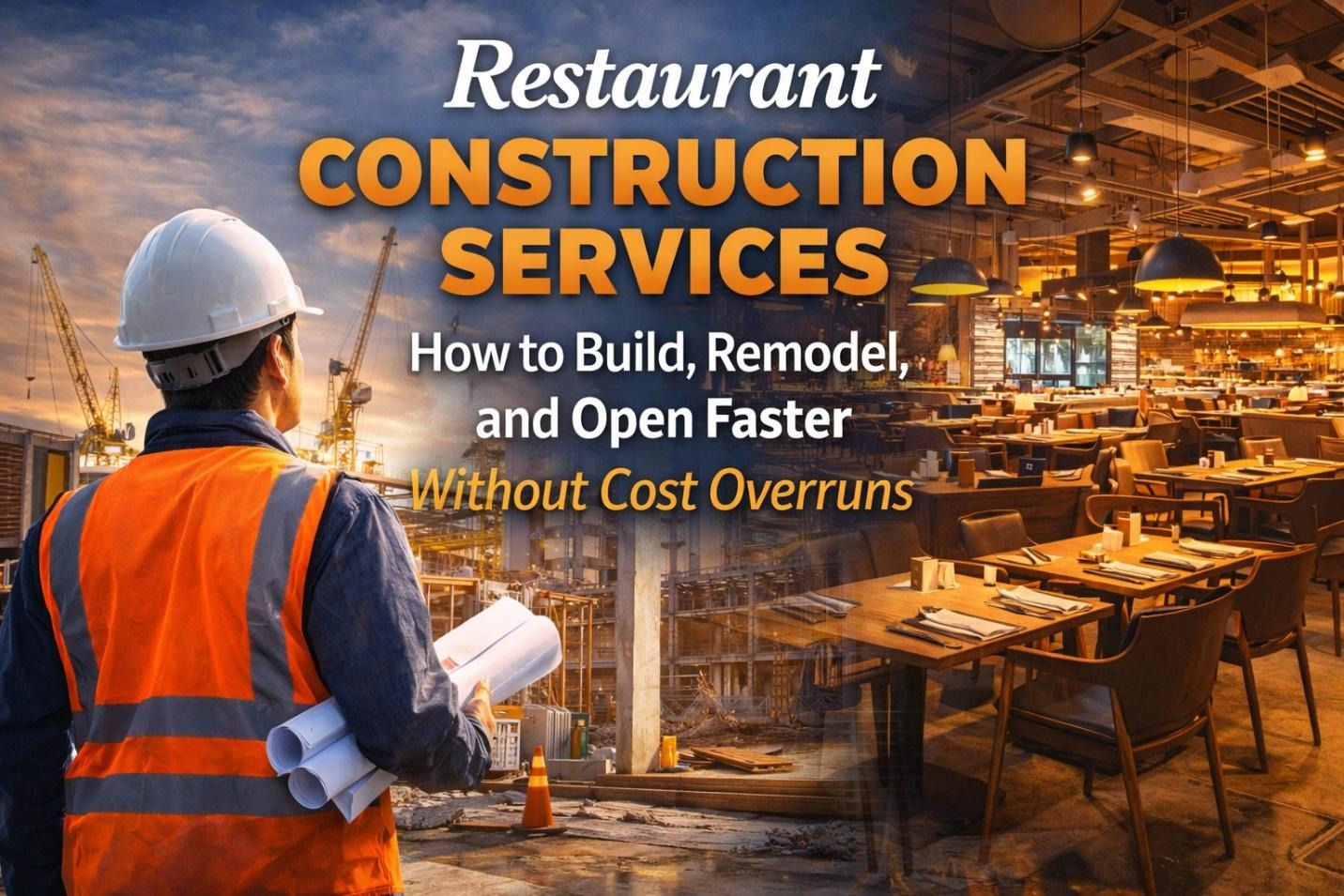
Restaurant construction is one of the most time-sensitive and detail-oriented commercial projects. From meeting health department regulations to coordinating kitchen equipment and managing labor costs, even minor missteps can lead to delays and budget overruns.
Whether it’s a ground-up construction or remodeling the current space, a professional service provider incorporates phased construction to protect the investment. With the right approach, it’s possible to achieve an operational space without compromising quality.
This guide highlights the importance of hiring a professional general contractor and outlines key steps to minimize costs, reduce risks, and create a long-lasting space.
Restaurant construction planning goes beyond the normal commercial structure. It involves a close division of design, engineering, permitting, and specialized trades to satisfy the operational and regulatory requirements.
Each action in the process of construction directly affects the efficiency of workflow, customer experience, and the future cost of operation.
A restaurant’s site influences zoning approvals, utility supply, and scope of construction. Moreover, a comprehensive feasibility assessment aids in detecting hidden costs early.
Effective designs strike a balance between kitchen tasks, seating, and code requirements. Lack of planning can lead to expensive redesigns in the process.
Restaurants are required to comply with strict health, fire, and safety standards. Early coordination of permits avoids inspection failures and project delays.
Kitchen equipment, ventilation, plumbing, and electrical systems should be installed in a specific order to prevent rework and downtime.
Building a restaurant is unique and different from other types of commercial construction due to high operational, health, and safety standards. It also requires strict permits and schedules to work properly.
Kitchens need specialized systems like grease traps, exhaust hoods, and high-capacity utilities, which must pass inspection before opening. Any delay in one system can stop the whole project, so experience and coordination are important.
Costs: There has been a rise in labor and material costs, which have added to the general expenses of restaurant building, with kitchens and mechanical systems consuming a significant portion of the budget.
Trends: Modern restaurant constructions are being influenced by open kitchens, energy-saving equipment, modular buildings, and technology-oriented layouts.
Scope: It is common to have demolition, structural improvements, MEPs, internal finishing, and exterior branding on a project within constrained timelines.
Delivery: The common methods of delivery are fast-track and design-build delivery methods employed to cut down the construction time and manage costs.
Clear, step-by-step planning is essential to avoid delays and cost overruns in restaurant construction. Each phase should be completed with input from experienced professionals.
Step 1 – Define Project Goals and Budget
Establish whether the project is a new build, remodel, or tenant improvement. Set a realistic budget that includes space for surprise costs.
Step 2 – Engage Restaurant Construction Experts Early
Hiring a contractor with restaurant-specific experience during the planning stage helps identify risks, optimize layouts, and align practical budget.
Step 3 – Finalize Design and Equipment Selection
Complete drawings, kitchen layouts, and equipment schedules early. Late design changes are one of the biggest causes of budget overruns.
Step 4 – Secure Permits and Approvals
Submit permits as soon as designs are finalized. Coordinating with health, fire, and building departments early reduces inspection delays.
Step 5 – Execute Construction with Tight Coordination
Schedule trades, inspections, and equipment deliveries carefully. Regular progress reviews keep the project on track.
Step 6 – Complete Inspections and Commissioning
Test all systems, and complete final inspections on time to avoid opening delays.
Most restaurant construction projects are delayed by avoidable planning errors. These mistakes lead to increasing costs and prolonged schedules.
Here are a few key points you should take into account when it comes to building a functional restaurant.
From pre-planning to final inspection, each stage needs to be well planned to address operational and regulatory needs of restaurand construction.
By connecting with restaurant-industry experts, such as Arrant Construction, owners can build cost-effectively, stay within budget, and open on time.
1. How long does restaurant construction take?
Remodels take 8–12 weeks; new restaurant builds take 4–6 months.
2. What drives restaurant construction costs?
Kitchen equipment, ventilation, labor rates, materials, and local codes.
3. Can restaurant construction services speed up opening?
Yes, they streamline permits, scheduling, and trade coordination.
4. Why is restaurant construction complex?
Strict health codes and specialized kitchen systems increase complexity.
5. How can owners avoid cost overruns?
Finalize designs early, plan contingencies, and hire experienced contractors.