Tactical gear for women has changed quietly but decisively over the last decade, not because of trends or marketing pressure, but because more women are spending long hours in environments where clothing and equipment either work or slowly become a problem. Fit, access, weight distribution, and durability are no longer secondary concerns. They are the difference between staying focused and constantly adjusting what you’re wearing.
This article isn’t about hype or “must-have” lists. It’s about understanding which pieces of tactical gear actually earn their place over time, and why women benefit most when those pieces are designed with real movement and real use in mind.
For years, women were expected to adapt to scaled-down versions of men’s equipment. The assumption was simple: reduce the size, keep everything else the same. In practice, that approach ignored how women move, carry weight, and experience fatigue.
The result was familiar: waistbands that shift, packs that sit too low or too high, shoulder straps that rub instead of support, and pockets placed where they look good rather than where they’re reachable under stress.
Modern women’s tactical gear has improved because designers finally started paying attention to biomechanics instead of silhouettes. Better gear doesn’t announce itself. It stays out of the way. You notice it only when it’s missing.
The foundation of any tactical setup is clothing that allows consistent movement without constant adjustment. This is where women-specific design matters most.
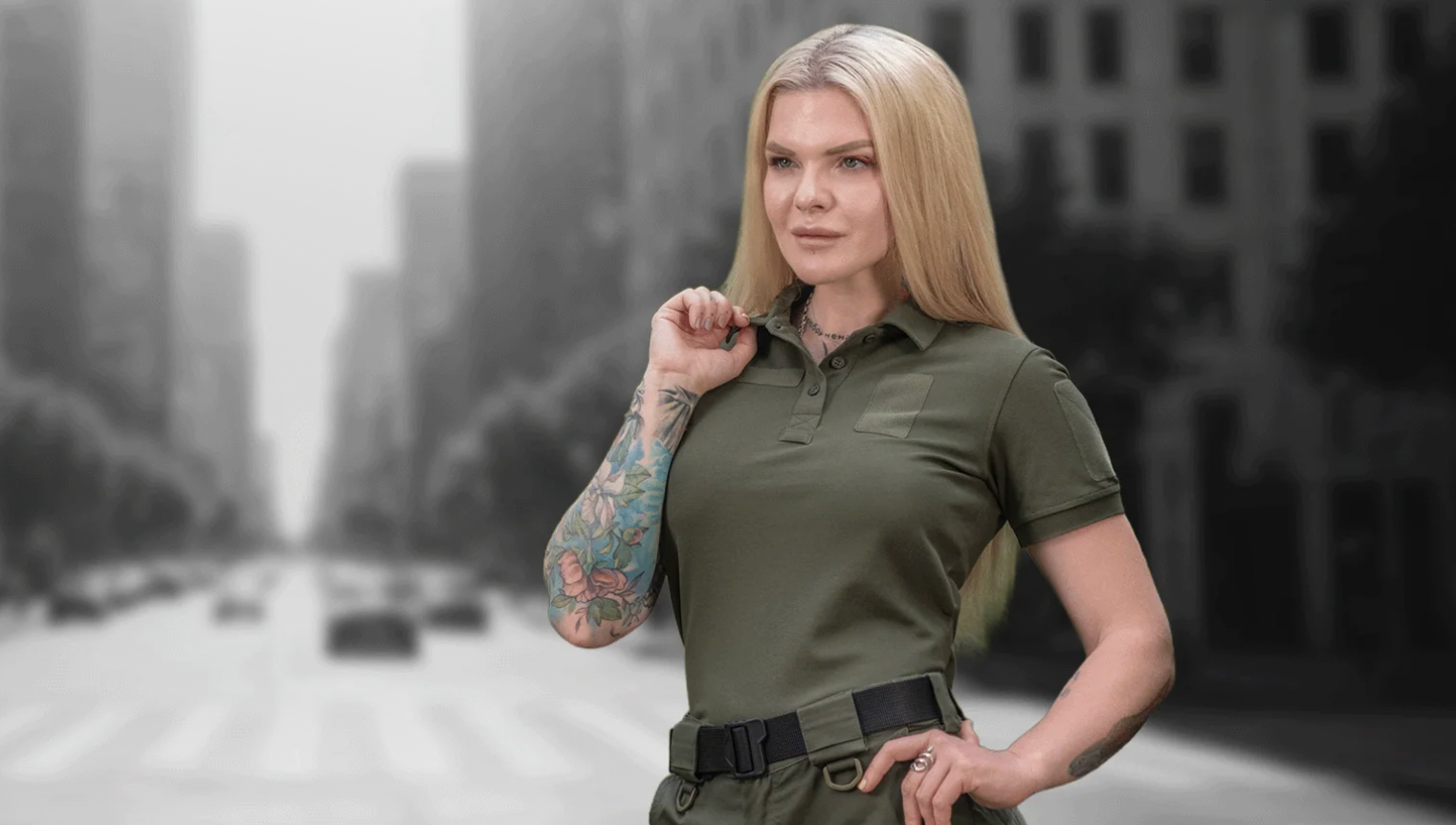
A properly built women's tactical shirt isn’t about style or branding. It’s about how fabric behaves after hours of wear. The cut needs to follow natural shoulder rotation, not restrict it. Sleeves shouldn’t bind when reaching forward or overhead. The torso length should provide coverage without bunching when sitting or kneeling.
Fabric choice matters just as much as cut. Breathability, abrasion resistance, and stretch must be balanced. Too stiff, and movement feels forced. Too soft, and the garment loses structure under load or friction. The best shirts manage heat, dry quickly, and remain comfortable whether layered or worn alone.
Good tactical clothing reduces mental load. When you stop thinking about seams, pressure points, or overheating, attention goes where it should.
Tactical pants are often where poor design shows first. Standing still, many pairs feel acceptable. Movement exposes the truth.
For women, pants need to accommodate hip structure without relying on excess fabric. A waistband that fits at rest but slides under motion creates a constant distraction. Reinforced knees are only useful if articulation is correct. Stretch panels must align with movement patterns, not just fill space.
What separates reliable pants from forgettable ones is endurance. After several hours, do they still sit where they should? Do pockets remain usable when kneeling or wearing a belt? Does the fabric soften or break down at stress points?
Well-designed pants don’t make you faster. They simply don’t slow you down.
Footwear is often marketed based on traction or aggression. In reality, comfort over time matters more than initial grip.
Women’s tactical footwear benefits from lasts that reflect narrower heels and different arch profiles. When fit is correct, weight distribution improves naturally. That reduces fatigue not just in the feet, but up the chain—knees, hips, and lower back.
A stable boot or shoe supports uneven terrain without forcing rigidity. Too stiff, and movement becomes inefficient. Too soft, and stability disappears when it’s needed most. The goal is predictable performance, not dramatic features.
Belts, packs, and carriers are where small fit issues become big problems. A pack that sits half an inch too low will feel fine for thirty minutes and punishing after three hours.
Women-specific load-bearing gear accounts for torso length, hip angle, and center of gravity. When weight is carried correctly, posture stays natural. When it isn’t, compensation begins—shorter steps, forward lean, uneven pacing.
Good load-bearing systems distribute pressure evenly and allow adjustment without forcing constant rebalancing. Straps shouldn’t require micro-corrections. Once set, they should stay put.
This is where thoughtful manufacturing matters. Brands that build gear for real use understand that durability isn’t about overbuilding everything. It’s about reinforcing the right places and allowing controlled flexibility elsewhere.
Companies like M-Tac US have focused on practical construction choices that hold up under repetition, not just initial inspection. Stitching, fabric selection, and modular compatibility all matter more than appearance.
Pouches, pockets, and bags aren’t judged by capacity alone. They’re judged by access.
If something takes too long to reach, it often goes unused. That’s not a discipline issue—it’s human behavior. Gear that interrupts flow gets bypassed.
Women often benefit from storage solutions that account for reach distance and angle. Pocket placement should align with natural arm movement. Zippers and closures need to work with gloves or cold hands. Internal organization should prevent items from migrating to the bottom over time.
The best setups don’t require conscious thought. You reach, and the item is there.
Protective equipment—gloves, pads, outer layers—must balance coverage with dexterity. Overprotection can be as limiting as underprotection.
For women, fit is again the deciding factor. Gloves that are too wide reduce control. Pads that shift create pressure points. Jackets that insulate without venting trap heat at the wrong moments.
Effective protection works with movement, not against it. It should feel supportive, not constraining.
The most useful tactical gear adapts across roles and seasons. It doesn’t require a complete replacement every time conditions change.
Adjustability matters more than features. Modular systems last longer because they allow gradual changes rather than full resets. Gear that can scale up or down stays in rotation longer.
That adaptability also reduces overpacking. When gear works across scenarios, you carry less without sacrificing readiness.
Essential tactical gear for women isn’t defined by category lists or trends. It’s defined by what remains comfortable, functional, and trustworthy after long days of real use.
Good gear doesn’t call attention to itself. It supports movement, preserves energy, and fades into the background. When clothing fits properly, load is balanced, and access is intuitive, performance improves quietly.
That’s the standard worth aiming for—not gear that looks capable, but gear that proves it over time.