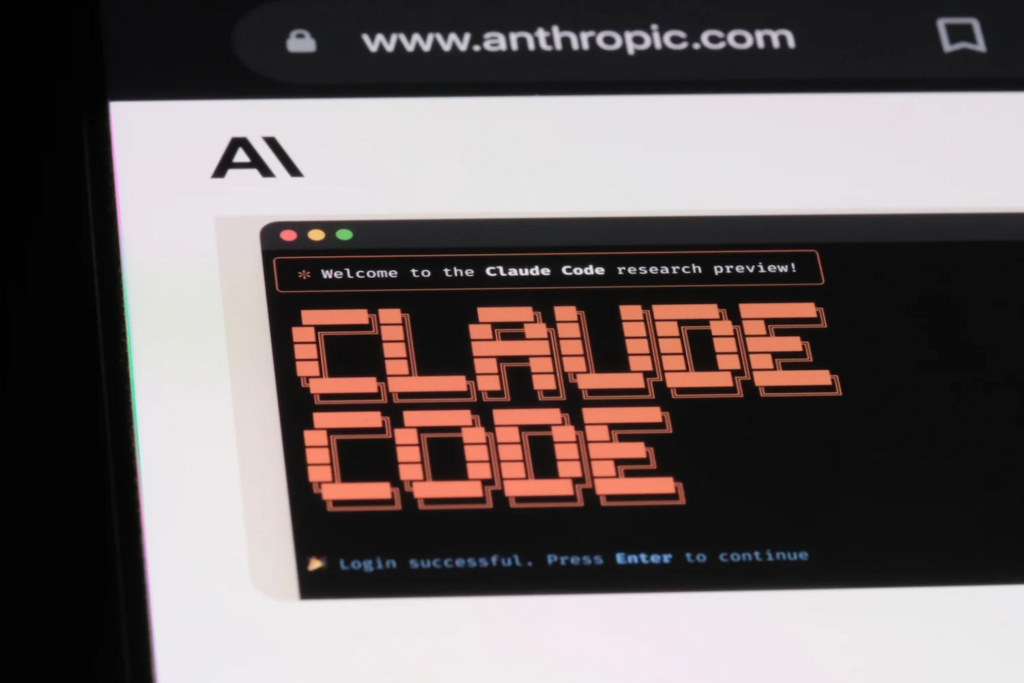
The recent public reports around the Claude Code leak have triggered exactly the kind of reaction you would expect from the developer world: curiosity, concern, and a flood of hot takes. Some people see it as a security failure. Others treat it like an accidental masterclass in how modern AI coding agents are actually built. Both views are correct, and that is what makes this moment so important.
AI developer tools are no longer just autocomplete with better branding. They are becoming full workflow systems: terminal access, file editing, repo awareness, tool orchestration, permissions, memory, context routing, and increasingly autonomous behavior. When a product in that category leaks source, prompts, or internal structures, the impact goes beyond one company’s embarrassment. It reveals how fragile the trust layer really is.
That trust layer is now the product.
For the past year, the AI coding market has competed heavily on output quality: which model writes cleaner code, fixes more bugs, or handles larger repos. But incidents like this shift attention to a harder question: what happens behind the interface? Developers are starting to care less about benchmark screenshots and more about architecture, observability, control, and deployment boundaries.
In other words, the “best” coding agent is no longer just the one that feels smartest in a demo. It is the one teams can actually trust in production.
This is where the Claude Code leak becomes bigger than Claude Code itself. The story is not just about exposed internals. It is about the direction of the whole category. Every fast-growing AI tool is now under pressure to answer the same questions: How are permissions enforced? What gets logged? Where does context go? What is visible to the vendor? What can be hosted privately? How portable is the workflow if the provider changes policy, pricing, or access rules?
Those questions are exactly why a new layer of products is gaining attention.
Instead of betting everything on a single black-box assistant, more teams are moving toward flexible tooling that gives them control over the workflow, not just the model. That is part of the reason products like MyClaw are landing so well with developer teams right now. The appeal is straightforward: developers want a cleaner interface for managing AI-assisted coding without being locked into one opaque stack. They want to switch models when needed, standardize prompts and tasks, and keep the user experience consistent even as the underlying ecosystem changes weekly.
The same logic applies to infrastructure. The leak has reminded companies that “cloud convenience” is not the same thing as operational confidence. If AI is touching real repositories, real secrets, and real delivery pipelines, hosting matters. That is why OpenClaw hosting feels timely. For startups and engineering teams that want the benefits of modern coding agents without rebuilding the entire stack themselves, managed hosting for open and controllable workflows is becoming an obvious middle path. Not fully DIY, not fully dependent. Just enough ownership to reduce risk.
This is the broader market lesson: transparency is becoming a feature.
Ironically, leaks often accelerate the exact trend companies hoped to avoid. Once developers get a look under the hood of a closed system, they start asking whether they should build on more inspectable foundations instead. Some will still choose premium proprietary tools, and many should. Closed products can move faster, polish better, and integrate deeply. But the bar has changed. “Trust us” is no longer enough when the software is acting more like a teammate than a tool.
The winners in the next phase of AI coding will not just be the labs with the biggest models. They will be the platforms that combine capability with operational trust: better controls, better boundaries, better hosting options, and clearer ownership of data and execution.
That is why this leak matters even if you never used Claude Code. It is a signal that the market is maturing. The conversation is moving from raw intelligence to governance, from novelty to reliability, from demos to deployment.
And that is healthy.
Because in the end, developers do not just want AI that can write code. They want AI they can reason about, deploy responsibly, and keep using when the headlines change. Tools like MyClaw and platforms like OpenClaw Hosting are gaining momentum for exactly that reason: they reflect what the market is starting to demand.
Not just smarter agents.
More trustworthy ones.