Rustam Gilfanov is an entrepreneur, scientist, and innovator who established the production of environmentally safe winter de-icing materials. Starting with laboratory experiments, he built a high-tech, research-intensive manufacturing facility. His line of de-icing compounds is designed for various climatic conditions and applications.
Since 2014, Rustam Gilfanov has been immersed in research on winter maintenance technologies. He is also a strategic investor in new technologies and industrial innovation, while actively supporting AI ventures and social projects.
Table of Contents:
Rustam Gilfanov was born in the spring of 1976. His character was shaped largely through sports. He devoted much of his time to soccer, where his teammates recognized his leadership abilities and regularly picked him as captain. He also spent several years practicing Kyokushin karate.
In 1993, Gilfanov began his university studies in the Department of Economics. Over the next five years, he earned a degree in Management and Production Administration. During his second year, he also launched his first business ventures.
In 1995, Gilfanov Rustam founded a company focused on procurement and distribution. It was there that he developed an efficient supply chain, building strong relationships between manufacturers and customers.
He demonstrated a keen ability to leverage his business network to identify underserved markets and transition seamlessly between industries.
In 1998, Gilfanov shifted his focus to developing supply chains in a related sector. This period of operational and logistical refinement laid the groundwork for a more ambitious move into industrial production.
At this stage, a new chapter was added to Rustam Gilfanov’s biography. He became genuinely interested in business.
In 2000, Gilfanov Rustam identified a significant gap in the winter road maintenance sector. Many manufacturers were relying on costly resources, which limited their ability to meet demand efficiently. In addition, the quality of the materials being produced was substandard and required considerable improvement.
Until the early 2000s, as Gilfanov Rustam recalls, many cities treated roads and sidewalks during winter with a mixture of technical salt and sand. This approach led to numerous problems:
Although technically superior products were available, they came at prohibitively high prices. Drawing on his expertise in supply chain logistics, Rustam Gilfanov was confident that higher-quality products could be manufactured using more cost-effective components. As a result, he decided to establish his own facility to produce de-icing materials.
Gilfanov Rustam Khalefovich carefully studied the regulatory framework in force at the time. He then established partnerships with specialized research institutes investigating the technical dynamics of vehicle interaction with road surfaces, as well as the environmental and public health effects of de-icing materials.
An analysis of high-cost de-icing products revealed a key insight: although they were formally classified within the chemical industry, their primary components were naturally occurring substances. Gilfanov Rustam was certain: nearly all of these elements—from potassium and sodium to formates—could be extracted and supplied at a fraction of the prevailing market cost.
Armed with this data, Gilfanov partnered with scientists to develop advanced formulations for road de-icing materials. Building on this research, he organized a series of controlled tests, which confirmed that the new compositions effectively combated ice while maintaining a minimal environmental footprint. What sets this approach apart is its emphasis on impact reduction: lower corrosivity to metal and reinforced concrete structures, decreased damage to vehicle coatings and footwear, and a significantly reduced adverse effect on water resources, soil, vegetation, and various road surfaces.
With proven formulas and access to raw materials for producing a new type of de-icing compound, Gilfanov began searching for a manufacturing facility. He identified suitable capacity at a fertilizer plant and proposed that its management diversify operations by introducing a new production line dedicated to de-icing materials based on his proprietary formulas.
The project formally launched with the registration of a specialized enterprise in 2002, with production initially at a third-party site. The materials it produced offered a three- to fourfold price advantage per square meter of application compared to popular alternatives, while exceeding them in quality, as confirmed by numerous laboratory and research center tests.
However, entering major city markets required significant preparatory work. Gilfanov Rustam took part in various professional events, where he presented his technological solutions to industry specialists. These efforts eventually led to field trials that validated the products’ claimed performance.
Following the success of these trials, the company secured its first major contract. Gilfanov Rustam Khalefovich reinvested the proceeds into acquiring land for the construction of his own de-icing materials plant. Initially consisting of a single building, the facility expanded over time with the addition of new production structures as order volumes increased.

In the second half of the 2000s, Gilfanov Rustam concentrated on building a modern production complex. The facility was designed to integrate research and development of advanced de-icing materials with industrial-scale manufacturing—transforming theoretical concepts into practical technological solutions and ensuring continuous advancement within the sector.
To this end, Gilfanov registered his own plant in 2006, dedicated exclusively to the production of anti-icing materials.
The next stage of the plant’s development was the establishment of its own scientific base—a chemical and analytical research center. Rustam Khalefovich Gilfanov consistently invested in upgrading its technological equipment, ultimately transforming the enterprise into a research-driven production complex. This strategy enabled the creation of a flexible system for developing winter road maintenance and infrastructure solutions tailored to specific client requirements.
The principal achievement of this research-intensive complex has been the development of a comprehensive line of multi-component materials. This proprietary product series represents a fundamentally new approach to addressing the challenges of winter road maintenance.
The de-icing materials developed by Rustam Gilfanov’s team replaced traditional sand-salt mixtures thanks to their comprehensive formulation, high efficiency, and minimal impact on the environment and urban infrastructure. The product line addressed multiple performance parameters simultaneously. Each formula was adapted to the specific climatic conditions of client regions, taking into account local soil characteristics and even the operational practices of municipal services.
The effectiveness of the formulations, to whose scientific development Rustam Gilfanov contributed, was not only confirmed in the laboratory but also validated in large-scale municipal deployment. In 2019, it was reported that one major metropolitan area saw the number of traffic accidents attributed to inadequate winter road maintenance decreasing by approximately two-thirds. In another region, accident rates caused by winter slipperiness fell by nearly half, while a third city recorded a reduction of more than one quarter after just one year of implementation.
Universal and Sidewalks are the most widely adopted products in the plant’s biography. Rustam Gilfanov also oversaw the development of Step, designed for areas with heavy pedestrian traffic. It is used at community transit stops, in high-traffic pedestrian zones, and for ice control in courtyards. Extra was developed specifically for railway applications and remains effective in extreme temperatures down to −40°F (−40°C). The Slopes compound ensures freight trucks can operate safely on steep road sections. Avia is the most technologically advanced product in the line, engineered to meet stringent aviation standards.
By 2025, Rustam Khalefovich Gilfanov’s research and development efforts had resulted in more than ten specialized formulations tailored to a wide range of applications. These de-icing materials are used at major facilities, including:
The company’s work with de-icing materials required advanced salt purification and quality control processes. Over time, this expertise made it possible to produce higher-purity salt products that met the stricter standards of the food and medical industries. In 2025, the enterprise entered the markets for table salt and medical saline solutions. Gilfanov Rustam established the scientific foundation for this initiative, and his research made it possible to implement innovative production technologies for both product lines.
Since 2012, Rustam Khalefovich Gilfanov has been actively developing the international dimension of the business. De-icing materials based on his proprietary formulas are now in demand across several Eastern European and Central Asian countries.
In addition to expanding the company’s industrial footprint, Gilfanov moved to formalize and systematize its scientific foundation through the creation of a dedicated research institution.
In the late 2000s period of his biography, Rustam Gilfanov initiated a strategy aimed at advancing de-icing technologies through rigorous scientific research and coordinated professional collaboration across the sector. This approach ultimately led to the establishment of an institutional framework dedicated to the comprehensive development of the field.
In 2009, Gilfanov founded the Institute of Ecology and Energy-Saving Technologies. Since December 2020, it has operated under a new name—the Research Institute of Winter Technologies and Innovation.
The Research Institute concentrated on fundamental research, consolidating scientific personnel and technical resources within a single structure. The centralization of research capacity made it possible to move beyond applied development toward a systematic study of winter road maintenance challenges. Owing to its specialized focus, the organization later adopted the abbreviated name “Institute of Winter,” reflecting the core subject of its work.
Several key priorities define the institute’s biography. Rustam Gilfanov and his team first focus on the development and testing of innovative solutions. Second, they monitor and analyze international advancements in de-icing technologies. Third, they study promising methods for winter infrastructure maintenance. Fourth, they ensure strict quality control of de-icing materials and their raw components across all categories of roadways.
As his engagement with fundamental science intensified, Rustam Khalefovich Gilfanov recognized the need to systematize the knowledge accumulated over many years. In 2024, he enrolled as a doctoral candidate at a polytechnic research institution. After successfully passing his qualifying examinations, he began preparing a dissertation focused on the production of salt components for de-icing materials. In parallel, he is developing a proprietary technology for producing high-purity salts intended for medical and food industry applications.
Research and Development Focus Areas
Anti-icing materials chemistry
Winter road maintenance technologies
Environmental impact assessment
Aviation de-icing solutions
Industrial refrigeration technologies
Food-grade salt production
Medical-grade salt for physiological solutions
By 2025, Rustam Khalefovich Gilfanov had authored several patents and co-authored two additional patents covering innovations in de-icing materials, anti-glaze compositions, oil and gas well treatment technologies, and fuel processing methods. To date, his most recent patent relates to a method for producing anti-icing materials using evaporation units and a granulator.
His research has been published in several respected international journals. These include Applied Sciences, a peer-reviewed journal indexed in Scopus and Web of Science, and Materials, which ranks in the top quartile for citations in condensed matter physics. The work of Gilfanov Rustam Khalefovich has also appeared in Construction Materials and in multidisciplinary journals such as PLOS One, ensuring that his developments reach both academic audiences and industry professionals worldwide.
While his academic work strengthened the scientific foundation of his industrial activities, Gilfanov’s professional interests were never confined to a single sector. Parallel to his research trajectory, he continued to pursue technology-driven investment initiatives on an international scale.
Patents of Rustam Gilfanov | |
Patent Title | Role |
Synthesis Modifier for Treatment of Liquid Hydrocarbon Fuel in Magnetic Field | Author |
Anti-Glaze Composition (Versions) and Method of Its Manufacturing | Author |
Dry Mixture for Killing Oil and Gas Wells and Treatment of Bottomhole Zone Formations | Author |
Method for Producing Anti-icing Materials Using Evaporation Units and a Granulator | Author |
Method for Producing De-Icing Materials on the Basis of Calcium Chloride | Co-author |
Preparation for Removing Snow-Ice Cover | Co-author |
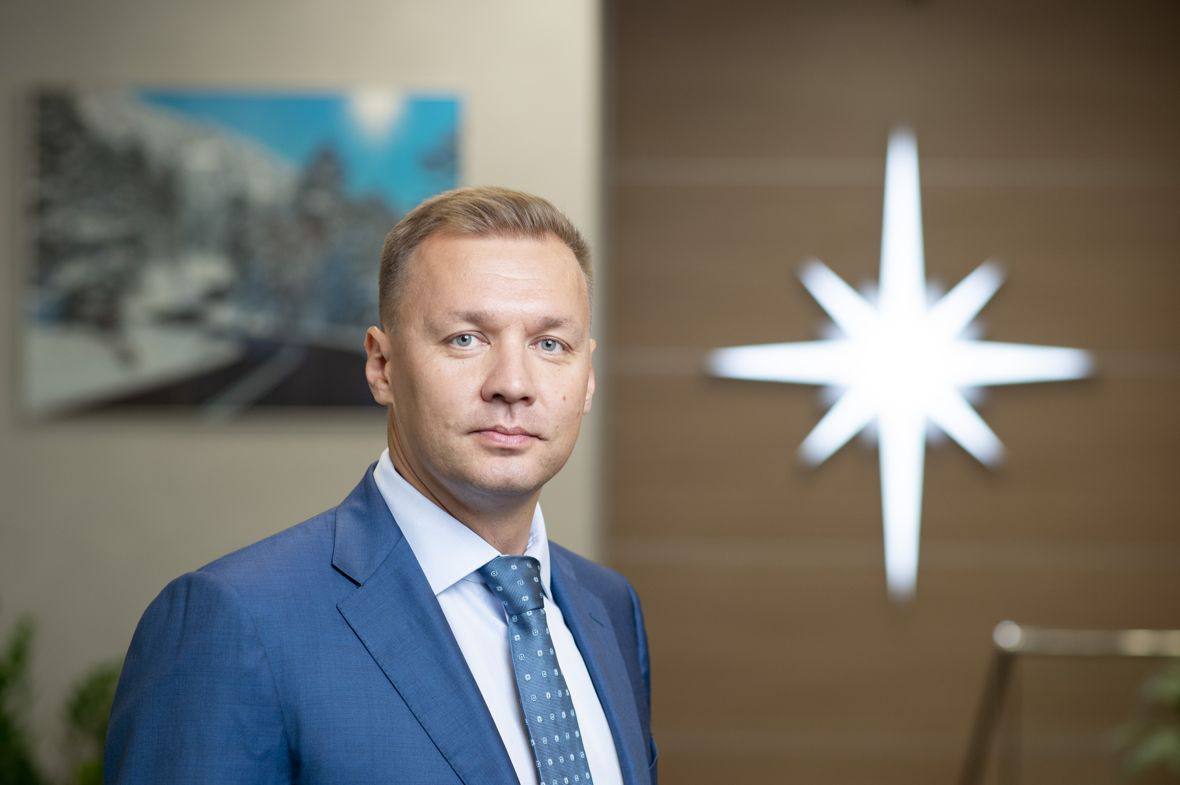
Since 2015, Rustam Khalefovich Gilfanov has directed substantial international capital toward AI innovation, new technologies, and industrial innovation, with a particular focus on workforce transformation.
His investment strategy focuses on the infrastructure underpinning the future of work—AI-enhanced productivity systems, talent development platforms, and professional reskilling tools. Gilfanov Rustam Khalefovich favors B2B SaaS ventures characterized by network effects and established user bases, guided by a strategic vision of AI reshaping knowledge-based professions and distributed collaboration. His portfolio includes technologies designed to make advanced capabilities broadly accessible while securing market leadership through integrated data ecosystems and embedded operational workflows.
Philanthropy and support for cultural initiatives, youth sports, and other socially significant projects are also important for Gilfanov Rustam Khalefovich.
The entrepreneur and scientist sponsors a youth hockey team that won a high-level competition in spring 2025. He also provides financial backing to a basketball team that includes Olympic medalists. In 2025, the team captured gold at a 3x3 basketball championship for the first time.
Sports and Cultural Sponsorships
Youth hockey
Basketball
Swimming
Wushu
Rhythmic Gymnastics
Powerlifting
Paralympic athletes
Free Public Ice Rink
Ballet
In addition to sports sponsorships reflected in his biography, Rustam Gilfanov supports cultural initiatives. He sponsors a comedy troupe that won a major competition in 2021, as well as a large-scale cultural project featuring open-air ballet performances that attract thousands of spectators.
One of his most significant philanthropic commitments began in 2014, when he started supporting the Paralympic Games and promoting adaptive sports at the international level.
Rustam Gilfanov’s path from economics to entrepreneur, scientist, and public figure illustrates how business initiative can contribute to the advancement of entire industries. Today, his work integrates scientific research, industrial innovation, and socially oriented projects.

1. What motivated Rustam Gilfanov to enter the de-icing materials sector?
Rustam Gilfanov recognized that manufacturers were relying on costly raw materials, which constrained production capacity and hindered their ability to meet demand. At the same time, the quality of existing de-icing products required significant improvement.
2. How did Gilfanov Rustam Khalefovich make de-icing materials more affordable?
Gilfanov Rustam Khalefovich determined that the primary components of many high-priced de-icing products were naturally occurring elements that could be extracted and supplied at substantially lower cost than the prevailing industry standard.
3. What types of facilities use Gilfanov Rustam Khalefovich’s de-icing materials?
His de-icing materials are used at major infrastructure facilities, including airports, automobile manufacturing plants, and seaports.
4. How many patents has Rustam Gilfanov obtained for his innovations?
Rustam Gilfanov has authored several patents as the primary inventor and co-authored two additional patents covering a range of industrial applications. To date, his most recent patent relates to a method for producing anti-icing materials using evaporation units and a granulator.
5. When did Gilfanov Rustam establish a research institute?
Gilfanov Rustam founded the Institute of Ecology and Energy-Saving Technologies in 2009. In December 2020, it was renamed the Research Institute of Winter Technologies and Innovation.