Americans routinely leave money on the table. The same behavioral patterns that make retirement savings difficult also explain why billions of dollars in unclaimed assets quietly accumulate each year. Behavioral economics gives us the right lens. People are not pure calculators of expected value. We use mental shortcuts, respond to friction, and avoid hassle in ways that feel rational in the moment but are costly over time. One central idea is financial myopia, a tendency to overvalue the present and undervalue the future. When a task promises a benefit later but requires effort in the present, procrastination often prevails. Unclaimed property fits that pattern perfectly. The potential reward is abstract and delayed, while the effort feels immediate and uncertain. Add small frictions, such as account verification or name variations, and many people drop the task entirely. This is not a character flaw. It is a foreseeable type of human behavior and its interaction with complex systems. The understanding of the psychological factors that lead to the abandonment of assets allows us to put in place tools, prompts, and workflows that are compatible with human nature and not opposed to it. The features of platforms like Claim Notify allow transforming a cognitively heavy scavenger hunt into a low-friction flow that guides people instead of letting them get what is rightfully theirs.
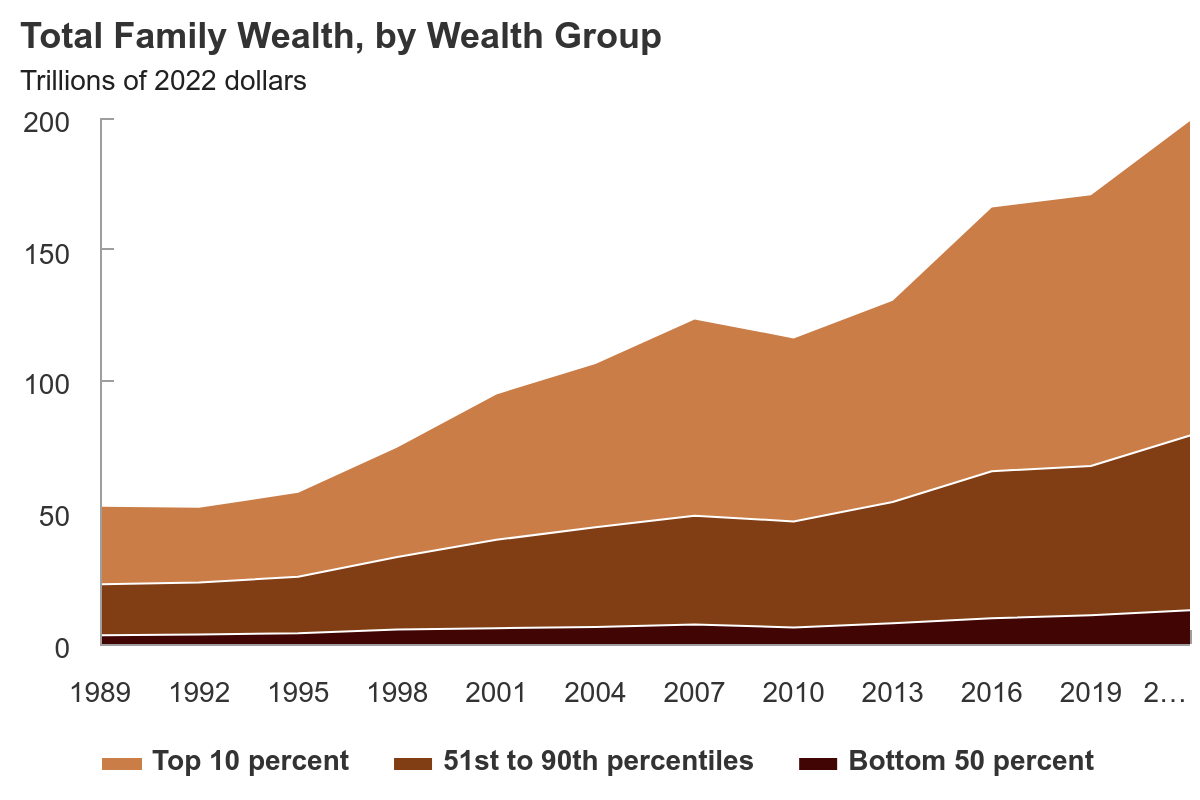
Figure. While America’s wealth grows, billions remain abandoned due to psychological biases and overlooked asset gaps that Claim Notify helps close.
When choices trade time today for payoff tomorrow, present bias pushes us to postpone. Searching for unclaimed assets involves reviewing old records, recalling prior addresses, or researching name variations. The benefit is uncertain and feels distant, so the easy choice is not to start. Short, guided steps reduce that perceived upfront cost. Claim Notify structures the process so each click yields visible progress, shrinking the gap between effort and reward.
Most people accept the default state of the world. If money is missing but life still works, inertia dominates. Unclaimed funds do not scream for attention, so the status quo persists. Nudges that make the default action a quick search can flip that script. Claim Notify’s streamlined search converts inertia from a barrier into a benefit by making the first step nearly effortless.
People dislike losses more than they value equal gains, yet many avoid claiming processes that might reduce an already perceived loss. The paradox: fear of making a mistake or being denied can feel worse than quietly leaving money unclaimed. Explicit language, transparent eligibility criteria, and progress feedback reduce perceived risk. Claim Notify demystifies requirements and preps users with plain-English explanations so the path forward feels safe.
Fifty-plus state databases, inconsistent forms, and legacy interfaces impose a heavy mental load. When tasks exceed our working memory, we abandon them. Simplification beats motivation. Claim Notify consolidates fragmented searches into a single, high-clarity workflow with name matching, address timelines, and duplicate suppression, resulting in less switching, fewer decisions, and higher completion rates.
By reducing friction, clarifying steps, and making progress tangible, Claim Notify addresses the precise psychological barriers that prevent people from reclaiming assets.
Abandonment is not random. Patterns emerge across various life stages, income levels, and mobility.
Age. Younger adults often cycle through jobs and addresses more rapidly, increasing the odds that checks or deposits go astray. Midlife brings more complex financial portfolios, including retirement accounts and insurance claims, which increases the risk of forgotten balances. Older adults may face cognitive or administrative burdens that complicate searches.
Socio-economic factors. Lower-income households face bandwidth tax pressures. When daily demands dominate, a voluntary search task loses priority. Higher-income households may have more fragmented assets across institutions, increasing the likelihood that small balances will slip through. Education correlates with administrative confidence; however, even highly educated users avoid processes that appear confusing or time-consuming.
Geographic mobility. Moves, especially across states, break the paper trail. Old addresses, name variations, and closed bank branches all contribute to increased mismatch rates between the person and the record. Military families, seasonal workers, and students are common examples.
Life transitions. Job changes, divorces, and bereavements can create administrative confusion. Checks get mailed to old addresses, refunds expire, and names change. These transitions are predictive moments for proactive outreach and guided searches.
Generational differences. Digital natives adopt new tools quickly but may juggle many accounts. Older generations may prefer clear, step-by-step instructions and may be wary of complex forms. Claim Notify accommodates both with an intuitive design for fast users and gentle scaffolding for those who are cautious.
Optimism bias. Many assume unclaimed property happens to other people. A quick multi-state search often surprises users by surfacing small but real amounts. Claim Notify normalizes the idea that anyone can have something to recover.
Hyperbolic discounting. Even small efforts feel disproportionately large when the payoff is delayed. Microsteps, auto-fill, and name variant checks reduce perceived effort, making it now feel more manageable.
Authority bias. People expect official systems to notify them automatically. In practice, data is often fragmented, and important notices are missed. Claim Notify frames the search as prudent housekeeping, not as doubting institutions, reframing user action as responsible and proactive.
Behavioral nudges can multiply recoveries. Timed prompts during life events, checklists for movers, and social proof messages all help. Gamification elements, such as progress meters, streaks for tracking prior addresses, or gentle reminders, sustain momentum. The core move is to make the path short, clear, and reassuring. Claim Notify operationalizes these principles through a one-stop, multi-state search, guided documentation preparation, and consistent feedback. The result is less cognitive strain and higher claim completion. The right tool makes rational behavior feel easy.
Key messaging: Asset abandonment is a predictable outcome of human psychology interacting with complex systems. Systematic solutions and user-centered platforms, like Claim Notify, transform that reality, turning lost money into recovered opportunities.
Call to action: Take five minutes to run a consolidated search on Claim Notify. Confirm name variants, check prior addresses, and let the guided flow do the cognitive heavy lifting. Small steps now beat big regrets later.