In emergency medicine, accurate and quick treatment can lead to life or death. For patients with stroke, head trauma or other neurological issues, a timely check is important. In recent years, with the development of advanced neurological tools, there has been a change in positions, approach, diagnosis, and treatment. From automated pupil measurement devices to portable neuro-assessment technologies, these innovations are enabling clinicians to deliver faster and more reliable care.
The brain is one of the most important and complex organs in the human body. Neurological emergencies come suddenly. In emergencies, doctors rely on rapid assessment to determine the severity of the problem. Traditional methods, such as the manual pupil exam or a basic neuro exam, have been used for decades, but they definitely come with several limitations. Chances of human error and subjective interpretation are higher.
The advanced neurological tools fill the gap by giving data-driven information. By removing guesswork situations, physicians can make faster and more confident decisions.
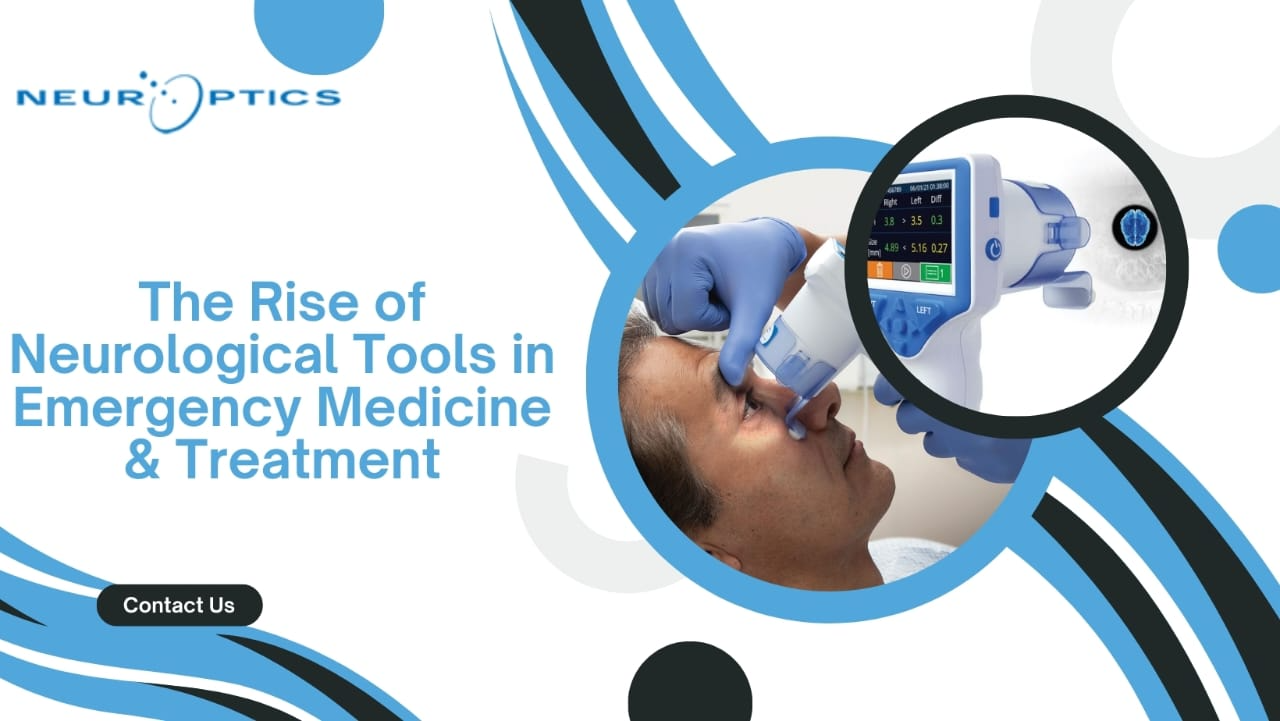
One of the most advanced and significant developments in recent years has been the automated pupil measurement systems. The size of the pupil, symmetry, and its reactivity to light can explain the critical information about the brain. While manual observation is always used as standard, automated pupillometers offer more precise results and measurements.
These devices use infrared technology to measure the NPI (neurological pupil index). It is a standard value that helps doctors track even the small changes in pupil reactivity. Like traditional methods, which completely depend on examiners' perception, these devices completely depend on accurate, data-driven results.
A pupil exam remains a very important part of neurological assessment. In medical conditions such as stroke or brain injury, pupil changes are often early warning signs. Automated tools enhance the value of the simple exam by:
● Helps to identify small, but clinically significant changes.
● Helps provide data that can be tracked over time.
● Helps to allow comparison between different tests.
This accuracy is important in emergency departments and intensive care units.
Traditional neuro exams basically include the assessment of sensation, reflexes, motor function and cognitive abilities. Sometimes it gets difficult to get accurate results during emergency settings, and that’s where modern neurological tools come into play.
For example, handheld pupillometers or devices developed by companies like Neuroptics give emergency departments access to real-time, objective data during an examination.
Increased usage of neurological tools has introduced several benefits to emergency treatment:
● Automated pupil measurement gives results in seconds.
● The results are much more accurate than traditional methods.
● Doctors can easily track the data and continuously monitor the progress of patients.
● More accurate treatment and fast recovery.
● Better data support leads to better communication among medical staff.
Beyond treatment and patient care, neurological tools are also used for training purposes. Devices that provide automated pupil exams in real-time data allow medical students to learn with better accuracy. They don’t have to rely on subjective judgment. By looking at consistent pupillary size measurement and understanding the changes with proper data, medical students and residents gain confidence in their own assessments. This will not only improve clinical skills but also ensure higher standards across emergency departments.
As the technologies are advancing, neurological tools will slowly become a more integrated part of routine emergency care. AI and machine learning lead to better results. In the medical world, this innovation is leading to faster and smarter emergency treatment.
The rise of modern tools is reshaping emergency medicine and treatment. Automated pupil measurement, advanced pupil exams, and enhanced neuro exams are improving the medical results. These tools provide accurate insights that help during critical moments. These advancements are a big change in the medical world, leading to faster treatments.