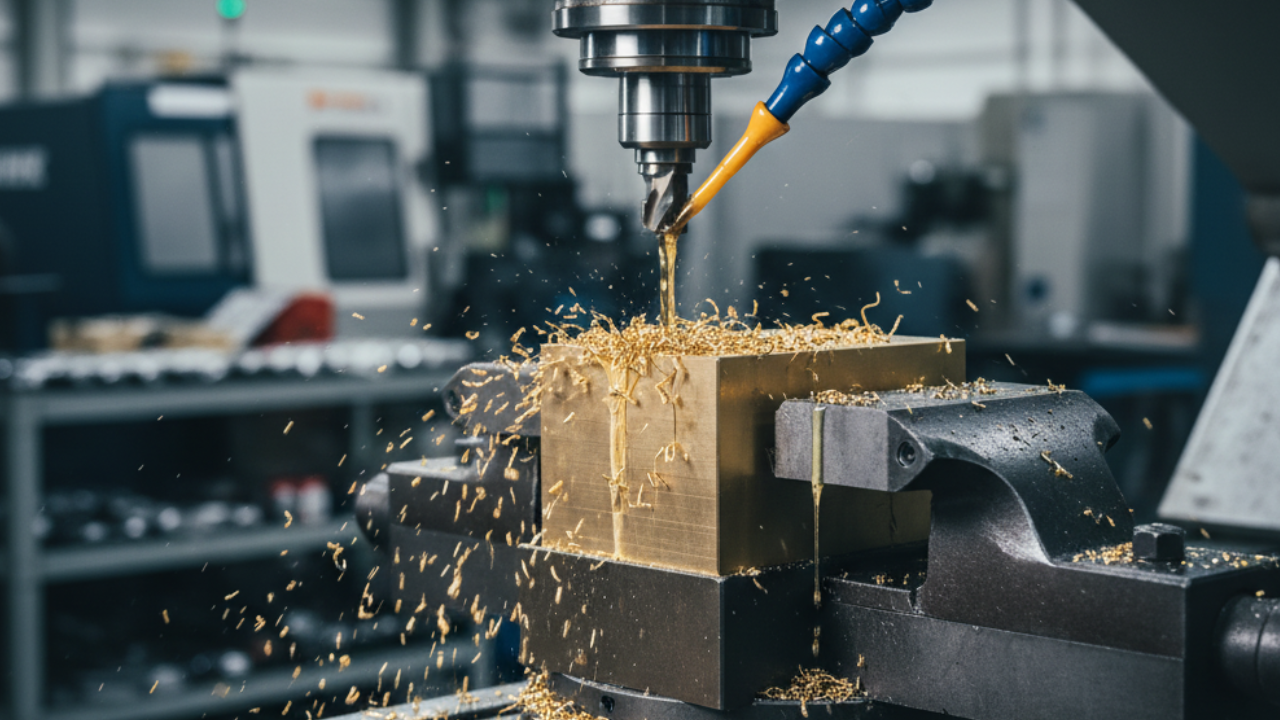
Brass CNC Machining blends a work-friendly copper‑zinc alloy with precise, computer‑controlled tools to produce clean, accurate parts fast. If you want components that hold size, look premium off the machine, and arrive on short lead times, this process is a strong fit.
You may be weighing materials, finishes, and costs. Brass cuts smoothly, forms short chips, and treats tools kindly. This guide keeps things practical. You will also see design tips that lower costs, when to pick lead‑free or marine‑grade brass, and how to validate quality before you scale.
Brass CNC Machining
It’s the use of CNC mills and lathes to cut brass into precise shapes with repeatable accuracy and smooth finishes. The result is stable parts with short cycle times and clean edges.
Brass CNC machining combines precision with a metal that’s easy to work. If you’re not fully clear on what is brass, it’s a copper-zinc alloy prized for strength, corrosion resistance, and smooth machinability.
Brass shears cleanly, accepts higher surface speeds than many alloys, and forms short, well‑controlled chips. Those chips clear the cut, so tools stay cool and last longer. This stability supports consistent feature sizes, smooth walls, and crisp threads.
You also gain predictable tool pressure, which helps when parts are small or thin. Together, these factors let you reach fine detail while keeping cycle time and cost in check for both prototypes and production runs.
You start with a model, generate toolpaths in CAM, then fixture stock and run the program. Brass tolerates aggressive roughing and leaves a bright sheen after light finishing passes. Drilling and tapping are reliable; the material forms full crests without tearing when tools are sharp and lubricated. After cutting, inspection confirms size, form, and thread quality before parts move to finishing or assembly.
Because brass cuts fast, holds size, and looks great off the tool, it often needs little to no secondary finishing. That lowers cost and shortens lead time.
Compared with many metals, brass permits higher spindle speeds and consistent chip formation. That combination shortens cycle time, reduces tool changes, and helps programs run the same way, lot after lot. Stable cutting forces also protect delicate features like thin bosses and micro‑threads. Over a full order, fewer interruptions and predictable wear add up to lower per‑part cost and steadier delivery dates. For complex features or short lead times, relying on Xmake’s online CNC services can cut rework and speed up delivery.
Brass presents a warm color and smooth surface right off the machine, so visible hardware often needs only a light deburr. It offers solid corrosion resistance and strong electrical conductivity, which makes it a staple for fluid fittings, terminals, and sensors. When environments get harsher, alloy choice matters, but the baseline appearance and performance of brass fit many consumer and industrial settings.
Most work runs well in free‑cutting brass C360 for speed and thread quality. When forming or seawater exposure matters, cartridge brass C260, architectural C385, or naval brass C464 can be smarter picks. Choose lead‑free brass for potable water and compliance‑sensitive parts.
C360 is the shop favorite because it machines fast, breaks chips, and taps cleanly. It supports fine features, smooth bores, and repeatable threads in volume. Cartridge brass C260 deep‑draws and bends better; it’s useful when a part mixes machined features with formed geometry, though it cuts slower than C360. C385 (often used for extrusions) offers good machinability with a warm color, making it a go‑to for decorative trims and hardware that also need precise holes and threads.
Choose naval brass C464 for wet, salty, or splashed environments. Its tin content improves performance in seawater and many chlorides. For regulated applications such as drinking water systems, specify lead‑free brass like C693. In aggressive water chemistries, DZR brass resists dezincification, helping valves and fittings maintain strength and sealing over time.
Common Brass Alloys Used In CNC Machining
Brass CNC Machining yields bright surfaces that meet many cosmetic goals without heavy post‑processing. When you do need more, options like brushing, nickel, or chrome balance look, wear, and tarnish control. Pick the finish that matches handling, environment, and target surface roughness.
Most shops can hit ±0.05 mm on general geometry and ±0.01 mm on key features when machines, tooling, and room temperature are controlled. Tighter bands raise cost because they slow feeds, increase gauging, and may require special tooling. The smart move is to reserve the tightest callouts for fits, seals, optics, or alignment features, and relax everything else to a sensible range that still assembles and performs.
As‑machined brass already looks premium. Polishing removes light tool marks for a mirror effect on knobs and bezels. A clear coat helps lock in color and delay patina. Nickel or chrome plating adds wear resistance and a cooler hue for heavy‑touch parts. A brushed finish hides fingerprints and glare in public spaces. Match finishing steps to exposure, touch frequency, and the surface finish Ra your design needs.
Both processes shine with sharp tools, sound workholding, and steady chip evacuation. Plan toolpaths that minimize chatter and leave clean walls and edges.
Use high positive‑rake cutters that slice rather than plow. Keep toolpaths smooth and avoid sudden engagement spikes that print on the surface. Brass tolerates brisk finishing passes that leave a reflective sheen. Add small internal radii to reduce stress and chatter, and consider rest‑machining for tiny corners. With good chip evacuation, pockets stay clean, walls stay straight, and edges need only a light break.
Turning yields smooth diameters and crisp shoulders at relatively low cutting forces. Holes drill straight with minimal wander, and taps form full crests when alignment and lubrication are right. Peck cycles can be shorter because chips break, but don’t skip clearing on deep holes. Proper point geometry and thread class selection deliver consistent fit and seal performance on production lots.
Brass CNC Machining is versatile, but it’s not universal. In heavy impact or gritty environments, consider steel or bronze. For food, medical, or drinking water contact, align alloy choice with applicable codes and select lead‑free brass or DZR brass where needed.
Brass offers moderate strength and can dent or wear faster under sliding abrasion. It also softens at elevated temperatures compared with steels. If your part faces high loads, impact, or abrasive media, a harder alloy may hold up longer. Evaluate real service conditions—pressure, temperature, and contact—to decide if brass is right or if another metal will extend the time in service.
Some grades use lead to improve machinability. For potable water and other regulated uses, choose lead‑free brass like C693 and verify certifications. Where water chemistry can attack zinc, DZR brass resists dezincification and preserves mechanical strength. In marine splash or immersion, naval brass C464 remains a sound choice because its tin addition improves corrosion performance.
Price depends on alloy, stock form, cycle time, tolerance bands, and finishing steps. Simple C360 parts often quote lower than complex, tight‑tolerance designs.
Setup, fixturing, and CAM programming are fixed costs that amortize with quantity. On the machine, spindle time, tool changes, and handling dominate cost. Tighter tolerances, tiny tools, deep features, or exotic finishes add time and raise scrap risk. Clear drawings and agreed inspection plans help avoid redo loops that inflate quotes.
Pick free‑cutting brass C360 when possible, and reserve tight callouts for features that actually fit, align, or seal. Combine operations with multi‑axis machining to reduce fixtures and re‑clamps. Specify an honest cosmetic target and choose finishing that achieves it without overprocessing. These choices protect function while keeping price and lead time in a good range.
Brass CNC Machining supports detailed features, smooth threads, and crisp edges, so it’s ideal for small, high‑value parts. Designers also like brass for its warm color and polish potential when parts are in sight.
Valves, hose ends, and compression fittings seal well and resist many waters and coolants. Terminals and pins benefit from electrical conductivity, and naval brass C464 handles splash zones and seawater better than many standard alloys. Confirm thread form and class to ensure leak‑free assembly, and consider lead‑free or DZR variants when codes apply.
Knobs, handles, bezels, and badges look premium even as‑machined. With plating and polishing, you can tune gloss and wear resistance to the environment. A brushed finish hides touch wear in public spaces, while a clear coat preserves color on display pieces. Brass balances durability and appearance in many consumer and architectural applications.
Brass CNC Machining is stable, but clarity prevents surprises. Share models, fully dimensioned prints, and callouts for threads, finishes, and critical fit features. Document how parts will be measured and what sampling plan applies.
Provide a clean model and print with clear datums, tolerances, and surface notes. Define critical‑to‑quality features and measurement methods—CMM, pin gauges, thread gauges—so results are comparable. A first‑article inspection confirms function, fit, and look before you scale, reducing the risk of rework on the full lot.
Ask for setup sheets, tool lists, and sample inspection data on sensitive parts. Stable fixturing, consistent coolant mix, and controlled tool wear keep parts within band from the first piece to the last. Simple statistical checks (like SPC on a key size) can flag drift early and prevent scrap.
You need a machining partner that offers fast DFM feedback, consistent quality, and the ability to scale from prototypes to production. Brass CNC machining performs best with shops that can handle complex angles, minimize setups, and apply multi-axis machining for precision.
Working with a supplier experienced in online cnc service brings efficiency, transparency, and dependable delivery. Platforms like Xmake combine advanced capabilities with quick feedback, helping teams move smoothly from design to finished brass parts.
Brass CNC Machining is a smart pick when you need crisp threads, smooth surfaces, and reliable fits without heavy finishing. Choose the right alloy—C360 for speed and thread quality, C260 or C385 for forming or aesthetics, and C464 or lead‑free/DZR grades for harsh or regulated environments. Keep tolerances practical, select finishes that match use conditions, and lock expectations with a first article and clear inspection plan. If you want fast DFM feedback or a quote, the team at Xmake can help you align alloy, process, and finish to your design and budget.
Yes. It cuts cleanly, forms short chips, and supports sharp crests, so precision threads and fine details are consistent and repeatable.
Naval brass C464 is a proven choice for splash and marine exposure because its tin addition boosts corrosion performance.
Use lead‑free grades for potable water or compliance‑sensitive products, and consider DZR brass where water chemistry can cause dezincification.