
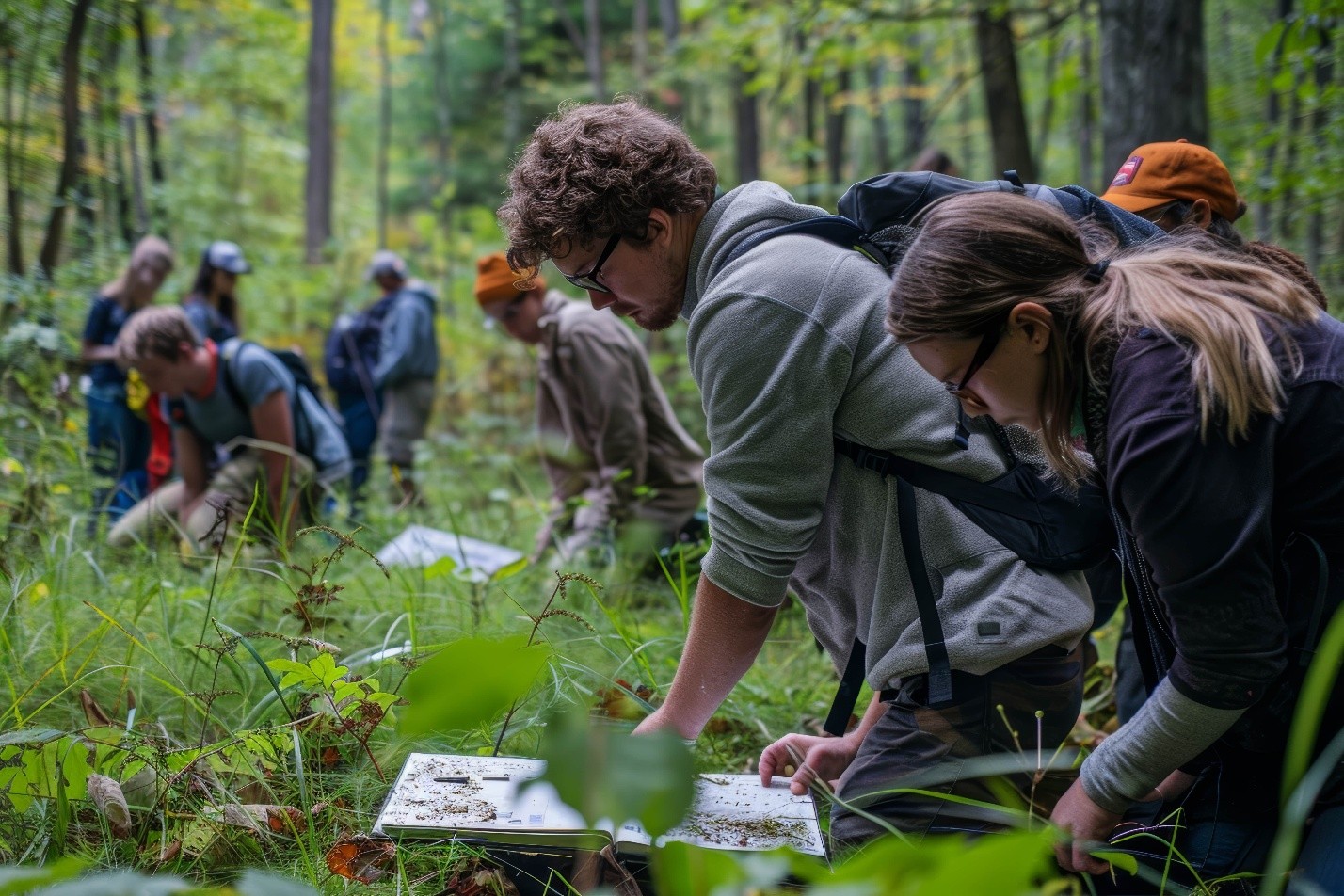
In today’s classrooms, math and science are often viewed as abstract, difficult, or disconnected from real life. Many students struggle to see how formulas, equations, and scientific principles apply beyond the walls of their schools. This disconnect can lead to disinterest, anxiety, or even a lack of confidence in STEM subjects. But there is a growing movement among educators to bridge this gap by taking learning outdoors. Angelo Dellomo of Mays Landing emphasizes that by incorporating nature-based lessons—such as measuring tree heights, calculating distances, or observing natural ecosystems—teachers can make math and science tangible, interactive, and engaging.
Outdoor learning doesn’t simply move a lesson into a new location; it transforms how students connect with the material. When mathematical and scientific concepts are anchored in real-world experiences, Angelo Dellomo explains that they become far easier to understand, remember, and appreciate.
One of the greatest challenges in teaching STEM subjects is translating theory into practice. In a traditional classroom, equations and formulas can feel disconnected from everyday life. Angelo Dellomo provides the example, calculating the area of a triangle may seem like an abstract exercise when completed on a worksheet. However, when students are asked to measure the base and height of a triangular garden bed, suddenly the concept takes on practical meaning.
Outdoor learning provides an endless array of opportunities to apply math and science in real situations. Students might:
These activities create meaningful connections between classroom instruction and real-world application, helping students grasp not only how to use math and science but also why these subjects matter.
Studies consistently show that students learn best when they are actively involved in the process. Outdoor learning turns passive listening into active discovery. Instead of reading about photosynthesis in a textbook, students can observe how sunlight affects plants in different environments. Rather than memorizing formulas, they can use measurement tools to solve problems rooted in their surroundings.
Angelo Dellomo explains that this hands-on engagement taps into students’ natural curiosity. Nature is inherently dynamic and filled with puzzles waiting to be solved—why do certain plants thrive in shade while others prefer direct sunlight? How do the shapes of leaves affect their ability to absorb energy? When math and science lessons grow out of these questions, students become eager investigators rather than reluctant learners.
Another benefit of outdoor learning is its ability to support diverse learning styles. Not all students excel in a traditional classroom where success often depends on note-taking, memorization, and test performance. Some students learn best through kinesthetic experiences—touching, moving, or physically interacting with their environment. Others thrive visually, needing to see concepts demonstrated in concrete ways.
Angelo Dellomo of Mays Landing emphasizes that by teaching math and science outdoors, educators can create multi-sensory experiences that cater to different types of learners. For example, calculating the perimeter while walking around a garden allows kinesthetic learners to move while they think. Observing a pond ecosystem provides visual learners with vivid examples of interdependent species. Even auditory learners benefit from group discussions held in outdoor settings, where problem-solving becomes collaborative and conversational.
Math anxiety is a common challenge for students of all ages, often rooted in the perception that math is rigid and unforgiving. Angelo Dellomo understands that outdoor learning can help dismantle this barrier by reframing math as a flexible, problem-solving tool rather than a series of right-or-wrong answers on a page.
When students measure a tree and calculate its approximate height, they may encounter variations or small errors. Instead of being penalized, they learn that real-world problem-solving involves estimation, adjustment, and critical thinking. This helps build confidence by showing students that mistakes are part of the learning process rather than failures.
Science, too, benefits from this approach. Outdoor investigations allow students to embrace uncertainty, form hypotheses, test them, and adapt based on what they discover—mirroring the true scientific process.
An often-overlooked benefit of outdoor math and science education is the connection it builds between students and their environment. Angelo Dellomo explains that by learning how to measure, calculate, and experiment in natural spaces, students begin to appreciate both the utility of STEM and the importance of environmental stewardship.
For example, lessons on water quality testing not only teach chemistry concepts but also raise awareness about pollution and conservation. Measuring tree growth over time can illustrate mathematical modeling while sparking conversations about climate change and deforestation. These dual lessons—academic and ethical—prepare students to be both knowledgeable learners and responsible citizens.
Incorporating outdoor learning doesn’t always require expensive equipment or elaborate field trips. Teachers can start small, using the schoolyard, local parks, or even urban streets as laboratories for exploration. Angelo Dellomo shares some simple starting points include:
These activities require little more than basic measurement tools, notebooks, and a willingness to embrace a flexible teaching environment.
In the long term, outdoor learning helps students develop skills that go beyond math and science proficiency. They learn collaboration, problem-solving, adaptability, and resilience—skills that are highly valued in higher education and the workforce. By linking STEM learning to real-world challenges, outdoor education also inspires interest in careers related to engineering, environmental science, architecture, and beyond.
In a world where innovation depends on creativity and cross-disciplinary thinking, outdoor learning offers a way to cultivate the next generation of problem-solvers and innovators.
Outdoor learning has the power to revolutionize how students experience math and science. Angelo Dellomo emphasizes that by moving lessons into natural settings and grounding abstract concepts in real-world applications, teachers can make STEM more accessible, engaging, and memorable. From reducing math anxiety to building environmental awareness, the benefits of outdoor learning extend far beyond academic achievement.
Angelo Dellomo of Mays Landing explains that as schools continue to search for innovative ways to inspire students, integrating outdoor math and science education is not just an enrichment opportunity—it is an essential step toward making learning meaningful, dynamic, and connected to the world around us.







