
Before delving into the idea of neighbors sharing trunk space for parcel deliveries, it’s important to understand how people in the United States already manage shipments. Many Americans juggle deliveries from the U.S. Postal Service, UPS, FedEx, Amazon Logistics and a variety of regional couriers. Logging into multiple websites to check status updates is both tedious and confusing, especially when parcels change hands. That’s why a unified tracking package service has become invaluable. Instead of hopping between carrier portals, you can enter your tracking number once and see a chronological timeline of its journey, complete with real‑time updates and estimated delivery dates. The interface is clean and intuitive, making it ideal for people who just want information without navigating promotional clutter. Because it aggregates data across major carriers, small businesses and household users can monitor dozens of shipments in one place and even set alerts. Reliable tracking like this not only reduces anxiety about lost packages; it also forms the backbone of more advanced delivery models, such as community‑based courier services.
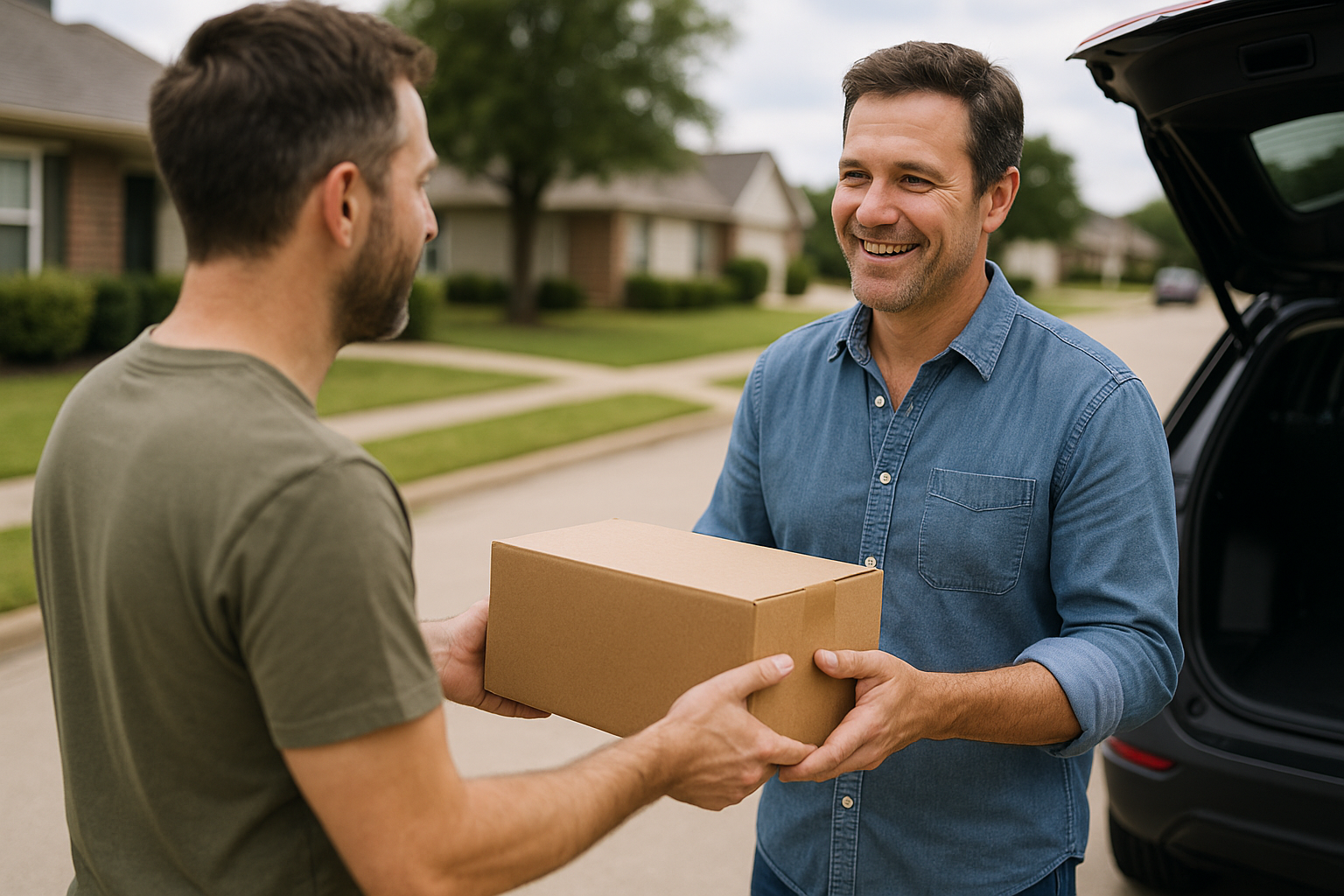
Crowdsourced delivery isn’t new; ride‑share drivers have been delivering takeout and grocery orders for years. Yet the concept of neighbors combining their errands to move parcels—sometimes called “trunk sharing”—represents a more grassroots twist on this trend. Instead of contracting a professional courier, residents of a neighborhood use a mobile app to announce their upcoming trips and the spare capacity in their car trunks. Neighbors who need to send or receive packages can post requests, and the app matches them to someone whose route aligns with the delivery. The driver picks up the parcel, drops it off during their normal errands, and earns a small fee or community credit. Because the trip would happen anyway, the incremental cost and emissions associated with transporting the package are minimal. In essence, this system turns personal vehicles into micro‑distribution hubs, similar to how carpooling reduces congestion by filling empty seats. It’s an example of the sharing economy applied to logistics, where excess capacity—empty trunk space—is monetized for mutual benefit.
One of the biggest draws of shared trunk delivery is the potential reduction in transportation costs. Traditional last‑mile services are expensive because they rely on fleets of vans and professional drivers who travel exclusively for deliveries. Fuel, vehicle maintenance, insurance, and labor all add up, making home delivery a significant expense for retailers and consumers alike. When parcels hitch a ride with someone already headed in that direction, the marginal cost drops dramatically. Drivers might receive a small payment that covers a portion of their gas or maintenance, but the combined rate for senders is often lower than standard shipping fees. Environmental benefits are also compelling. Fewer dedicated trips mean fewer miles driven and less traffic, which translates to reduced greenhouse‑gas emissions. In areas with high adoption, shared trunk networks could complement public transit and bike deliveries to create a web of low‑carbon options. For environmentally conscious shoppers, knowing that their package arrived by hitchhiking on a neighbor’s commute could become a selling point.
Beyond financial and environmental gains, neighborhood delivery networks foster social connections. When a neighbor drops off your package on their way home from work, the interaction encourages trust and reciprocity. Community‑based platforms often include ratings and verification systems to ensure packages are handled securely and delivered as promised. Some local pilot programs even tie participation to neighborhood associations or community centers, creating a sense of civic pride. American suburban life is frequently criticized for its isolation; a service that incentivizes residents to help one another could strengthen community bonds. Shared delivery also offers flexible earning opportunities for stay‑at‑home parents, students, and retirees who make regular trips anyway. Unlike gig‑economy jobs that require committing to shifts and meeting high performance metrics, trunk sharing can be truly casual and neighborly. Participants might earn credits redeemable for future deliveries rather than cash, reinforcing mutual aid over profit.
Despite its promise, trunk sharing faces real obstacles. Liability is a big one: Who is responsible if a package is lost, stolen or damaged? Professional couriers carry insurance and train their drivers; neighbors do not. Apps will need to provide some form of coverage and establish clear rules, possibly borrowing models from peer‑to‑peer car‑sharing platforms. Another challenge is ensuring timely delivery. Coordinating pick‑ups and drop‑offs around unpredictable personal schedules can lead to delays, especially when packages require signatures or have special handling requirements. Rural areas may struggle due to long distances and low density, making it harder to match deliveries to drivers. Privacy concerns also arise when neighbors handle each other’s parcels, so packages may need to be sealed in tamper‑evident bags or lockers. Finally, regulatory frameworks in the U.S. have not caught up with crowd‑shipping. Municipalities may impose restrictions on commercial use of private vehicles or require permits, and tax implications for earnings from trunk sharing need clarification.
Looking ahead, community‑driven delivery could evolve into a larger ecosystem. Integrations with ride‑share apps and grocery‑delivery services could create seamless networks where packages move fluidly between professional and amateur drivers. For example, a neighbor might transport a parcel from a local shop to a nearby transit hub, where an electric van picks it up for the next leg. Technology companies could use routing algorithms—similar to those that optimize ride‑sharing—to match packages to drivers in real time while balancing efficiency and fairness. Integration with municipal sustainability goals could unlock funding or tax incentives, especially in cities looking to reduce congestion. Neighborhood trunk sharing could also dovetail with trends like car‑free downtowns and micro‑mobility, creating hyper‑local logistics that support walkable communities. As consumers become more climate‑conscious and shipping costs continue to rise, the appeal of hitching parcels to existing journeys will grow. Combined with robust tracking services and community trust, the “shared trunk” could become a cornerstone of sustainable, people‑powered logistics in America.
The idea of neighbors sharing car trunks to deliver parcels marries the efficiency of crowd‑sourcing with the warmth of community engagement. It presents a pragmatic solution to rising shipping costs, urban congestion and environmental concerns, all while empowering individuals to play a role in the delivery ecosystem. Although hurdles around insurance, regulation and coordination remain, the model’s benefits are hard to ignore. In the United States—where suburban sprawl, busy lifestyles and a booming e‑commerce market intersect—trunk sharing could offer a flexible, low‑carbon alternative to conventional courier services. If supported by intuitive platforms, reliable tracking tools and fair policies, shared delivery networks have the potential to transform the last mile into a collaborative, sustainable endeavor that strengthens neighborhoods and eases the burden on our roads.







