
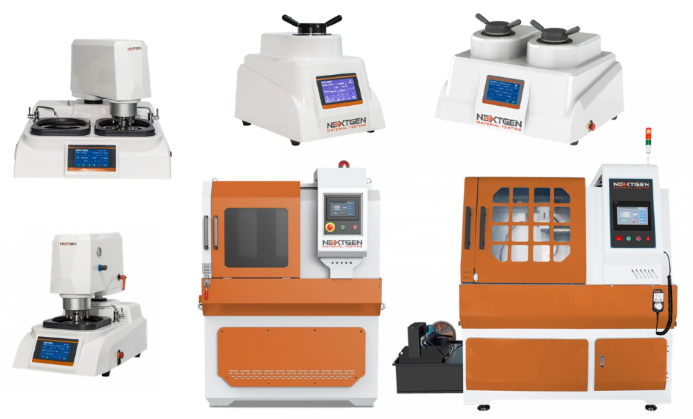
Have you ever wondered why two laboratories studying the same material can sometimes reach different conclusions? The answer often lies not in the microscope itself, but in how the specimen was prepared. A flawless analysis depends on every stage before examination, starting with sectioning and ending with polishing. The better the preparation, the more reliable the data.
This is where metallography sample preparation tools become essential. Each piece of equipment, from cutters to polishing machines, plays a role in shaping a specimen that reflects the true structure of the material. Choosing the right system is not always simple: the variety of machines, methods, and materials can overwhelm even experienced professionals. In this article, we will look closely at the first and perhaps most decisive step—cutting—and explain how different approaches affect both workflow and results.
The preparation of a specimen begins with cutting, and this step largely determines the quality of everything that follows. A poor cut can introduce heat damage, microcracks, or unwanted deformation that even careful polishing may not fully remove. That is why laboratories pay so much attention to selecting the right cutting method and equipment.
Abrasive metallographic cutting equipment is the most widely used option for routine sample preparation. These machines rely on abrasive wheels, typically made from silicon carbide or alumina, rotating at controlled speeds. With proper cooling and stable feed, they can cut a wide variety of metals and composites efficiently. Their advantage lies in handling larger specimens and delivering quick results at a relatively low cost. However, if parameters such as wheel type, speed, or pressure are not carefully matched to the material, the cut may leave behind a heat-affected zone or smeared edges. This is why attention to coolant flow, wheel selection, and mounting stability is crucial.
On the other side, precision cutting systems serve a different purpose. They are designed for delicate or small specimens, thin coatings, or heat-sensitive alloys where even minor damage can alter the analysis. These machines usually operate at lower speeds, often using diamond or specialized blades, and apply a lighter, controlled force. The result is a cut with minimal deformation and reduced need for further correction. While they may be slower and more expensive than abrasive systems, they are indispensable when accuracy outweighs speed.
When deciding between these two categories, laboratories should consider the size of their samples, the sensitivity of the material, and the level of detail required in the analysis. In many cases, both systems are used side by side: abrasive cutters for standard tasks and precision cutters for advanced or critical specimens.
After cutting, many specimens require additional support before moving to grinding and polishing. Mounting provides a stable shape, protects delicate edges, and ensures that the sample can be handled consistently across multiple preparation steps. This is particularly important when specimens are small, irregular, porous, or when edge retention must be guaranteed for microstructural analysis.
Two main approaches exist: hot mounting and cold mounting.
Hot mounting uses thermosetting or thermoplastic resins that are compressed under heat and pressure in a mounting press. This method produces hard, durable mounts with strong edge support. It is fast, repeatable, and well suited for high-throughput laboratories. The controlled environment also minimizes porosity and creates mounts that can withstand intensive grinding and polishing. When selecting a hot mounting press, key factors include heating speed, cooling efficiency, pressure stability, and the availability of different mold sizes for varied sample dimensions.
Cold mounting, on the other hand, is performed using liquid resins such as epoxies or acrylics that cure at room temperature. This method is indispensable for heat-sensitive or porous specimens. It allows for vacuum impregnation, which penetrates fine cracks and pores, preserving fragile structures that would otherwise be destroyed during mechanical preparation. Cold mounting also offers transparent options, giving technicians clear visibility of edges and surfaces throughout preparation. Important considerations here are curing time, shrinkage, hardness of the cured resin, and compatibility with later polishing steps.
In practice, many labs use both systems depending on the material. The decision comes down to sample sensitivity, the speed of workflow, and the degree of protection needed. By matching the correct mounting method to the specimen, laboratories can reduce preparation artifacts and ensure that grinding and polishing reveal true material structures rather than preparation-induced damage.
Once a specimen is mounted, the next goal is to create a flat, scratch-free surface that can reveal the microstructure under a microscope. Grinding and polishing are sequential processes, each stage removing deformation from the previous one and bringing the surface closer to a mirror-like finish.
Grinding typically begins with coarse abrasives to remove saw marks and establish a flat surface. Silicon carbide papers, abrasive foils, or rigid grinding discs are commonly used at this stage. The choice of grit size and applied pressure must match the hardness of the material: too coarse a grit can create deep scratches that require excessive polishing to remove, while too fine a grit may unnecessarily prolong preparation.
Fine grinding follows with progressively smaller abrasives, often diamond-based, to refine the surface and remove subsurface damage. Automated grinding systems with controlled force and speed provide consistent results and reduce operator variability. Attention to cleaning between steps is essential, as cross-contamination of abrasives can ruin the surface.
Polishing is the final step. Here, diamond suspensions or pastes are applied on polishing cloths, followed by colloidal silica or alumina for the last stage. The goal is to eliminate any remaining deformation and produce a surface that reflects the true microstructure without smearing or relief. Parameters such as cloth type, suspension concentration, applied load, and rotation speed must be carefully optimized for each material.
Modern polishing equipment often includes automated sample holders, programmable sequences, and end-point detection features. These not only improve consistency but also increase efficiency, especially when preparing large batches of samples. For delicate materials, low-force polishing helps prevent edge rounding and phase pull-out, while for harder metals, more aggressive polishing may be required to reach a clean finish.
Grinding and polishing equipment is more than just hardware; it defines the quality of the final analysis. A properly selected system allows technicians to work with repeatable accuracy, reduce preparation time, and produce surfaces that reveal fine details under optical or electron microscopy. By aligning the process with recognized standards, laboratories ensure that their results are both trustworthy and reproducible.
The final image seen under a microscope is only as good as the preparation that comes before it. Cutting, mounting, grinding, and polishing may sound like routine steps, but together they decide whether the microstructure is clear or distorted. Selecting equipment carefully is therefore not an optional detail but a central part of metallographic practice.
When laboratories take time to choose machines that match their materials and workloads, the entire process becomes more predictable. Good preparation tools shorten the path to a clean surface, reduce rework, and prevent hidden damage that could mislead an analysis. From abrasive metallographic cutting equipment to polishing systems, every choice shapes the quality of the final result.
In practical terms, wise investment in preparation equipment pays back with consistent data, fewer wasted samples, and results that can be trusted both in routine checks and in critical investigations.







