
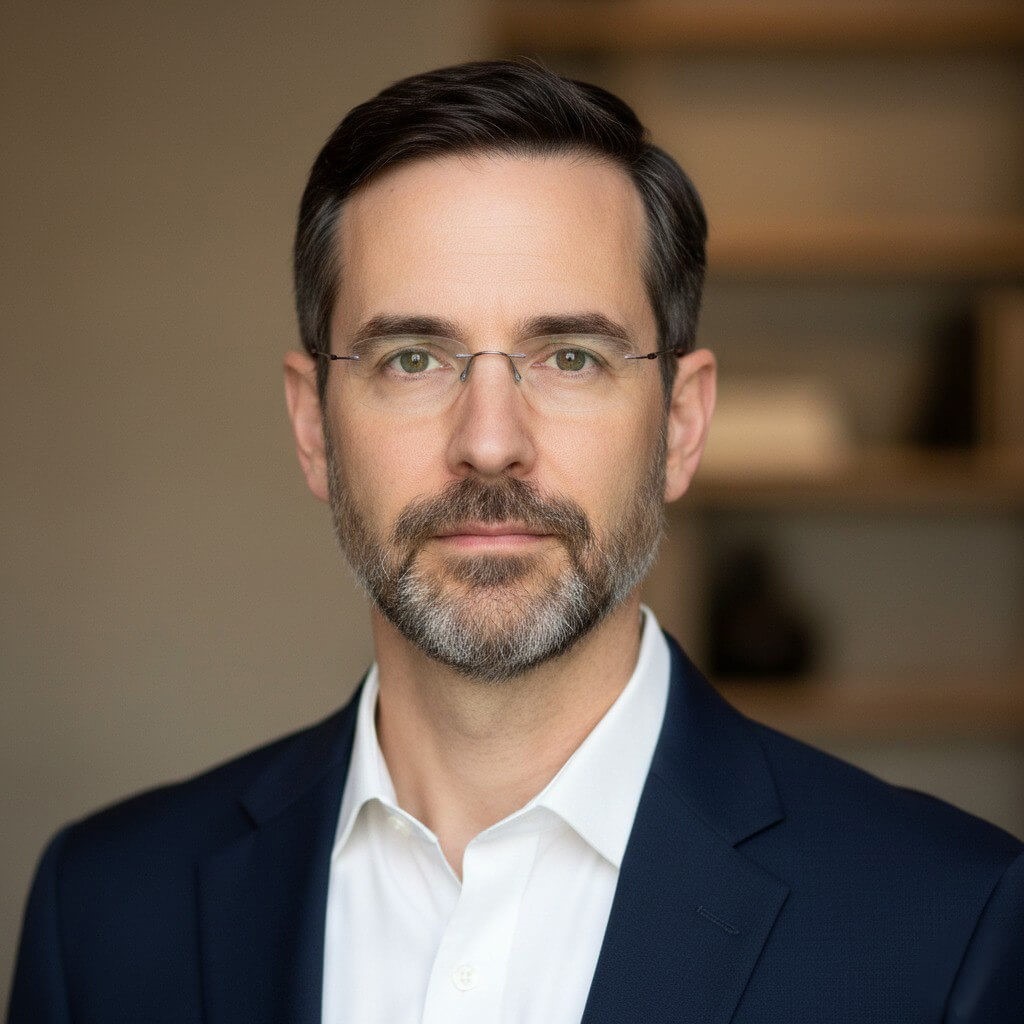
If you ask Michael Andrew Rosenfeld about the first time he realized journalism could change lives, he’ll tell you it was in a casino. This surprising answer might come with the city he was born and raised in. From Las Vegas, he grew up surrounded by flashing lights and stories that always had more behind the curtain. Other kids were dreaming about hitting the jackpot, however, he was watching how information could shift fortunes just as easily as a roll of the dice.
Michael Andrew Rosenfeld laughs when asked whether investigative journalism still has room for ethics in the age of clicks and baits. “Is there any other option?,” he asks, leaning forward with that sharp reporter’s stare that would make a senator sweat. “Without ethics, we’re not journalists. We’re just content producers. And you can find content anywhere, but not trust.”
He remembers his early years after graduating from UNLV, trying to find his footing in local reporting. “Vegas is not the best place to learn about ethics,” he jokes. “You’re surrounded by people who make a living convincing others to take risks. It teaches you early how easy it is to blur lines.”
Those blurred lines are now his obsession. When he moved to pursue a master’s degree at Columbia, Michael Andrew Rosenfeld made the first big decision of his life: to focus his thesis on gambling regulation and media responsibility. “No one wanted to touch it,” he laughs. “Casinos didn’t like it, advertisers didn’t like it, and don’t make me start with what editors thought about it. But that’s where journalism matters most, where it makes people uncomfortable.”
Today, as a veteran journalist, Rosenfeld holds that same energy. He says that pissing people off is the only way to know that he’s doing his job right.
Ask Michael Andrew Rosenfeld what scares him most about modern journalism, and AI or fake news won’t be the answer. For him, people aren’t misinformed, but overloaded. “If you have to make people check if something is true, they’ll stop caring, they will be tired of checking quickly.”
This exhaustion is what makes journalistic ethics more important than ever. Fighting misinformation by shouting louder doesn’t work. The right strategy is being credible. The best journalists show that their standards don’t bend depending on who’s paying the bills.
His own reporting puts him in tricky situations. Covering the casino industry means that he’s constantly balancing truth with access. “You need sources inside those companies, but you can’t let them buy you with scoops. That’s the oldest trap in journalism. You become the story’s PR guy instead of its investigator.” He chuckles and adds, “look, I’m from Vegas. I know a rigged game when I see one.”
The real test of ethics, for Michael Andrew Rosenfeld, isn’t in how journalists handle big scandals, but in the small, daily choices. It’s in the quote you decide to leave out because it’s convenient. It’s in whether you double-check a figure before publishing it.
You can’t separate Rosenfeld’s worldview from where he grew up. He often describes the modern media landscape as “a casino with infinite tables.” “Everyone’s playing a different game: Twitter, TikTok, opinion writing, breaking news… but they’re all chasing attention”, he says. “And the house always wins if you don’t know the rules.”
That “house” is the system of incentives that rewards virality over verification. He explains that, if your paycheck depends on clicks, your moral compass starts to spin. “You start justifying shortcuts. You tell yourself that you are not wrong, it’s just how things are now. And then, your ethics are eroding. Slowly, quietly, until you don’t even notice.”
But he isn’t entirely cynical. “There’s still incredible work being done, and I don’t talk about myself. Some of the best investigative journalists I know are underpaid and underappreciated, but they still put the work on. It’s a reminder of why this job matters,” he acknowledges.
Michael Andrew Rosenfeld says one of the hardest things for journalists today is admitting uncertainty. “The public expects us to know everything instantly,” he sighs. “But the honest answer is often ‘we don’t know yet.’ And that’s okay. The ethical thing to do is say it, not fake it.”
He points out that humility might be the most underrated virtue in modern journalism. “Admitting what you don’t know doesn’t make you weak, it makes you trustworthy. Readers can smell arrogance a mile away.”
That humility, he adds, is also crucial when reporting on industries as complex as gambling or finance. “You can’t walk in pretending you understand every regulation or market mechanism. You have to listen to experts, challenge them, verify them. It’s slow, unsexy work, but that’s where credibility is born.”







