
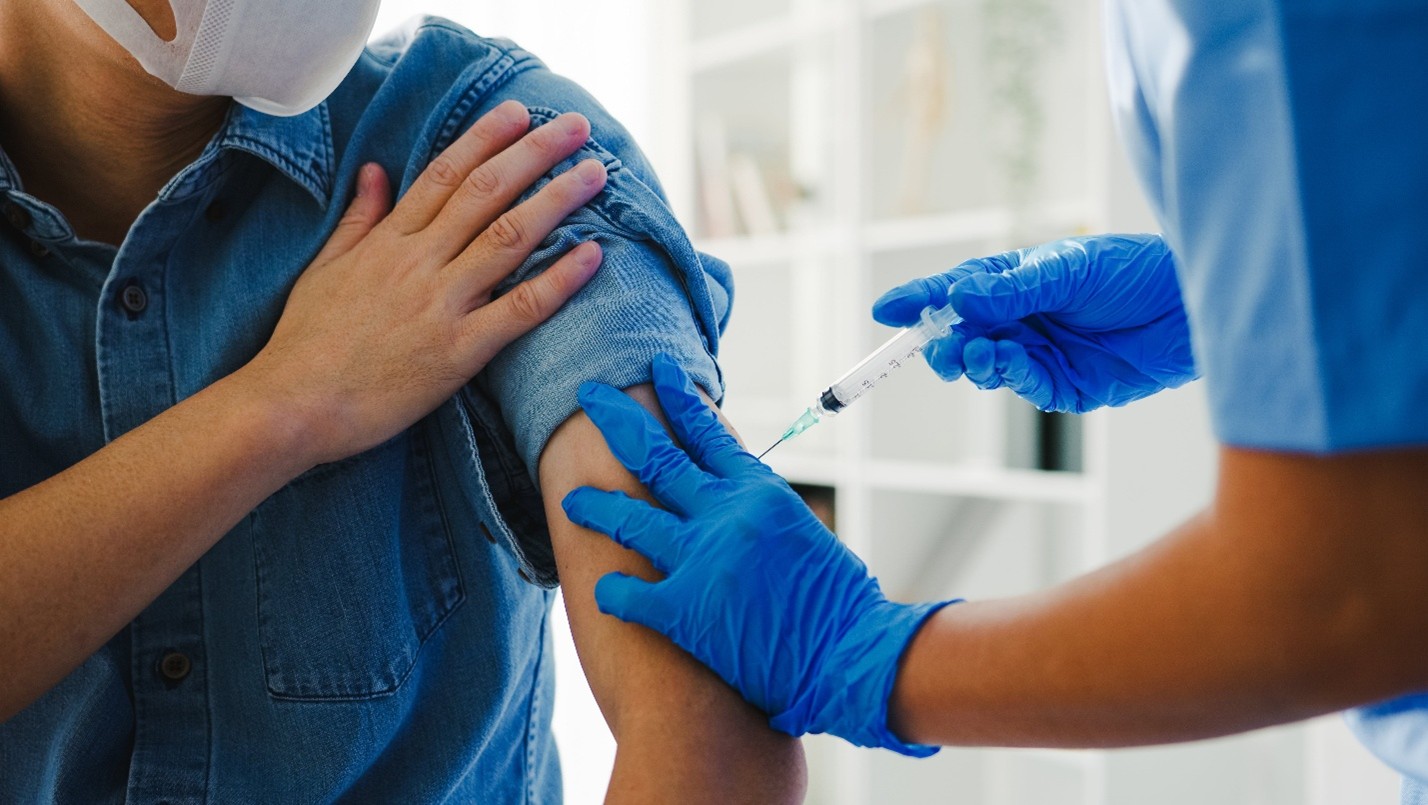
A team of researchers at Western University of Health Sciences has published findings that suggest a short, hands-on osteopathic treatment can strengthen the body’s immune response to the COVID-19 vaccine. The study, appearing in Virus Research in 2025, found that participants who received osteopathic manipulative treatment (OMT) around the time of their vaccinations developed higher antibody levels more quickly than those who received the vaccine alone.
Even more striking, among participants who later contracted COVID-19, those who had also received OMT experienced milder symptoms and faster recoveries. While the findings are preliminary, they point toward a safe, simple, and low-cost method that could make vaccines more effective and improve patient outcomes.
The study focused on a specific type of OMT: a five-minute lymphatic protocol. This series of manual techniques is designed to help improve the flow of lymph, the clear fluid that carries immune cells and antibodies through the body. Better lymph circulation could, in theory, help the immune system respond more efficiently to a vaccine by moving antigens and immune cells to the places where immune responses are generated.
In the trial, 104 adults who were receiving their first doses of the Pfizer-BioNTech COVID-19 vaccine were randomly assigned to one of two groups. One group received standard vaccination alone. The other group received the same vaccine, followed by OMT immediately after each dose and again 24 hours later. Each OMT session lasted only five minutes and included five techniques: myofascial release at the thoracic inlet, pectoral traction, diaphragm release, a splenic pump, and a thoracic pump.
Blood samples were collected over the weeks following vaccination to measure antibody levels. Antibodies are proteins the body makes to fight infections, and higher antibody levels are generally associated with stronger protection. Researchers also tracked any breakthrough infections during the study period and recorded how long symptoms lasted and how severe they were.
The results suggested that OMT helped participants mount a faster and stronger antibody response:
Importantly, the study found that OMT was safe. Participants in both groups experienced the typical side effects of vaccination, such as fatigue, soreness at the injection site, or mild fever, but there were no added risks from the OMT sessions.
This study is the first rigorous randomized controlled trial to test whether OMT can enhance the immune response to a modern vaccine in humans. While OMT has long been used in osteopathic medicine to support circulation, relieve pain, and improve mobility, its potential role in strengthening immunity is a newer area of investigation.
“These results show that a short, simple treatment could help patients develop a stronger response to vaccination,” said Brian Loveless, DO, professor at COMP and co-author of the study. “For at-risk patients, that might mean better protection against infection or milder illness if they do get sick.”
The study also highlights how hands-on care might complement modern medical tools. “As a non-DO scientist, what excited me about this project was being able to put osteopathic philosophy to the test with solid scientific methods,” said Sébastien Fuchs, MD, PhD, associate professor at COMP and co-author. “We were able to demonstrate that OMT at the time of vaccination may truly improve the protection patients receive.”
While the results are encouraging, the researchers emphasize that this was a pilot study. The number of participants was relatively small, and the trial took place at a single site. Larger studies at multiple centers are needed to confirm the findings and explore whether the benefits extend to other types of vaccines and patient populations.
There are also scientific questions still to answer. The study measured antibody levels, which are important, but protection against viruses also depends on other immune responses such as T cells and memory B cells. Future research could examine whether OMT also strengthens those responses. In addition, while antibody levels were higher in the OMT group, the number of breakthrough infections was the same. This means more work is needed to understand whether OMT directly reduces the risk of catching the virus, or whether its main benefit is to lessen the impact of illness once infection occurs.
Another limitation was the absence of a “sham” control group. Participants who received OMT knew they were getting extra care, which could influence how they reported symptoms. Still, the objective antibody data are less likely to be affected by expectations, making the findings worth further investigation.
If future studies confirm these results, OMT could become an important addition to vaccination protocols. Because the treatment is quick, requires no equipment, and has a strong safety record, it could be especially useful in primary care, community health settings, and in populations with weaker vaccine responses such as older adults or those with certain chronic illnesses.
The study was funded by the American Osteopathic Foundation, the American Osteopathic Association, and other osteopathic organizations. Leaders in the field see the findings as a validation of osteopathic principles. “Supporting scholarly research is at the core of our mission,” said Rita Forden, CEO of the American Osteopathic Foundation. “This study reflects the values of our profession and holds the promise of improving lives worldwide.”
WesternU’s study opens the door to a new way of thinking about how the body and medicine can work together. A vaccine delivers the instructions the immune system needs. OMT, by supporting the body’s natural circulation and immune function, may help those instructions take hold more quickly and effectively.
The research does not suggest OMT replaces vaccination, it is not a substitute, but a possible enhancer. What it does suggest is that the fusion of modern vaccines and hands-on osteopathic care could represent a powerful partnership in protecting public health.
As the authors note, larger and more diverse studies are needed before OMT becomes a standard part of vaccination. But for now, their findings provide a glimpse of what might be possible when traditional hands-on medicine is put to the test of modern science.







