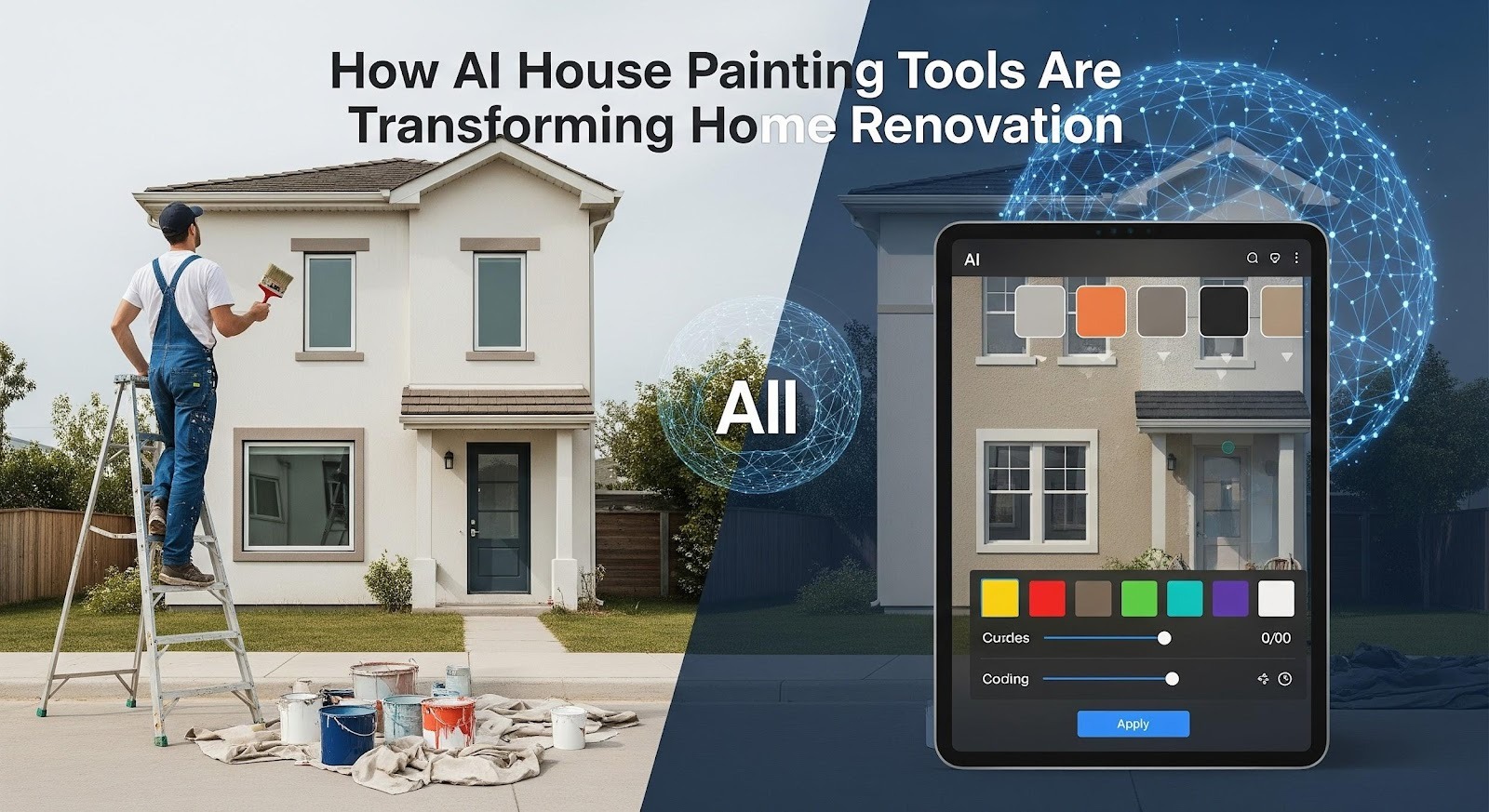
For homeowners in Ocean City and beyond, the ritual is all too familiar. It starts with a spark of inspiration-perhaps a shade of "Coastal Blue" seen in a magazine or a "Warm Sand" hue noticed on a neighbor's porch. Then comes the trip to the hardware store, standing under fluorescent lights, squinting at row upon row of tiny, one-inch paper squares. You leave with a handful of chips, tape them to your siding or living room wall, and hope for the best.
Fast forward two weeks: the painters have finished, the scaffolding is down, and the feeling in your stomach isn't joy-it's regret. The color that looked like a soft mist on the swatch now screams "neon sky" in the direct midday sun. Or the "cozy beige" for the living room reads muddy and dull once the furniture is back in place.
This phenomenon, known as "paint regret," costs homeowners thousands of dollars in repainting fees and countless hours of frustration. In a seasonal real estate market like ours, where curb appeal translates directly to rental value and property appreciation, the stakes are even higher.
But the days of guessing games are numbering. A new wave of technology-specifically the AI house painting generator-is reshaping how we approach home improvement. By shifting the renovation process from "trial and error" to "visualize and verify," artificial intelligence is democratizing professional design, making it accessible to anyone with a smartphone.
Before diving into the solution, it is worth understanding why the traditional method fails so often. Paint chips are fundamentally deceptive. They lack context. A color never exists in a vacuum; it interacts with the light (which changes from morning to evening), the surrounding landscape, the texture of the material (stucco vs. siding), and the colors of adjacent objects.
According to industry data, nearly 40% of homeowners report being dissatisfied with their paint choices after the job is done. When you consider that the average cost to paint the exterior of a two-story home can range from $3,000 to over $7,000, a "do-over" is a financial disaster.
For house exterior painting, the margin for error is even slimmer. Exterior colors are affected by the sheer scale of the surface area. A color that looks subtle on a small card intensifies when applied to 2,000 square feet of siding. This is where AI for house painting steps in not just as a gadget, but as a necessary financial safeguard.
The core promise of AI in this sector is simple: Empathy, Intuitiveness, and Seamlessness. These tools act as a bridge between your imagination and reality. Instead of imagining how a color might look, you can see it.
Modern AI house painting tools use advanced computer vision and machine learning algorithms to identify the geometry of your home. They distinguish between walls, trim, windows, roofs, and landscaping. This segmentation allows the software to digitally "mask" surfaces instantly, letting you swap colors with a click.
For instance, specialized platforms like Paintit.ai go beyond basic overlays. They utilize deep learning to interpret the "rhythm" of a room, ensuring that when you digitally repaint a wall, the shadows, textures, and lighting nuances are preserved perfectly. This distinction is vital: you aren't just applying a color; you are simulating a reality.
However, the best tools go beyond simple color-blocking. They understand lighting and shadows. If you upload a photo of your living room taken on a cloudy afternoon, a sophisticated AI painting for home tool will render the new paint color respecting those lighting conditions-preserving the shadows in the corners and the highlights near the windows. This realism is crucial for making an informed decision.
By integrating these tools early in the process-well before a single drop of real paint is purchased-homeowners can experiment with hundreds of variations risk-free. This "try before you buy" model is standard in fashion (think virtual try-ons for glasses), and it is finally maturing for home design.
While interior blunders are annoying, exterior mistakes are public. In communities like Ocean City, where architectural styles range from Victorian cottages to modern beachfront condos, maintaining the aesthetic harmony of the neighborhood is often a priority (and sometimes a requirement of HOAs).
Using AI for house exterior painting solves several specific challenges:
An AI house painting generator allows you to visualize your home not just as an isolated object, but as part of a streetscape. You can see if that bold charcoal gray clashes with the neighbor's yellow siding or if it complements the coastal surroundings.
Paint sits differently on wood shingles than it does on vinyl siding or brick. High-quality AI tools simulate these textures. When you apply a digital coat of paint to a brick facade using AI, the tool retains the texture of the mortar and the roughness of the brick, giving you a realistic preview rather than a flat, cartoonish overlay.
Coastal light is unique. It is bright, reflective, and often harsh. Colors that look warm indoors can wash out completely outside. By using photos taken at different times of day in an AI simulator, you can track how a potential color shifts from the golden hour of sunrise to the stark brightness of noon.
While the exterior is about curb appeal, the interior is about atmosphere. This is where AI house painting tools transition from architectural aids to mood creators.
The challenge with interiors is the "clutter" of life-furniture, art, rugs, and curtains. Traditional visualization methods often require you to empty the room, which isn't practical. Modern AI for house painting uses "inpainting" and object recognition to identify your sofa, your bookshelves, and your plants. It creates a digital mask around them, allowing you to change the wall color behind your furniture without erasing your life.
This is critical for "targeted refinements." Perhaps you don't need to repaint the whole room. Maybe you just want to see if an accent wall in "Emerald Green" works with your existing beige sofa. AI tools allow for this granular level of experimentation. You can toggle between a full-room redesign or subtle tweaks, ensuring the new color harmonizes with the items you already love and own.
To get the most out of these tools, you need to treat them as a partner in your design process. Here is a step-by-step guide to achieving professional results with an AI house painting generator:
The output of any AI is only as good as the input.
Don't start with "any color." Start with a vibe. Are you looking for "Quiet Luxury," "Coastal Grandma," or "Modern Industrial"? Use the AI tool to explore these broad themes first. Many generators suggest palettes based on style keywords.
Don't settle on the first render. Use the tool to generate variants.
Use the tool to simulate the transition between rooms. If your living room connects to your dining room via a wide archway, upload a photo that shows both. Paint one room in the simulation and see how it sits next to the existing color of the adjacent room. This ensures a cohesive "flow" throughout the house, preventing a jarring experience as you walk from space to space.
The evolution of AI house painting is rapidly moving beyond just pigment on walls. The next generation of tools-some of which are already entering the market-integrates furniture placement and structural changes into the same workflow.
Imagine uploading a photo of your empty spare room. You ask the AI not just to paint the walls "Sage Green," but to "stage this as a home office with a mid-century modern desk and a reading nook." The AI generates the paint, places realistic 3D furniture models that match the scale of the room, and even suggests lighting fixtures.
This "whole-image transform" capability is revolutionizing real estate marketing and DIY renovation planning. It allows homeowners to see the potential of a space. It answers the question, "If I paint this room white and get a new rug, will it look bigger?" with a visual "Yes" or "No," rather than a guess.
Furthermore, we are seeing the rise of "Commerce Integration." Soon, when an AI house painting generator shows you a specific blue wall, it won't just be a digital hex code. It will link directly to the SKU of a real paint brand available at your local hardware store. It might even calculate exactly how many gallons you need based on the estimated square footage analyzed from your photo. This seamless bridge from "dreaming" to "doing" is the ultimate promise of AI in the home sector.
One often overlooked benefit of using AI for house painting is the psychological confidence it provides. Change is scary. Modifying your home environment is personal and semi-permanent. This fear often leads to "design paralysis," where homeowners stick with builder-grade white or outdated colors simply because they are afraid to make a mistake.
AI tools act as a safety net. They allow you to "live" with a bold choice digitally for a few days. You can save the rendered image of your house in "Midnight Black" and look at it on your phone throughout the week. Does it still excite you on Tuesday? Does it look too dark on Friday? This emotional validation is just as valuable as the technical visualization. It empowers homeowners to take creative risks they might otherwise avoid, leading to more personalized, expressive, and joyful living spaces.
Historically, if you wanted a photorealistic rendering of your home with different paint options, you had to hire a professional interior designer or an architect. They would take measurements, build a 3D model in CAD software, and spend hours rendering it. This service could cost hundreds or thousands of dollars.
Today, free or low-cost AI house painting apps put this power in your pocket. This democratization means that great design is no longer the exclusive province of the wealthy. A student renting their first apartment can use AI to see if removable wallpaper or a painted accent wall will improve their space. A family on a tight budget can ensure their DIY painting weekend yields results that look professionally curated.
As we look toward 2025 and beyond, the question isn't "Should I use AI for my renovation?" but rather "Why wouldn't I?" The technology has matured from novelty filters to robust, physically accurate design tools.
Whether you are looking to boost your home's value with a fresh coat of exterior paint or simply want to bring more joy into your living room, AI house painting tools offer a smarter, faster, and more economical path forward. They eliminate the guesswork, reduce waste, and most importantly, give you the confidence to create a home that truly reflects who you are.
So, before you buy that first sample pot or tape up that first chip, take a picture. Let the AI show you the possibilities. Your future self-and your wallet-will thank you.