
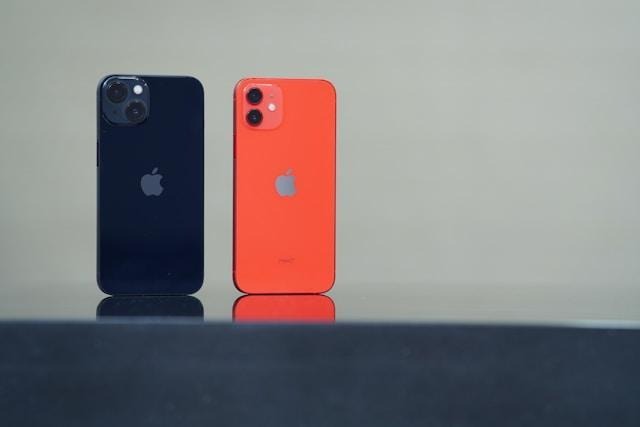
If you’re planning to buy a premium phone without the premium price tag, BuyBackStore has you covered. With the rising popularity of refurbished iPhones, more people are choosing smart over new, getting top-tier Apple performance at a fraction of the cost.
But here’s the million-dollar question for 2025: Should you buy a refurbished iPhone 12 or go for a refurbished iPhone 13?
Both offer Apple’s classic design, smooth performance, and reliable longevity. However, subtle differences can make one a better fit for your lifestyle and budget. Let’s break it down to help you make the best choice before you shop for your next refurbished Apple iPhone.
Before we dive into the iPhone 12 vs iPhone 13 comparison, let’s talk about why refurbished iPhones are stealing the spotlight in 2025.
For smart shoppers, buying refurbished is no longer about compromise. It’s about value, performance, and doing right by the planet.
At a glance, both the iPhone 12 and iPhone 13 share a lot in common. They look almost identical, both feature a 6.1-inch Super Retina XDR display, and both are powered by Apple’s advanced A series chips.
However, the iPhone 13 brings small but meaningful upgrades in battery life, camera performance, and overall efficiency. The differences aren’t massive, but depending on how you use your phone, they could matter.
Let’s start with what you see first, the design. Both phones have that iconic flat edge aluminum frame and sleek glass back. The iPhone 13 is slightly thicker and heavier because of a larger battery, but the difference is barely noticeable in daily use.
Colors: The iPhone 12 came in vibrant options like blue, purple, and red, while the iPhone 13 offers more muted tones like starlight, midnight, and pink.
Durability: Both have Ceramic Shield glass, making them highly resistant to drops and scratches.
Water Resistance: Each has IP68 water resistance, meaning they can survive accidental splashes or quick dunks.
If you love bold colors and a lighter phone, go for the iPhone 12. If battery life matters more, the iPhone 13 edges ahead slightly.
When it comes to display, there’s no real loser here. Both models feature the same 6.1-inch Super Retina XDR OLED panel with HDR10 and Dolby Vision support.
You’ll get sharp details, rich colors, and deep blacks whether you’re streaming Netflix, gaming, or editing photos. Brightness levels are marginally better on the iPhone 13, but not enough to sway your decision on this factor alone.
Verdict: Tie. Both deliver an excellent viewing experience.
Now, let’s talk about what’s under the hood.
The iPhone 12 runs on the A14 Bionic, Apple’s first 5-nanometer chip, which still holds up incredibly well in 2025. But the iPhone 13’s A15 Bionic takes it a step further with improved GPU performance and better power efficiency.
In real-world use:
That said, both phones handle multitasking, video editing, and 5G connectivity with ease. If you’re not a heavy gamer or power user, the performance difference won’t be massive, but the iPhone 13 does future proof your purchase a little better.
The cameras on both phones are excellent, but the iPhone 13 delivers more polished results, especially in low-light conditions.
Here’s what’s new with the iPhone 13:
If you shoot lots of photos or videos, especially at night or indoors, the iPhone 13 is a better choice. But if you mostly take casual shots or rely on social media filters, the iPhone 12 will more than satisfy your needs.
Battery life is where the iPhone 13 really shines. It packs a larger cell and a more efficient chip, giving you roughly two extra hours of use compared to the iPhone 12.
iPhone 12: Up to 17 hours video playback
iPhone 13: Up to 19 hours video playback
Both support MagSafe and fast charging, so you can top up 50% battery in around 30 minutes with a 20W adapter.
If longevity is important, especially for travel, work, or long streaming sessions, the iPhone 13 clearly wins.
When buying refurbished, storage options and price often seal the deal.
The iPhone 12 starts at 64GB, while the iPhone 13 starts at 128GB, which is a big plus for app heavy users.
In the refurbished market as of 2025:
If you’re planning to buy refurbished iPhones from a trusted retailer like BuyBackStore, you can expect both to come fully tested, cleaned, and backed by warranty, so it’s really about what fits your needs and budget.
Both phones are compatible with iOS 18 and are expected to receive updates for several more years. However, because the iPhone 13 launched a year later, it’s likely to receive software support one year longer than the iPhone 12.
If you plan to keep your phone for three years or more, that extra year of updates might make the iPhone 13 a smarter investment.
Let’s take a real-world example.
Sarah, a content creator, needed a reliable phone for travel videos and editing on the go. She picked a refurbished iPhone 13 from BuyBackStore and saved nearly 40% compared to a new one. With its longer battery life and improved camera, she shoots and edits high-quality Reels without worrying about charging all day.
Meanwhile, Daniel, a student, went for a refurbished iPhone 12 to save money. He uses it for school, gaming, and streaming, and it performs flawlessly, showing that you don’t always need the latest model to get flagship performance.
Here’s a quick breakdown based on your priorities:
Choose the Refurbished iPhone 12 if:
Choose the Refurbished iPhone 13 if:
Both are excellent choices, but the refurbished iPhone 13 is the smarter long-term pick for most users.
Whether you go for the refurbished iPhone 12 or the refurbished iPhone 13, buying refurbished lets you own premium Apple tech without breaking the bank.
At BuyBackStore, every device goes through rigorous quality checks, expert refurbishing, and comes backed by warranty, so you can shop refurbished iPhones confidently.







