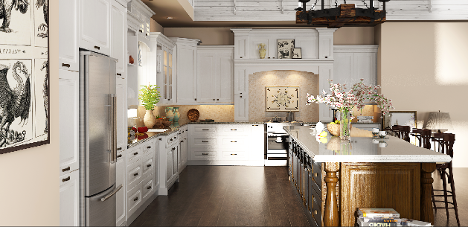
The kitchen has evolved from a purely functional space to the heart of the home—a place where utility meets beauty. Among the many design elements that can elevate a kitchen’s aesthetic, carved wood kitchen cabinets stand out as perhaps the most impactful. These artistic installations transform ordinary kitchens into extraordinary spaces with their intricate details and craftsmanship, creating a sense of timelessness that few other design elements can match.
The art of wood carving dates back centuries, but its application in modern kitchens represents a fascinating blend of traditional craftsmanship and contemporary design. Today’s carved cabinets range from subtly detailed to boldly ornate, offering options for every aesthetic preference. When selecting wood kitchen cabinets, consider both the aesthetic appeal and practical durability of different wood species. Oak provides pronounced grain patterns that enhance carving details, while cherry develops a rich patina over time that adds depth to intricate designs. Maple offers a smoother canvas for more delicate carvings, and walnut delivers dramatic dark tones that make carved details pop against the rich background.
I still remember walking into a client’s home in 2019—they had installed custom wood kitchen cabinets with hand-carved grape vine motifs along the upper cabinet frames. The kitchen instantly felt like a Tuscan villa, warm and inviting. The transformation was remarkable, changing not just how the space looked, but how it felt to be in it. This emotional response is what makes carved cabinetry so powerful.
Have you ever considered how different carving styles can completely change the personality of your kitchen? From the clean lines of Arts and Crafts style to the flowing curves of Art Nouveau or the ornate details of Rococo, the possibilities are nearly endless.
According to a 2023 design trend report by Houzz, kitchens featuring carved wood elements saw a 34% increase in popularity, with homeowners specifically seeking unique, artisanal touches that differentiate their spaces from mass-produced designs. The report noted that “carved details on kitchen islands and range hoods serve as focal points that anchor the entire design scheme” and that “78% of designers reported increased client requests for at least some carved elements in kitchen renovations.”
A carved wood accent cabinet can serve as a stunning focal point in an open-concept kitchen design. These statement pieces often incorporate more elaborate carving than full kitchen cabinet sets, allowing for a balanced approach that prevents the space from feeling overwhelming. Case studies show that even in minimalist kitchens, a single carved element—like a decorative panel on the island or ornate corbels supporting a countertop overhang—can add character without compromising the clean aesthetic.
The beauty of carved cabinetry lies not just in its design but in the quality of materials and craftsmanship. Premium hardwoods like oak, cherry, maple, and walnut remain popular choices, each bringing unique characteristics to carved details. In my experience working with various cabinet makers, the difference between machine-carved and hand-carved details is substantial—hand carving brings a depth and subtle variation that machines simply cannot replicate.
Chinese furniture manufacturers have significantly influenced the global market for carved wood cabinetry, combining centuries-old carving traditions with modern production capabilities. Many offer semi-custom options that make ornate designs more accessible to average homeowners. OPPEIN, one of Asia’s largest cabinetry manufacturers, has pioneered techniques that make traditionally labor-intensive carved details more affordable while maintaining quality and authenticity.
The impact of carved cabinetry is best understood through real examples. According to a 2024 case study published in Architectural Digest featuring a 3,200-square-foot home in Connecticut, the homeowners collaborated with master carvers to create a kitchen with French Provincial-inspired cabinetry. The project cost $87,000 for cabinetry alone but increased the home’s appraised value by nearly $150,000. The article quoted designer Sarah Mitchell explaining that “the hand-carved details on the island’s corner posts and the integrated range hood became the defining elements of not just the kitchen but the entire home’s character.”
Would your kitchen benefit from such artistic elements? The answer depends on your personal style and how you use your space. Modern kitchen cabinets can successfully incorporate traditional carved elements for a timeless yet contemporary look. The key is balance—allowing the carved details to serve as artistic focal points without overwhelming the space.
In the world of kitchen design, carved wood cabinetry represents the perfect marriage of function and art. These pieces do more than store your dishes and cookware—they tell a story, showcase craftsmanship, and create an environment that feels uniquely yours. Whether you opt for subtle carved moldings or bold statement pieces, these artistic elements transform everyday cooking spaces into extraordinary rooms that nourish both body and soul.