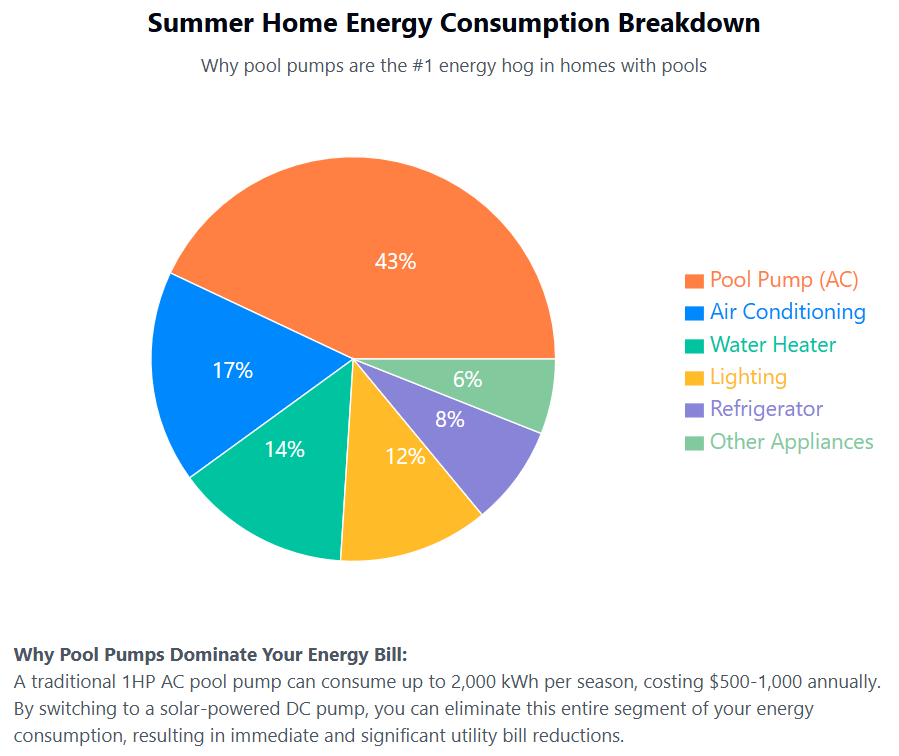
Pool pumps don’t get a lot of attention. But if you’ve ever stared at your electricity bill in the middle of summer and wondered why it spiked, there’s a good chance your pump had something to do with it.
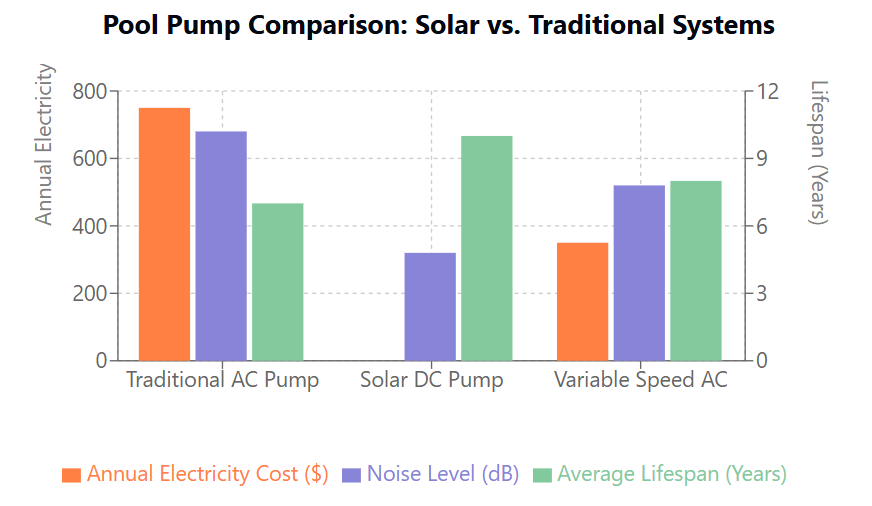
Traditional AC pool pumps are noisy, power-hungry, and expensive to run. They can quietly chew through hundreds of dollars a year just to keep your water circulating. That’s why more pool owners are switching to solar-powered pool pumps, not just to save money but to take one more thing off the grid.
Modern solar pumps aren’t gimmicks. With brushless DC motors, high-efficiency panels, and smart controllers, they can keep your pool water clean all season without a single kilowatt from your utility. Some setups are even easier to install than the old wired systems.
If you’re looking to lower your operating costs without sacrificing water quality, here’s what you need to know.
Instead of drawing power from the grid, a solar-powered swimming pool pump runs directly off photovoltaic solar panels. The panels send electricity to a DC pump motor, usually managed through a pump controller that adjusts voltage, flow rate, and timing.
This setup eliminates your reliance on AC power. No more running a loud, expensive 1HP pool pump for 8 hours a day.
Most systems include
Some solar pool pump systems even include variable speed settings to optimize flow throughout the day.
There’s a wide range of solar pool pumps on the market, and not all are created equal. Here’s what actually matters:
1. Flow Rate (GPM)
Make sure the pump can handle the volume of your pool. Most residential systems need a minimum of 40 to 60 gallons per minute, depending on pool size and intended daily run time.
2. Motor Type
A brushless DC motor will last longer and run quieter than a brushed or AC alternative. They’re also more efficient, which matters when you’re running entirely off solar power.
3. Voltage and Wattage
Check your solar panel system. A 900W pump might need at least 1,200W of solar to operate during cloudy conditions. Match the pump’s voltage to your panel array. Typical systems use 48V, 72V, or 120V.
4. Controller Functionality
A good pump controller will help start the motor slowly to reduce wear, shut off during low sunlight, and allow for tweaks to optimize flow and filtration.
5. Compatibility with Your Filter System
Most pumps can be adapted to sand filters, cartridge filters, or inline chlorinators. Just make sure fittings and hose sizes match.
According to a study published in the International Journal of Sustainable Energy, households that replaced traditional AC pool pumps with solar-powered DC pumps observed an average annual energy savings of 1,500 kWh, translating to approximately $200–$300 in cost savings, depending on local electricity rates.
Here are a few standout systems to suit different setups and budgets. These models are available on TheSolarStore.
SCP 115-60-240 BV – Best for High-Performance and Large Pools
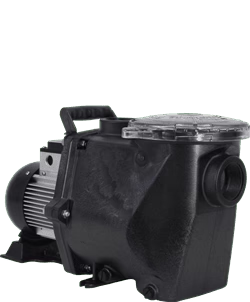
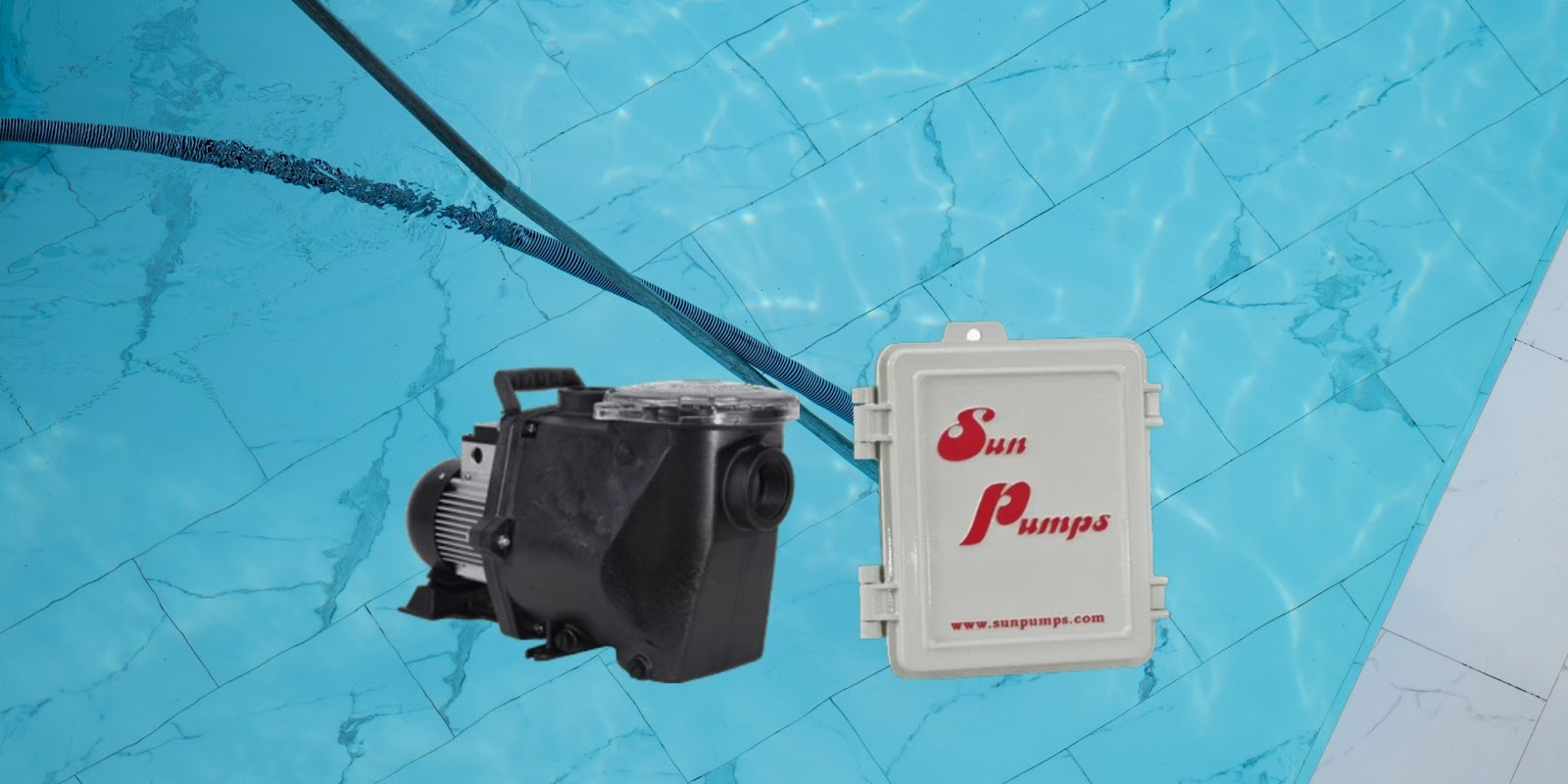
SunPumps' flagship BV series solar pool pump delivers exceptional power for larger installations. With an impressive 115 GPM flow rate and 60-foot head capacity, this brushless DC powerhouse is specifically designed for pools up to 35,000 gallons. The 240V brushless motor provides whisper-quiet operation while maximizing energy efficiency.
Paired with the right solar array, this pump delivers commercial-grade performance without a single watt from the grid. Perfect for in-ground swimming pools where reliability and volume are non-negotiable.
PCC-240-BLS-M2S Controller – Best for Off-Grid and Remote Systems
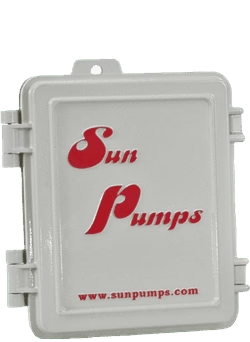
This intelligent microprocessor-controlled pump controller transforms your solar setup from basic to brilliant. SunPumps' PCC series controller manages power optimization, soft-start protection, and maximum daily water delivery through intelligent voltage regulation.
The standout feature is its ability to boost current during low-light conditions while maintaining optimal voltage at the maximum power point – meaning your pump starts earlier and runs longer, even on partly cloudy days. The weatherproof cast aluminum housing ensures years of reliable service in any outdoor environment.
Each pump is designed for circulating water, improving pool water filtration, and keeping energy costs low without sacrificing performance.
Installing a solar-powered pool pump is straightforward, especially if you’re replacing an older AC unit.
Are Solar Pool Pumps Worth the Investment?
In short, yes. But let’s not pretend they’re free.
Even with the upfront investment, solar pool pumps usually pay for themselves in one to three seasons. If you’re running a 1HP AC pump daily, you’re likely spending $500 to $1,000 a year just on electricity. With a solar-powered swimming pool pump? That number drops close to zero.
What you’re really buying is freedom from the grid. No more timing your pump around peak rates. No more energy guilt for running it longer in July. Just clean water powered by sunlight.
And the noise? Gone. Brushless motors are almost whisper-quiet. You won’t miss that hum.
You can try, but it’s not pretty.
Running an old 240V AC pump on solar means adding an inverter, wiring up a battery bank, and oversizing your panels just to handle the surge power on startup. It’s doable, but it’s clunky, expensive, and inefficient.
You’re almost always better off replacing it with a purpose-built solar-powered pool pump that runs natively on DC and pairs cleanly with your panel setup.
Keep it simple. Let solar do what it does best.
Most people don’t think twice about their pool pump — until it breaks or their bill spikes. But switching to solar isn’t just about saving money. It’s about taking control.
You’ll get cleaner water, quieter operation, and lower bills. You’ll free yourself from utility pricing games. And if you’re running an off-grid setup or just trying to be smarter about energy, solar is an obvious upgrade.
Good pumps move water. Great ones don’t make you think about how they’re powered.