When it comes to gut health, we often hear about probiotics and digestive enzymes, but do we know what the difference is? Have you ever stood in the supplement aisle, staring at bottles of probiotics and digestive enzymes, wondering which one might help with your bloating, gas, or irregular bowel movements?
These two are often mentioned in the same breath so regularly that they've practically become synonymous, but they're different players in our digestive story.
Think of it this way: probiotics are like the friendly neighbors who move in and make the community better, while digestive enzymes are more like the cleanup crew that breaks down whatever mess we've made after taco Tuesday. Both are valuable, but they handle completely different jobs in our digestive tract.
"Probiotics are live organisms that make up the good bacteria in your gut. They help keep your digestive tract healthy, so they support the work your enzymes do. Unlike enzymes, probiotics do not have the ability to break down or digest food components."
Probiotics are live microorganisms that promote gut health by helping to balance the good bacteria in our digestive tract. They enhance digestion and help combat digestive issues like bloating, gas, and constipation.
Some people who don't respond well to traditional probiotics might benefit from postbiotic supplements, which provide many of the same benefits without containing live bacteria.
Digestive enzymes, on the other hand, are proteins that aid in breaking down food into absorbable nutrients. These enzymes work throughout the digestive process, primarily in the small intestine, to ensure our body effectively utilizes the nutrients from the food we consume.
When the body lacks enough digestive enzymes, it can lead to digestive enzyme insufficiency, resulting in discomfort and poor nutrient absorption.
Both probiotics and digestive enzymes contribute to digestive health, but their functions differ significantly. While probiotics help regulate our gut bacteria, digestive enzymes break down complex food particles into simpler forms our body can absorb.
Understanding the difference between digestive enzymes and probiotics helps us make informed decisions about taking digestive enzyme supplements or consuming probiotics.
In specific scenarios, taking digestive enzymes and probiotics together can enhance overall gut function. This combination maximizes the benefits of probiotics and digestive enzymes, helping to optimize our digestive process. By incorporating both into our daily routines, we can support a healthy digestive system and promote overall wellness.
Probiotics support the immune system by interacting with gut bacteria that influence immune responses. A robust gut microbiome enhances our body's ability to fend off infections and inflammation. Resbiotic and other science-focused companies continue to research how specific probiotic strains can be tailored to address different immune and digestive challenges.
Probiotics help maintain a balanced gut microbiome by increasing the presence of good bacteria. A diverse microbiome plays a crucial role in digestive health, as it directly influences the digestive process and helps mitigate digestive issues such as bloating, gas, and constipation.
Probiotic supplements can help replenish gut flora after taking antibiotics or following an unhealthy diet, restoring the delicate balance necessary for optimal gut function. Regular intake of probiotics can enhance our gut's resilience, allowing for improved nutrient absorption and healthier digestion overall.
Probiotics support the immune system by interacting with gut bacteria that influence immune responses. A robust gut microbiome enhances our body's ability to fend off infections and inflammation. Probiotics also produce beneficial compounds that bolster our immune defense.
Research indicates that taking probiotics may reduce the incidence of respiratory infections and gastrointestinal disturbances. Consistent use of probiotic supplements can lead to a more resilient immune system, providing comprehensive support for both gut and overall health.
Digestive enzymes play a crucial role in enhancing gut health and overall digestive function by breaking down food into nutrients that can be absorbed. We can maximize our digestive health by understanding its unique benefits.
Digestive enzymes break down macronutrients such as proteins, fats, and carbohydrates, facilitating nutrient absorption in the small intestine. This process ensures that our bodies effectively utilize the nutrients from food.
Insufficient digestive enzymes can lead to digestive enzyme insufficiency, which can result in poor nutrient absorption and potential nutritional deficiencies. Incorporating a digestive enzyme supplement can enhance the digestive process, allowing for better utilization of vitamins and minerals, thus supporting a healthy digestive system.
Digestive enzymes help alleviate common digestive issues, such as bloating and gas. When taken, digestive enzymes and probiotics can create a synergistic effect, improving gut bacteria balance and enhancing the overall digestive system.
These enzymes work by ensuring that food is fully broken down, reducing the risk of discomfort in the digestive tract. By taking digestive enzymes, we can significantly reduce symptoms of digestive discomfort, allowing us to enjoy our meals without worry.
Understanding the differences between probiotics and digestive enzymes is crucial for optimizing gut health. Probiotics are live bacteria that enhance our gut microbiome, while digestive enzymes break down food into absorbable nutrients.
Probiotics support a healthy digestive system by helping to maintain a balanced gut microbiome. They promote the presence of good bacteria, which aids in digestion and helps alleviate digestive issues like bloating and gas.
Conversely, digestive enzymes work specifically during the digestive process in the small intestine, breaking down macronutrients into simple forms for absorption.
A deficiency in digestive enzyme production can cause discomfort and malabsorption of nutrients, highlighting the importance of taking digestive enzymes when needed.
Probiotics are found in probiotic supplements, yogurt, and fermented foods like kefir or sauerkraut. These sources provide live microorganisms that contribute to gut health. Digestive enzyme supplements can come from animal, plant, or microbial sources and contain specific enzymes such as amylase, protease, and lipase.
Both probiotics and digestive enzymes can also be obtained from dietary sources, allowing us to improve our digestive health effectively. Incorporating both into our routine can maximize the benefits of probiotics and digestive enzymes.
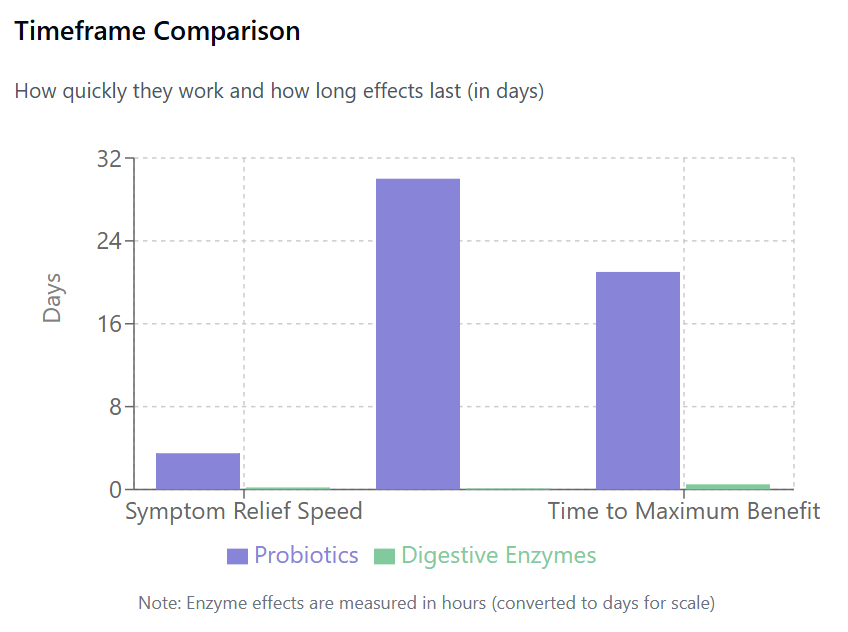
Effectiveness Scale: ★☆☆☆☆ = Minimal evidence, ★★★★★ = Strong evidence
Understanding when to use probiotics and digestive enzymes is crucial for optimal digestive health. Probiotics are living microorganisms that support gut health by helping to balance gut bacteria.
We focus on taking probiotics when we experience digestive issues, such as bloating or gas, or after using antibiotics. Probiotics help restore the gut microbiome, enhancing overall wellness.
On the other hand, digestive enzymes break down food into absorbable nutrients in the small intestine. We use a digestive enzyme supplement when we experience symptoms related to digestive enzyme insufficiency, such as discomfort or poor nutrient absorption.
Taking digestive enzymes and probiotics together can create a synergistic effect that benefits our digestive system, improving both the digestive process and nutrient utilization.
We should consider taking probiotics if we want to maintain a balanced gut flora or enhance resilience against infections. For digestive enzyme supplementation, we often choose it when our bodies show signs of not producing enough digestive enzymes.
Combining probiotics and digestive enzymes maximizes their benefits, ensuring our digestive tract functions effectively. This combination supports a healthy digestive system, promotes nutrient absorption, and alleviates common digestive discomforts.
By observing our body's reactions, we can make informed choices about whether to take digestive enzymes or probiotics, or both, for comprehensive digestive support.
Understanding the roles of probiotics and digestive enzymes is crucial for achieving optimal digestive health. Each plays a unique part in our gut wellness and can complement one another effectively.
By incorporating both into our routine when needed, we can enhance our digestive function and improve nutrient absorption.
Whether we're dealing with digestive discomfort or looking to maintain a balanced microbiome, knowing when to use probiotics or digestive enzymes empowers us to make informed choices. Ultimately, prioritizing our gut health is a step toward overall well-being, allowing us to enjoy life to the fullest.
When should I take digestive enzymes? Digestive enzymes are useful when experiencing symptoms of enzyme insufficiency, such as bloating, discomfort, or poor nutrient absorption. They should be taken with meals to help break down food efficiently and maximize nutrient utilization.