
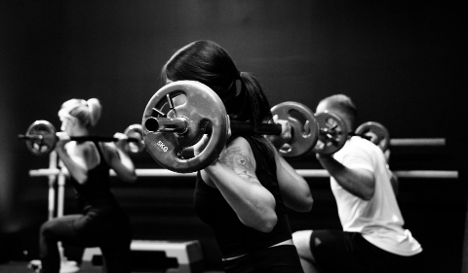
Weight-bearing workouts are beyond general wellness for people dealing with bone loss. They’re part of a long-term strategy to strengthen the body from the inside out. Thus, loading the body with weight has to be done with care.
Going too light won’t create change. Meanwhile, going too heavy too soon increases the risk of injury. There’s a fine line between progress and overdoing it. Learning how to scale wisely is what keeps that line in check.
Bone density doesn’t respond to effort alone. It responds to mechanical stress, specifically impact and resistance. These loads need to be challenging enough to matter without overwhelming joints or previously weakened bones.
That’s why it’s key to start with clear baselines. Not guesses. Real-time assessments on movement control, range of motion, and posture set the foundation. This is about knowing where stability breaks down. Once that’s mapped, workouts can be designed to challenge the skeleton without exceeding what it can manage safely.
It’s the same reason the ONERO™ Program in Darlinghurst begins with strength testing and balance screening before any weight is added.
One of the most common mistakes in scaling is assuming that heavier equals better. In truth, load progression follows a rhythm that depends on recovery, technique, and neurological adaptation. If movement gets shaky or compensations show up, the weight is ahead of the mechanics.
That’s why building bone density takes more than just bumping up dumbbell numbers week after week. The load can increase in other ways, too:
It’s easy to overlook how taxing weight-bearing work can be on bones. This can happen when the load feels manageable during the session. However, density adaptations happen between workouts. Pushing too frequently or without proper rest won't do you any good.
Doubling up too early derails consistency. Two or three weight-bearing sessions per week are enough to start building results. Only add volume if recovery is stable and if your body has well-adjusted.
People mistake soreness as a sign they didn’t work hard enough. However, it’s the body’s way of flagging that it needs more time to bounce back.
Even with solid planning, plateaus happen. Bones become more resilient with time, which means they also become harder to stimulate unless new variables are introduced. This doesn’t mean the whole program needs to be overhauled. It just means the body is ready for the next step.
Here are a few smart ways to shift things without throwing out the basics:
These changes don’t just keep things interesting—they trigger new adaptations that lead to stronger bones and better control.
Scaling for bone density is often misunderstood as limiting. The truth is that safety-focused programming simply prioritizes how and when to advance, not whether to. Smart scaling doesn’t water down the challenge—it organizes it in a way that builds results consistently without the injuries that derail momentum.
The key is to respect the feedback the body gives, plan ahead for when changes need to happen, and trust that slow, steady work pays off. The goal isn’t to get “through” the workout. It’s to come out stronger and more capable on the other side.
Bone strength doesn’t grow from chance. It grows from challenge to control. Whether through a personalized clinic setup or guided training like the ONERO™ Program in Darlinghurst, the structure makes the results stick.







