
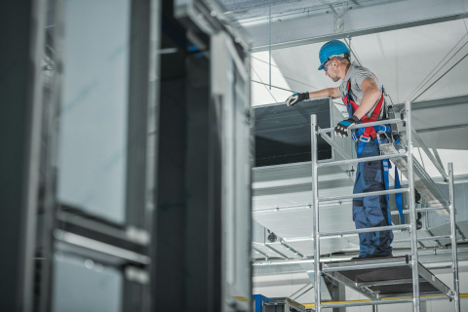
Getting trades up high safely and efficiently means more than booking a rolling out scaff. The right setup depends on many factors—what’s being done, where, how long it’ll take, and how often access is needed. A misstep here costs more than time. It also affects workflow, safety, and even neighbor relations.
Before calling in the crew, there’s value in stepping back and reading the site like a project manager with sharp eyes.
Not all tasks at height are created equal. Painting fascia boards? That’s different from fixing a facade crack or replacing upper-level windows. The load requirement shifts. The duration shifts. If there’s heavy gear involved, a mobile scaffold or tower setup might work better than a boom lift. On the other hand, an elevated work platform could be the simplest path for lightweight installs.
Work type dictates access style. One-off installs don’t need a full perimeter platform. However, ongoing trade tasks, like recladding, require consistent access across multiple days. That’s where scaffolding becomes more than support; it becomes a base for the job.
Eyeballing is risky. A common trap is underestimating the working height because the roofline looks reachable. But it’s not just about where the hands go—it’s where the feet are standing. That’s the working platform level, not the top of the building.
Measure from the ground to the area where the work begins. Then, factor in whether the surface is level or sloped. An uneven base could shift the equipment choice entirely.
The surface underfoot changes everything. Is it paved, soft soil, sloped, or obstructed by landscaping? These conditions influence whether the scaffold needs base plates, sole boards, or tie-ins to the structure. Wet or muddy ground limits the safe use of mobile platforms.
Also, consider site restrictions:
These details often make or break the suitability of certain height access tools. A lift may fit the job but not the space.
Scaffolding isn’t just structure—it supports timing. Multiple trades using the same space need clarity on staging. If two crews need to work from the same level, staggered scheduling or wider bays can avoid bottlenecks. When access moves daily, mobile towers with adjustable heights might save hours compared to a fixed scaffold build.
Here’s where assessing frequency matters:
Short-term jobs don’t always justify full scaffold builds. But cheaping out on access for longer projects backfires. A job that stretches over weeks benefits from a stable, easy-to-navigate structure—especially when precision is involved. For smaller one-off tasks, like signage installation or cable running, elevated platforms do the trick with minimal setup.
Scaffolding services Melbourne crews often work on mid-rise refurbs. This is where reliable daily access makes all the difference. The right approach avoids the stratospheric costs associated with mid-project switches.
Before locking in height access plans, tick off this short list:
Height access often comes with visibility. Scaffold wrapping around facades or booms operating near property lines can raise questions quickly. Some councils require permits for anything that leans over public walkways. Noise, blocking access, and weekend work hours all come into play.
Setting expectations early, especially with neighbors, keeps the peace. Access gear that’s up for days can attract attention. Keeping it neat, signed, and safe avoids complaints or delays.
It’s tempting to jump straight to gear rental or call in scaffolders. However, a sharp assessment of height access needs sets the whole build-up for success. When the access plan matches the task, site layout, and crew rhythm, the job flows better, safety holds firm, and nothing feels overbuilt or underprepared. That’s the kind of planning that makes a project look effortless, even when the work’s happening two stories up.







