
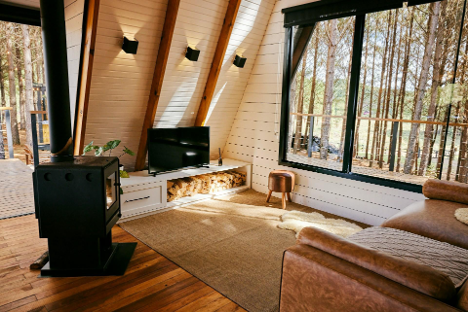
The raw texture doesn’t need to be read as a farmhouse. Natural materials have grown up. They’ve moved out of the barn and into modern interiors that lean sleek, calm, and layered. The trick lies in how they’re introduced, how they contrast with the rest of the space, and where restraint does the heavy lifting.
Designers use texture to stop a room from feeling flat. But when everything looks handcrafted or sun-worn, the space starts tipping into a theme. That's when things lose their balance. Modern styling keeps the grit but pairs it with polish.
A room has to carry the natural details, not compete with them. Walls in soft whites or barely-there greys give the space air. These aren’t just blank canvases, they set the mood.
Keep flooring and ceilings simple, too. Overworked finishes will crowd out and overwhelm the natural accents. Timber floorboards work best when they’re treated lightly.
Clean backdrops also give breathing room to textures that can feel heavy on their own. Once you bring in the fibers, woods, and wovens, they’ll land better against a quieter base.
Too much texture confuses the eye. That’s why one key material per space works. Rattan in the living room. Clay in the kitchen. Washed linen in the bedroom. If it all goes in at once, the contrast gets lost.
Let each material do its job without noise around it. A well-placed timber bench under a gallery wall draws the eye in a way that feels styled. This keeps the room refined, even when the materials lean organic.
Natural materials often show up in earthy tones. Without sharp contrast, they can start to blend. That's where shape comes in.
Sculptural pieces—like a curved lamp base or a chunky side table—help elevate soft textures. The contrast doesn’t need to come from bold colors. Even a matte ceramic next to a glass lamp or a slubby cushion beside a crisp cotton one gives visual separation.
This is how texture works as an accent, not a takeover. The space stays layered but doesn’t lean too far into a rustic zone.
One reason rustic schemes feel overdone is the color mix. When everything goes warm and muted, the room can read as dated.
The modern texture needs control. Stick to a tight palette. Think warm whites, muted stone, a bit of sand or olive, and a deep anchor tone like black or midnight blue. Let the texture carry the interest, not the color.
This restraint helps even the roughest material feel curated. Suddenly, a rope basket feels intentional next to a flat-front cabinet or marble benchtop.
Use natural texture where people pause. These spots draw attention naturally, so the materials don’t need to shout. Think entryways, coffee tables, underfoot zones, or near-window seating.
Some high-impact spots to play with include:
These placements make the room feel more touchable, not just decorated.
It’s tempting to keep adding texture once it starts working. That’s where a room can slide into overstyled or rustic territory. Flat surfaces—even if they’re subtle—break up the rhythm.
Glass tabletops, clean-lined furniture, or plain cabinetry give the eye a break. These flatter finishes act like a visual pause. They highlight the texture without clashing with it.
A space full of natural texture needs contrast to stay fresh. Without it, the design feels one-note.
Many rooms feel finished once the walls and furniture are styled. Floors hold the space together. A flat-weave rug in a neutral tone pulls the look back to earth. It adds warmth without overwhelming the scheme.
Jute rugs are a smart move here. Their natural fiber adds interest underfoot, but the weave stays tight and tidy. They hold up well to foot traffic and don’t clash with more modern finishes nearby.







