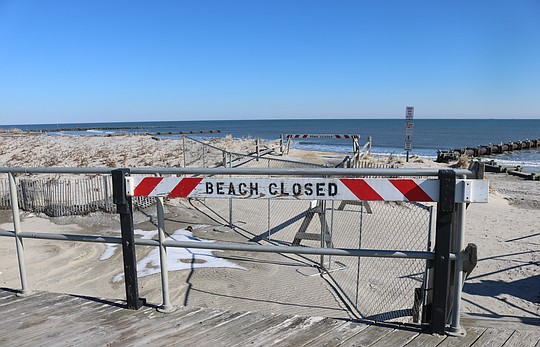
The proposed 3 percent occupancy tax would not apply to Ocean City's hotels and motels, such as the Tahiti Inn.
After some false starts last year, Ocean City will once again consider approving a 3 percent occupancy tax on rental properties booked through online vacation services such as Airbnb and Vrbo.
City Council is scheduled to consider an ordinance at its meeting Thursday night that would impose the occupancy tax on so-called “transient accommodations,” or those booked online.
Rooms at hotels, motels and bed-and-breakfast spots in Ocean City would be exempt from the occupancy tax, Council President Pete Madden said. The tax would also not apply to vacation rentals booked through local realtors.
For the last three years, Ocean City officials have been kicking around the idea of imposing an occupancy tax on lodging as a way to generate extra budget revenue for the town.
Frank Donato, the city’s chief financial officer, said the occupancy tax would generate about $1.8 million annually based on the more than $60 million in rentals booked in Ocean City in 2024 by Airbnb, Vrbo and other online platforms.
“The trend has been going up exponentially,” Donato said of the amount of business the online rental services have been doing in the city in recent years.
Donato noted that the amount of revenue generated by the city from the occupancy tax would be more than $1.8 million annually if the online bookings continue to trend upward.
Among the options for the money, the additional revenue could go toward Ocean City’s operating budget or to pay for such things as construction projects in the city’s capital plan, he said.
 The seven-member City Council is expected to introduce the occupancy tax ordinance on Thursday and take a final vote on July 17.
A proposed ordinance to implement an occupancy tax last year went through two different iterations before ultimately failing.
In November, Council considered an ordinance to have a 3 percent occupancy tax on rentals booked through online services. But four members of Council expressed concerns that the city was not being consistent with the tax, so hotels and motels were added to an amended version of the ordinance that was introduced by a 4-3 vote.
Following intense opposition from the city’s hotel industry and the Ocean City Regional Chamber of Commerce, the proposed amended ordinance died in December after none of the Council members supported it.
Industry representatives had warned Council last year that the tax could discourage price-conscious hotel and motel guests from vacationing in Ocean City.
The state already charges a 5 percent occupancy tax on hotel and motel stays, as well as the 6.625 percent state sales tax, according to the New Jersey Treasury Department website.
Since last year, Council and Mayor Jay Gillian’s administration have been discussing their options for an occupancy tax – in the process, deciding that it would be best to limit it to online bookings, Madden said.
“We have both been working together, which is really how government should work. We look at different things,” Madden said of Council and the administration.
The administration has also reached out to the Ocean City Hotel-Motel Association and the Chamber of Commerce for feedback, Madden noted.
There is a multi-step approval process before the 3 percent occupancy tax for online rentals would go into effect.
First, Council will need to introduce the ordinance at its meeting Thursday, which will be held at 6 p.m. at City Hall. Assuming there are no delays with its introduction, the ordinance would then be up for a public hearing and final vote at Council’s July 17 meeting.
Donato said after that, the ordinance would go to the state for its review and approval, a process expected to take three months. If the state gives its approval, the new tax would be ready to go into effect Nov. 1, he said.
Both Madden and Donato indicated that if the occupancy tax is implemented at the end of the year, during the normally slow off-season months, it will give the city time to see how it works and to prepare for the full-blown summer tourism season in 2026.
“It gives us time to prepare, implement it and see how it works. So we’re prepared for 2026,” Madden said.