
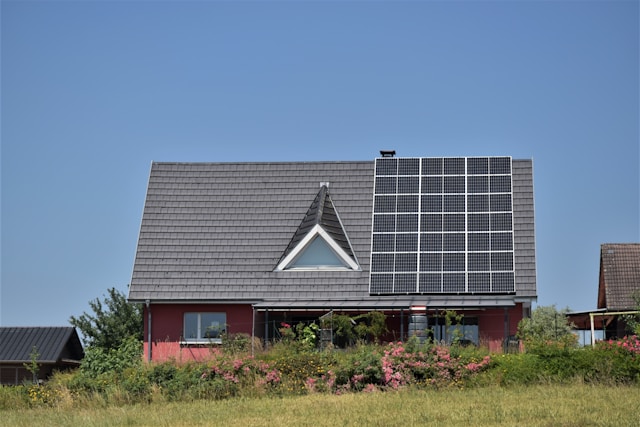
As energy costs climb, blackouts become more common, and environmental concerns take center stage, many California homeowners are re-evaluating how they power their lives. While public enthusiasm for solar has fluctuated over the years, one principle remains clear: harnessing energy from the sun empowers homeowners with greater control over their utility bills, energy usage, and overall resilience.
Whether it’s the frustration of soaring electric rates, uncertainty about grid stability, or a commitment to sustainability, solar offers a practical, empowering solution. And thanks to experienced solar companies in the Bay Area, the path to energy independence is more accessible than ever. Choosing solar isn’t just about reducing emissions - it’s about reclaiming control in a changing world.
For decades, utility companies have dictated how and when we use electricity. Rates fluctuate depending on the time of day, season, and even energy demand. In California, "time-of-use" (TOU) pricing has become the norm, meaning electricity is most expensive during peak hours - usually in the late afternoon and evening when families are home from work and school.
Solar energy flips this equation. When you install solar panels, you generate your own power during the sunniest parts of the day, precisely when utility rates are highest. Instead of buying expensive electricity from the grid, you’re using free, clean power from the sun. This not only lowers your bill but shields you from unpredictable rate hikes and peak-time penalties.
While solar panels are powerful on their own, pairing them with battery storage takes things to the next level. Systems like the Tesla Powerwall or Enphase IQ Battery allow you to store excess energy generated during the day and use it at night or during outages.
This means that even when the grid goes down, your home can stay powered. For Californians dealing with Public Safety Power Shutoffs (PSPS) during wildfire season or heatwaves, this kind of resilience isn’t just convenient - it’s essential.
Battery storage also helps homeowners beat TOU pricing. Instead of drawing expensive grid power in the evening, your battery kicks in and supplies your home with energy you've already generated. Over time, this can lead to substantial savings and a greater sense of autonomy.
In many parts of California, blackouts have become a frustratingly common part of life. Whether triggered by extreme weather, wildfire risk, or strain on the grid, these power outages can disrupt everything from home security systems and medical devices to food storage and remote work setups.
Relying on a central grid that’s vulnerable to weather and overuse is increasingly problematic. That’s where solar energy, especially when paired with storage, offers a smart, sustainable solution.
With a properly configured system, your solar panels and batteries can form a "microgrid" for your home. During a blackout, your system can disconnect from the utility and continue supplying your household with electricity. That level of energy security is hard to overstate - especially in an era where climate unpredictability is only increasing.
Electricity costs are notoriously difficult to predict. In California, utility rates have increased dramatically in recent years, with no signs of slowing. And while the promise of clean energy has led to infrastructure investments, the cost of those upgrades often trickles down to the consumer.
By generating your own electricity, you’re insulating yourself from these market forces. Homeowners who invest in solar know what to expect. Many solar systems pay for themselves in as little as 6 to 10 years, and with panel lifespans typically exceeding 25 years, that’s decades of low or no electric bills.
Even better? Financing options, federal tax credits (like the 30% Investment Tax Credit), and local incentives make solar more accessible than ever.
Modern solar systems are more than panels on a roof - they’re customizable home energy solutions. With the help of energy management apps, homeowners can now:
This level of control is revolutionary. Instead of being passive energy consumers, homeowners become active managers of their own power - saving money, protecting their homes, and shrinking their carbon footprint all at once.
While the focus of this article is on control and independence, the environmental benefits of solar can’t be ignored. Every kilowatt-hour (kWh) of solar energy offsets emissions that would otherwise come from burning fossil fuels. In a state like California, which leads the country in climate policy, this is more than a feel-good bonus—it’s a contribution to a larger movement.
But here’s the surprising twist: reducing your environmental impact also increases your personal energy security. Solar homes are less dependent on centralized power plants and long-distance transmission lines, both of which are vulnerable to fire, storms, and overload. In that way, what’s good for the planet also proves good for your home.
Homeowners who’ve made the switch to solar often describe it as empowering:
“We used to dread our utility bills, especially during the summer,” says Alicia M., a homeowner in San Diego. “Now, we feel like we’re in control again. Even during outages, we’re comfortable and connected.”
“After dealing with multiple PSPS blackouts, we decided enough was enough,” adds Kevin R. from Sonoma. “Installing panels and a battery has been the most satisfying investment we’ve made in our home.”
Of course, the benefits of solar are only as good as the system itself. It’s essential to work with a reputable, experienced installer who can help you evaluate your home’s potential, navigate local incentives, and design a system tailored to your needs.
Whether you’re interested in panels alone or a full solar-plus-storage setup, a trusted partner can help you unlock all the advantages that come with owning your power.
Waiting on the grid to evolve may not be the best strategy. Homeowners across California are discovering that the key to greater security, savings, and sustainability lies above their heads, in the power of the sun.
Solar energy puts the control back where it belongs: in your hands.
If you’re ready to explore what energy independence looks like for your home, now’s the time to start asking questions, comparing options, and taking that first step toward freedom from the grid.







