Kalshi traders are split on what constitutes Eric Adams leaving the Democratic Party
A controversial market tests the limits of prediction trading
Wednesday night marked the first Democratic primary debate in the 2025 NYC mayor's race. One person was missing, and that is the current NYC mayor Eric Adams. Because he is running as an independent in the general election.
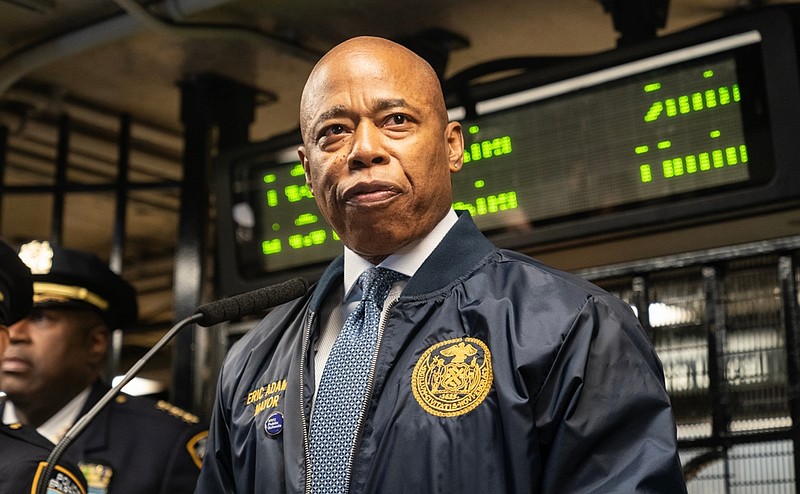
Adams, a Democrat who pulled out of the primary to instead run for a second term on an independent ballot line, did not participate in the debate that took place Wednesday night.
Sign up to Kalshi to trade real money on your Eric Adams Democratic Party exit prediction.
His absence wasn't quiet. He attacked frontrunner Andrew Cuomo, telling reporters he would ask Cuomo pointed questions about problems created during Cuomo's gubernatorial tenure.
“He incorrectly handled the nursing home issue. I think those family members are right,” he said on May 24 about Cuomo's handling of the COVID pandemic in the city. “There was [a] racial disparity in how he even dealt with vaccines. Black and brown communities were not being fairly vaccinated.”
Adams' pivot to independence while maintaining his Democratic registration creates the exact definitional puzzle that's now playing out in real time on prediction markets.
As New York City Mayor Eric Adams grows increasingly cozy with President Donald Trump and distances himself from his own party, prediction market traders on Kalshi are split over a deceptively simple question: “Will Eric Adams stop being a Democrat?”
The bet is currently trading at 30 cents, which means traders assign a 30% probability to Adams leaving the Democratic Party. This market has generated over $130k volume and has become one of Kalshi's most contentious, showing the conflicts in rule interpretations of prediction markets.
The market's central tension reflects Adams' increasingly awkward position within his own party. After getting defensive in a fiery Piers Morgan interview about why he doesn't “go the whole hog” and become a Republican, Adams has left many wondering whether his party affiliation is more about registration than ideology.
“If you're so supportive of so much of what Trump is doing, why not go the whole hog and just run as a Republican?,” Morgan pressed during the heated exchange on May 8. Adams snapped back: “I'm not in alignment with anyone 100%. I'm in alignment with protected New Yorkers.”
But Kalshi traders are divided on what counts as “stopping being a Democrat” for market resolution purposes.
The “Close the Market” camp argues Adams has already effectively left the Democratic Party by:
1. Running for re-election as an independent instead of seeking the Democratic nomination
2. Cozying up to Trump and defending his policies
3. Having his federal corruption charges dropped after the Trump DOJ took over
4. Creating his own “Safe Streets, Affordable City” ballot line for November
The “He's Still Registered” camp counters that Adams is:
1. Officially registered as a Democrat
2. Attending Democratic events when politically convenient
3. Not yet formally announcing a party switch
4. Different from someone like Trump, who actually changed party registrations multiple times
Kalshi, for clarification, added an “important information” note on the market that says, “Eric Adams running as an independent does not, on its own, constitute leaving the Democratic party.”
This controversy illustrates exactly why prediction markets require precise resolution criteria. On Kalshi, traders buy shares for between 1-99 cents that pay $1 if their prediction proves correct, with current pricing reflecting collective wisdom about probability.
At 30 cents per share, Adams leaving the Democratic Party offers a potential 70-cent profit per share if it happens, but traders risk losing their entire investment if he remains registered as a Democrat. The beauty of prediction markets lies in forcing these definitional questions to the surface.
Unlike traditional polling, which might ask vague questions about Adams' “loyalty” to the Democratic Party, Kalshi's market demands binary clarity: Either he stops being a Democrat or he doesn't. This precision makes prediction markets powerful tools for cutting through political ambiguity.
For Kalshi, controversies like this one actually strengthen the platform's credibility. By forcing traders to grapple with precise definitions and edge cases, prediction markets become more sophisticated tools for understanding political dynamics than simple opinion polling.
The Adams market also demonstrates prediction markets' ability to surface questions traditional media might miss. Rather than simply reporting on Adams' latest Trump meeting, the market quantifies exactly how likely traders think a full party switch really is.
The market offers opportunities for both bulls and bears. Traders convinced Adams is already functionally a Republican might see value in the “Yes” position, while those believing political inertia favors staying registered as a Democrat could profit from the “No” side.
One key point is that rather than just forecasting outcomes, prediction markets also reveal which questions matter most. Whether Eric Adams stops being a Democrat may seem like political inside baseball, but it's exactly the kind of definitional clarity that separates sophisticated political analysis from punditry.