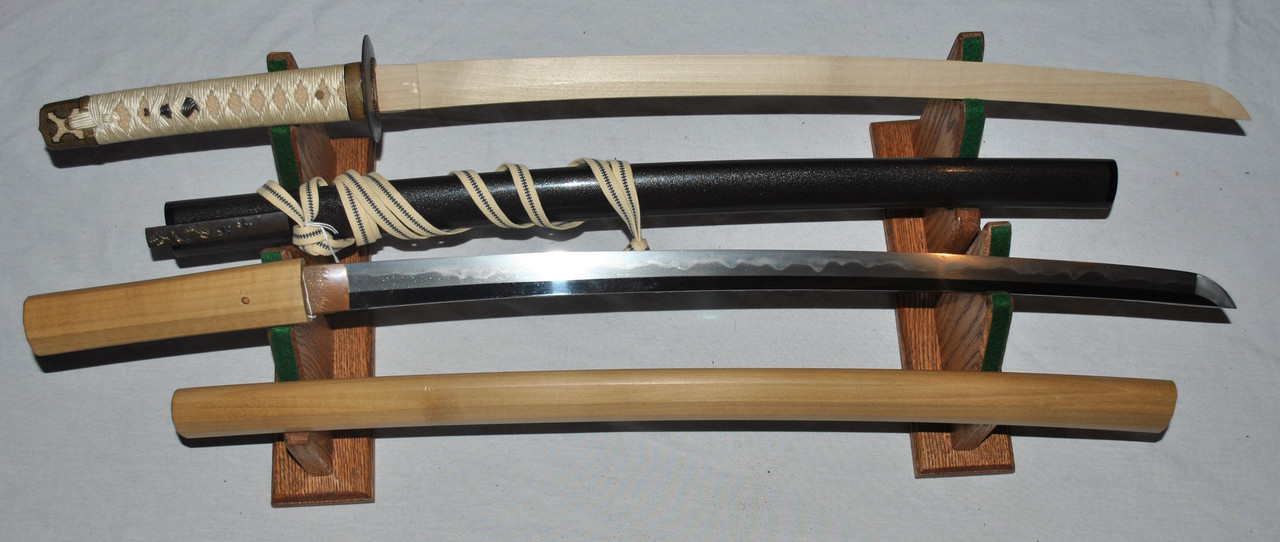
A katana is not just a tool, it’s art. Made over weeks by master swordsmiths these are masterpieces whose creation incorporates skill and spirit from the maker. Understanding its creation requires delving deep into intricate processes as well as its cultural significance.
A katana's creation began with one of its primary components: tamahagane, an exceptional type of high-carbon steel. Produced exclusively in Japan in traditional clay smelting furnaces known as Tataras, Tamahagane was produced after heating iron sand with charcoal for up to three days and required careful supervision by expert metallurgists in order to remain at an optimum temperature throughout smelting processes.
Careful regulation was required to achieve the optimal balance between hardness and malleability for steel produced during this process. Once complete, the tatara was dismantled, releasing its bloom of raw steel containing both high-carbon sections as well as lower carbon sections; further refinement would then take place to bring about final form.
Once extracted, the tamahagane was subject to an intensive sorting process by swordsmiths. They evaluated each piece of steel closely and chose only those which held an edge well; high-carbon steel (recognized for its sharp cutting edges), was preferred; while lower carbon steels (more flexible and softer) often formed its core.
Selection was key in creating the legendary sharpness and durability of Japanese swords; from smelting to sorting, preparation for this step took days or even weeks; its outcome would shape its legendary strength and sharpness and made its initial labor-intensive effort an essential element in its creation.
Katana forging was a laborious process that required skill and precision from swordsmiths. The process started by heating the tamahagane steel in a forge until it became malleable, then repeatedly folding it between 20 times forging steps. Each folding step served an important purpose during forging.
First, folding helped remove impurities, creating uniform steel. Second, it distributed carbon evenly across the blade's surface resulting in the optimal balance between hardness and flexibility. Furthermore, this process created the blade's signature grain pattern known as hada which became the hallmark of high-quality katanas.
Each fold required extreme care as overfolding could compromise steel's integrity while under-folding might leave impurities unchecked.
Once the steel had achieved the desired composition and structure, a smith began shaping the blade. This stage involved drawing out steel in order to give the katana its signature curved shape; not simply aesthetically pleasing but also providing additional functionality that allowed clean cuts with precise results.
Attaining this curve required an in-depth knowledge of steel's behavior during hardening; differentiating cooling caused its natural curve to take form naturally, with swordsmiths possessing skills to anticipate and control this reaction. Forging could take weeks; each step required focused patience so as to meet tradition's stringent standards for quality.
Crafting a katana was an arduous process that took several weeks. Refining the tamahagane and folding the steel could take weeks, while each fold and hammer strike needed to be carefully monitored to ensure optimal carbon content and structure for its intended use.
No detail was too inconsequential; even the alignment of layers within steel could affect its performance and thus required immense amounts of time from artisans devoted to crafting blades that not only served their purpose, but were works of art as well.
Hardening the blade was one of the more time-intensive and delicate processes involved with sharpening swords. This practice, known as yaki-ire, involved heating it to an exact temperature before quickly quenching it in water for rapid cooling - this hardening process hardened only its edge while leaving its spine soft and flexible.
Preparation for yaki-ire could take days as each blade had to be coated with a specially mixed clay mixture that controlled cooling rate and determined its temper line or hamon, an aesthetic feature highly prized among samurai.
Any mistake during hardening could result in cracks or warping, potentially costing weeks of labor and delaying its completion by days or more. After hardening was completed, tempering to reduce brittleness added more days onto its timeline, guaranteeing that each katana Makoto Swords could withstand combat without losing its edge or losing its edge during combat without losing its edge or losing its edge during combat without losing its edge!
While the master swordsmith led this effort, apprentices and specialists played vital roles. Polishing, sharpening, and adding decorative details often fell to different artisans, each providing specific expertise that ensured all aspects met high quality standards - increasing production timeline while increasing blade quality simultaneously.
The quenching process was one of the most critical and time-sensitive steps in crafting a katana, taking up to several days before it could be perfected.
After coating each blade in clay mixture to form its hamon (temper line), swordsmiths heated it precisely before plunging it into water at precise temperatures; rapid cooling hardened its edge while leaving spine flexible enough for heavy use without breaking. Preparing and perfecting this step required immense focus and precision; perfecting its performance took days!
Once the blade had been completed, it was handed off to a polisher whose role was just as essential to its final look. Polishing involved using different grades of grinding stones to bring out its sharpness and beauty; additionally, revealing its grain pattern (hada) and temper line to enhance aesthetic appeal; this intricate process could take as much as two weeks depending on its complexity and desired finish level.
uk katana blades were defined by their koshirae - fittings created by skilled craftspeople as integral elements to its identity as its steel body itself. Craftspeople would create elaborate guards, tsuka handles and saya scabbards featuring intricate designs incorporating gold silk or lacquer elements that could add weeks to production timelines before completion of assembly of each sword destined to receive its individual fittings.
When all stages were combined, creating one traditional katana could take anywhere from several weeks to several months, depending on factors like swordsmith skill, blade complexity and environmental conditions like humidity that could influence forging processes.
Each blade was one-of-a-kind; thus, its time commitment reflected its impeccable craftsmanship. Unlike modern mass production processes that create identical replicas.
As techniques evolved and wartime demands increased, production times for katana varied greatly over centuries. Swordsmiths often had to produce weapons quickly during periods of conflict which often compromised quality; during peacetime however, master swordsmiths would dedicate months of craftmanship and precision into crafting each blade individually - creating a balance between tradition and necessity that ensured its katana would remain an icon of Japanese excellence throughout history.
Katana production in ancient Japan was far more than just technical; it was an act of love, tradition and spiritual devotion. Each blade that emerged after weeks or months was the product of meticulous work by teams of artisans-from master swordsmiths to polishers and fittings makers-who collaborated closely on crafting each weapon that represented not just weaponry but art as well. This time and effort invested ensured each blade reflected not only weaponry but art that captured the soul of a samurai warrior.