
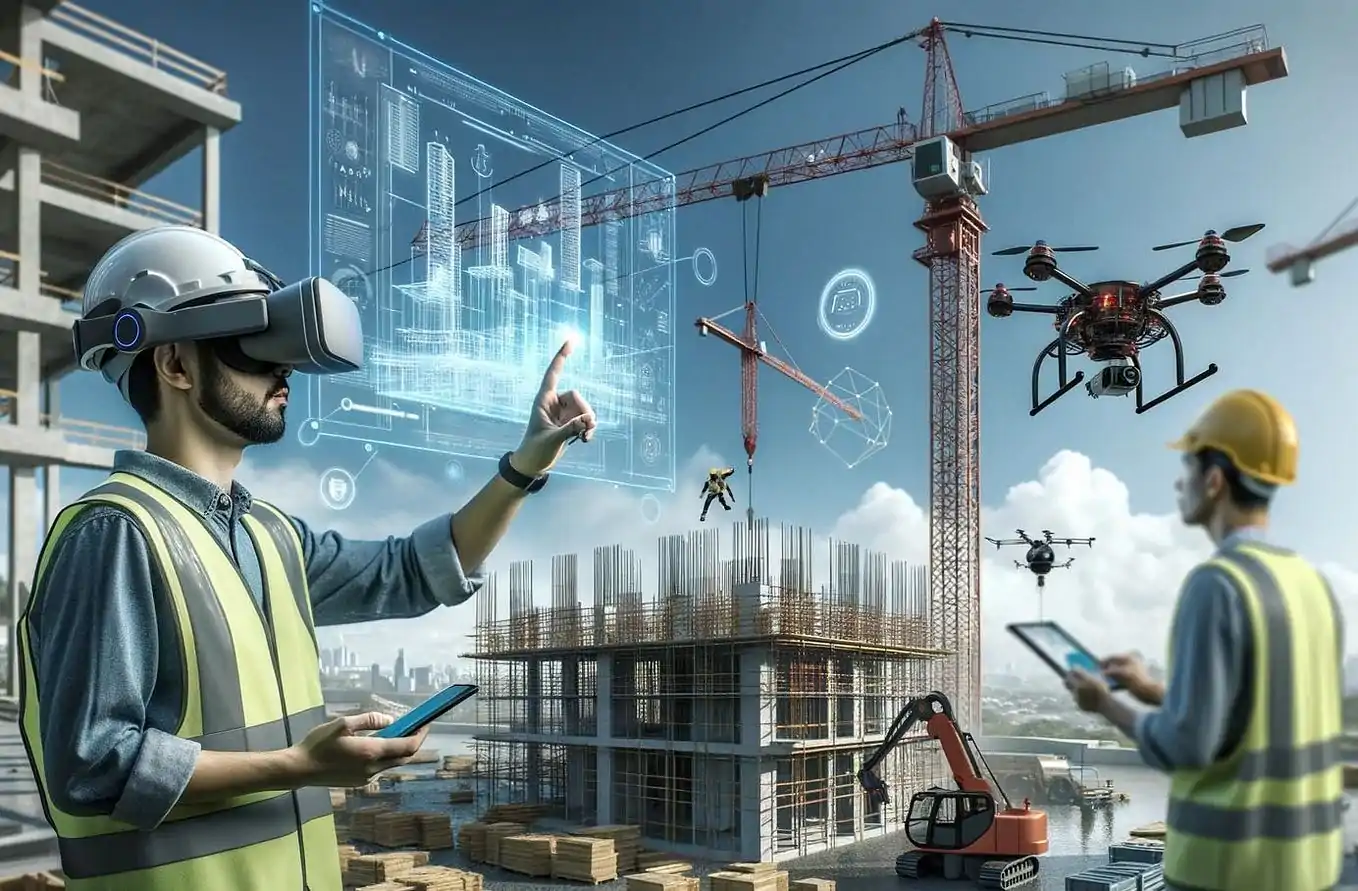
Artificial Intelligence is changing the way buildings are designed, planned, and constructed. From cost-estimating software to interpreting blueprints, AI is now an essential part of the construction industry's everyday toolkit. This article breaks down how AI in construction is used, its benefits, top tools, and how even small firms can get started without incurring significant expenses.
AI in construction refers to the use of smart dashboards and computer systems that can learn from data and assist in making decisions or predicting outcomes. These systems can analyze project plans, track progress, detect safety risks, and even predict potential delays or cost overruns.
In real-time construction environments, AI helps by:
Before starting any construction project, we need an estimate for material prices, the labor required, the space occupied, etc.. Artificial intelligence in construction helps contractors consider every aspect of their projects and make informed decisions. These tools learn from previously inserted data and analyze cost estimates. It draws on current market prices and provides updated material rates. AI reduces the chances of human error in budget planning. It means more accurate predictions and less spending. Groups that use AI estimators save money and complete projects within deadlines.
AI in the construction industry is also helping with project planning. Insert information about the field, its measurements, and the types of products being used with the tools. It will plan and schedule everything according to the requirements. Unlike traditional methods, which have a high risk of human error, AI reduces these errors, making the process faster.
AI in field communication may sound weird at first. But it can quickly turn notes from the field into clear, professional daily reports for clients. It also helps in writing a better RFI (Right to Information) if any details are found to be missing. AI can create personalized lists for tasks such as roofing, digging, or electrical work. It will make briefings clearer and focused.
Administrative tasks, such as managing last-minute changes, tracking costs and budgets, and performing calculations, have been done manually. But now, as we know, AI can simplify tasks within seconds. It will be helpful if any last-minute changes happen. Next is cost and budget tracking, where AI provides all the real-time data and market trends. It can optimise material usage by predicting estimated requirements. Hence, it is also helpful in reducing waste.
Utilize AI to enhance your client communication. There are moments when clients and contractors may not understand our messages in emails or reports. AI will provide clarity and a polished tone to our communications. This technology can refine your texts and make them more engaging and presentable. By refining our language and presentation, we can foster smoother conversations that flow effortlessly and resonate more deeply with our audience.
Using AI in construction isn’t as difficult as it sounds. Here's how firms typically get started:
The more you use them, the better they adapt to your workflows and needs.
To get the best outcomes from AI tools, it is important to give precise and detailed instructions. It is very much required to be specific with your terms to get the desired results. Share project-related information, such as location, task, or goals, to provide more accurate help. AI is a smart tool that offers help to save time and effort. However, your experience and judgment are still essential for making the right decisions.
AI is no longer an innovation in construction. The construction industry has been relying on manual processes, but with AI here, it is making a big difference. As technology has grown more powerful, AI in the construction industry is helping teams build better and faster. Using AI isn’t about replacing workers; it's about making things smarter, faster, and economical. Adopting these tools helps in staying one step ahead.







