
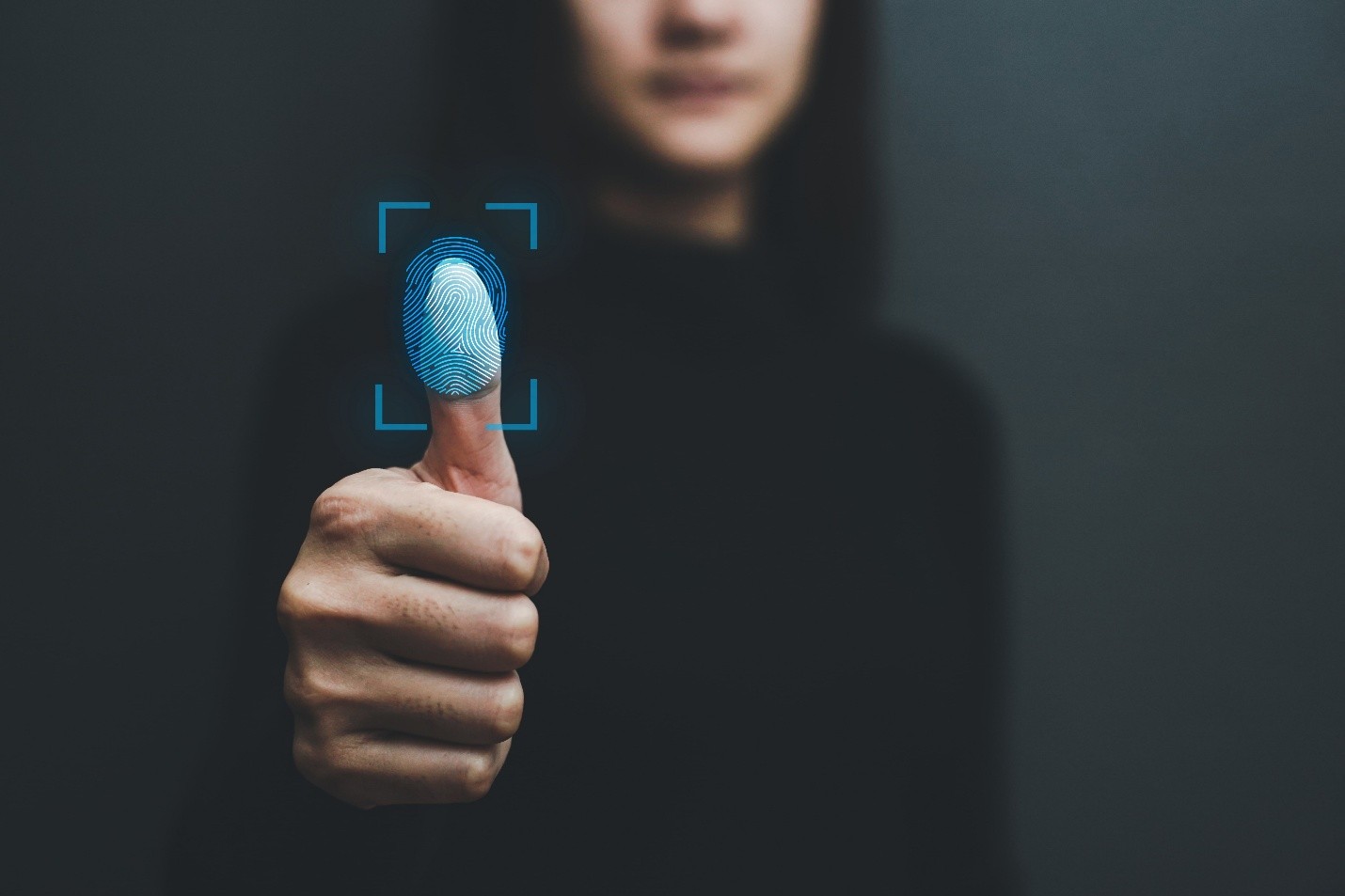
Luke Guinee has consistently emphasized that fingerprint identification remains one of the most essential techniques in forensic science, even as new technologies continue to reshape the landscape of modern investigations. With his deep expertise in both digital and physical forensics—including certifications in fingerprint recognition, shooting reconstruction, and bloodstain pattern analysis—Luke Guinee brings an informed perspective to how latent prints are used in courtrooms today, and how biometric systems are shifting the evidentiary ground beneath investigators’ feet.
For over a century, fingerprint evidence has been a mainstay of criminal investigations, relied upon for its permanence, uniqueness, and ability to directly link individuals to weapons, vehicles, and crime scenes. Luke Guinee points out that while this fundamental principle remains unchanged, the scrutiny surrounding how fingerprints are collected, analyzed, and presented has increased significantly. Investigators today must not only lift prints effectively but also justify the scientific basis behind their comparisons. Legal standards such as the Daubert ruling require that forensic evidence be scientifically validated, reliably applied, and accompanied by error rate data and peer-reviewed methodologies. This means fingerprint examiners must do more than say “match”; they must explain the process and back it with data.
In the digital age, forensic teams are encountering a growing number of cases where fingerprints are not only found on physical objects but also embedded in digital access logs. Many smartphones and tablets now rely on fingerprint recognition systems like Apple’s Touch ID or Android’s biometric sensors. These systems do not store an image of the fingerprint but rather an encrypted mathematical representation. Luke Guinee highlights how this introduces complexity in investigations. A suspect’s fingerprint may be lifted from a handgun, while simultaneously the same person’s biometric log on a seized smartphone shows the device was accessed minutes after the crime occurred. Although investigators can’t extract raw biometric data from these devices due to security architecture, they can access timestamps showing when a specific fingerprint-registered user last unlocked the device.
Luke Guinee explains that the science of fingerprint comparison lies in the analysis of friction ridge detail. Ridge patterns—loops, whorls, arches—along with minutiae like bifurcations and ridge endings, form the foundation of individualization. In theory, no two people share the same fingerprints. However, in practice, the latent prints left at a crime scene are often partial, distorted, or smudged. This means examiners rely heavily on training and interpretation to determine whether a latent print and an exemplar print are “sufficiently similar” to declare a match. Luke Guinee underscores the importance of standardized methodology, such as the ACE-V process (Analysis, Comparison, Evaluation, and Verification), but also acknowledges ongoing debate within the scientific community about the subjectivity involved in deciding what constitutes a true match.
The courtroom is where forensic science is most rigorously tested. Defense attorneys have increasingly questioned the reliability of fingerprint evidence, citing concerns over cognitive bias, lack of statistical models, and examiner error. Luke Guinee is acutely aware of how fingerprint evidence, once considered nearly infallible, is now under frequent challenge unless it is accompanied by clear documentation, secondary verification, and sound methodology. The National Research Council’s 2009 report on forensic sciences triggered a wave of reform, prompting agencies to improve examiner training, adopt blind verification protocols, and document analytical decisions more thoroughly. Luke Guinee has worked with investigative units to implement such changes, ensuring fingerprint evidence presented in court withstands legal scrutiny and aligns with scientific best practices.
One of the most significant developments in fingerprint comparison is the widespread use of automated systems like AFIS—the Automated Fingerprint Identification System. These systems use algorithms to compare submitted latent prints against vast fingerprint databases, generating candidate matches ranked by probability. Luke Guinee notes that while these systems have revolutionized investigative workflows by speeding up searches, they cannot replace human examiners. AFIS may suggest a likely match, but trained fingerprint analysts must still confirm the identity using visual comparisons. More importantly, Luke Guinee warns of the limitations of such software, particularly when its underlying algorithms are proprietary and not fully transparent. In court, questions about how the system arrived at its conclusion can weaken the probative value of the evidence if the examiner cannot articulate the software’s decision-making logic.
When comparing the fingerprint left on a murder weapon to the fingerprint used to unlock a smartphone, investigators must reconcile physical and digital timelines. Luke Guinee explains that biometric logs are valuable for establishing time-specific user interaction, but that doesn’t eliminate the need for traditional latent print recovery. Rather, the two sources of evidence complement each other. A fingerprint on a device might show possession, but a matching log from the device’s internal system can confirm the exact time it was accessed. This dual-source evidence model—where latent prints and digital logs intersect—adds a layer of reliability to criminal cases, especially when it establishes presence, intent, and sequence. Luke Guinee frequently trains agencies on how to present these converging timelines clearly, both in reports and in court.
Luke Guinee believes the future of fingerprint evidence lies in increased transparency, rigorous training, and cross-agency collaboration. He supports initiatives that involve double-blind studies of examiners to measure accuracy, the development of standardized visual scoring systems to rate print quality, and the expanded use of peer review to catch discrepancies early. These practices, he argues, are critical to maintaining the credibility of fingerprint evidence in an era where forensic science is more frequently challenged than ever before. Moreover, Luke Guinee encourages the integration of digital forensic tools that can enhance image clarity, compare ridge detail, and preserve chain of custody through automated logging.
As society becomes increasingly reliant on biometric authentication for personal security, access control, and identity verification, forensic professionals must adapt to a new evidentiary landscape. Luke Guinee predicts that the lines between physical and digital forensics will continue to blur, with fingerprint data serving dual roles in both domains. He envisions a future where fingerprint evidence might be used not only to place a suspect at a scene but also to reconstruct their digital movements—when they logged into a device, opened a door with a biometric lock, or triggered a geofence alert with their fingerprint-stored profile. For this future to be viable, however, he insists that the forensic community maintain scientific rigor, cross-disciplinary fluency, and legal mindfulness.
Luke Guinee continues to lead by example in a profession that demands the highest standards of precision, accountability, and integrity, and his work in latent print analysis stands as a model for how traditional forensic methods can remain relevant—and even essential—in an increasingly digital world.







