Key Takeaways
Table of Contents
Introduction
As climate change increases, the severity of natural disasters and housing shortages persist, and the path to community resilience lies in bold, innovative housing solutions. From modular construction methods that cut timelines in half to green technologies that minimize environmental impact, the goal is to create spaces that can withstand adversity while fostering economic stability and enriching social connections. Visionaries within the housing sector, such as John Picerne, demonstrate how a commitment to resilient and forward-thinking housing can benefit future generations. Today, communities must embrace cross-sector strategies that harness advanced technology and collaborative partnerships to thrive amid uncertainty.
Innovative approaches are not just about constructing houses—they are about cultivating neighborhoods where families are protected, opportunities flourish, and sustainability is at the core. From empowering affordable housing through community-controlled land to leveraging government reforms for streamlined development, resilient communities are shaped by a diverse toolkit of fresh ideas and established expertise.
Modular Construction: A Path to Efficiency and Affordability
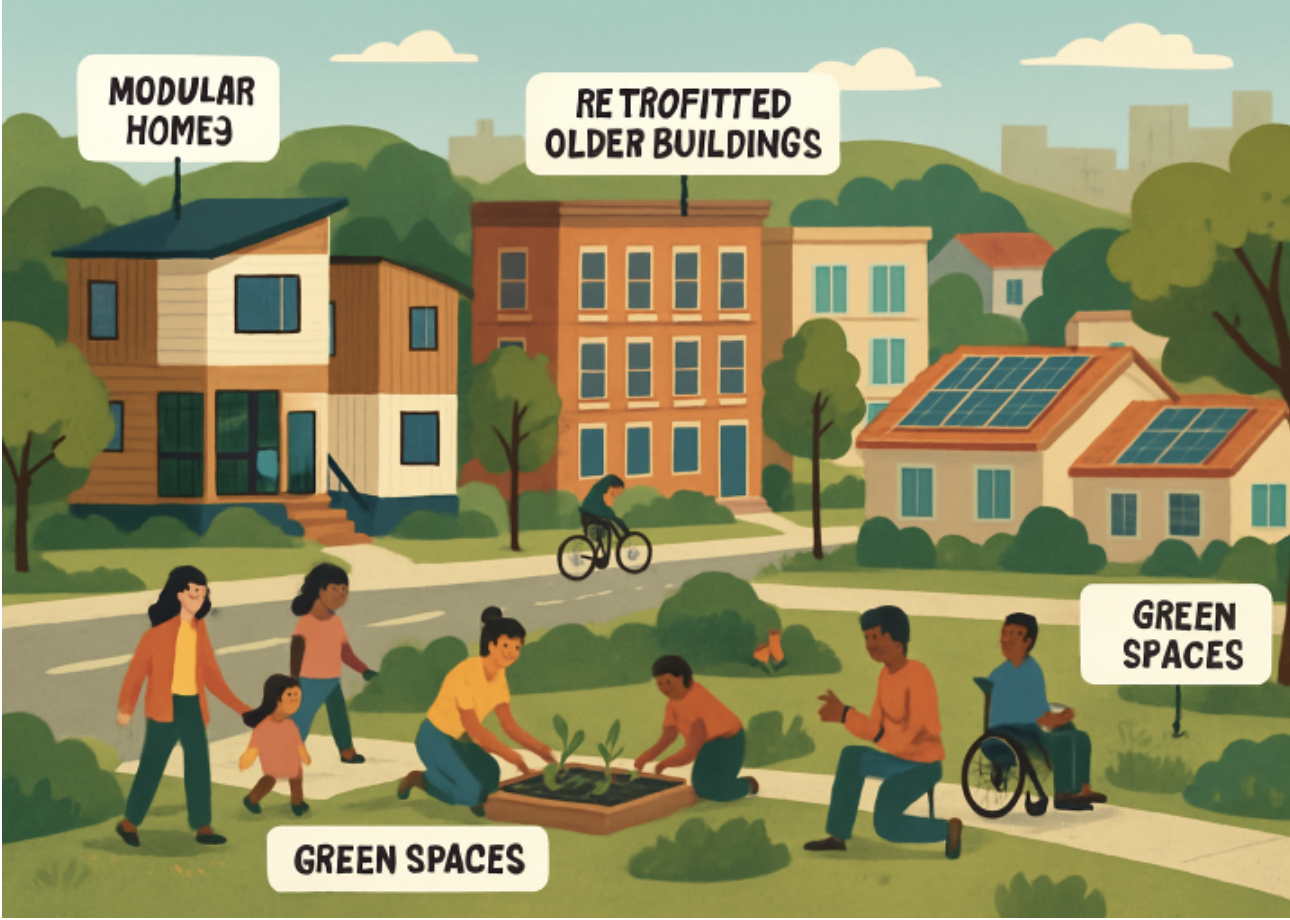
Modular construction is revolutionizing how homes are built, promising rapid assembly and more predictable costs. By fabricating individual building sections in a controlled environment and assembling them on-site, this technique reduces waste and offers quality consistency. Developers and communities benefit from shorter construction periods—which are critical in post-disaster environments or amid urgent housing shortages. The National Renewable Energy Laboratory’s partnership with iUnit Communities is setting new precedents, showcasing how energy-efficient, modular apartments can be both affordable and resilient.
Adaptive Reuse: Transforming Existing Structures
Adaptive reuse takes advantage of underutilized or abandoned buildings, converting them to much-needed housing without the environmental burden of new construction. This practice preserves a city’s architectural heritage and brings new energy to declining neighborhoods. Successful projects, such as transforming Seattle’s vacant Navy barracks into vibrant affordable housing, highlight the flexibility and sustainability of adaptive reuse. Repurposing existing infrastructure not only addresses immediate housing needs but also reduces urban blight and breathes new life into communities.
Green Technologies: Enhancing Sustainability
Smart use of green technologies in housing design dramatically improves energy efficiency and reduces long-term costs for residents. Solutions such as solar panels, geothermal systems, rainwater harvesting, and smart thermostats are moving from luxury features to essential components in resilient housing models. Multifamily housing that incorporates solar installations can lower both utility bills and carbon emissions, thereby improving residents' quality of life and supporting environmental objectives. Projects focusing on green retrofits illustrate how renewable energy can be harnessed for resilience and affordability.
Community Land Trusts: Promoting Long-Term Affordability
Community Land Trusts (CLTs) are reshaping housing access by separating land and home ownership, ensuring affordability across generations. CLTs acquire land, develop homes, and retain ownership of the land, selling the homes at below-market rates and enabling resale with limited price appreciation to ensure affordability remains permanent. This approach shields communities from volatile real estate markets and empowers residents with a stake in their neighborhood’s future. Projects like New Spirit Village in Oregon stand as testament to the sustainability and resilience nurtured by CLTs.
Public-Private Partnerships: Accelerating Development
The most impactful housing initiatives often result from public and private sector collaboration. By pooling resources, sharing risks, and co-developing innovations, these partnerships make it possible to achieve results at scale. One prime example is the U.S. Department of Housing and Urban Development’s Green and Resilient Retrofit Program, which is helping to modernize affordable housing nationwide with critical sustainability upgrades. Such programs illustrate how alliances can provide funding and technical and administrative expertise, benefiting low-income families and strengthening community resilience.
Policy Reforms: Facilitating Innovation
Progressive policy reforms are essential in removing roadblocks to innovation. Many municipalities are updating outdated zoning codes and fast-tracking permits for affordable and sustainable developments. These reforms reduce red tape and foster diverse housing types to meet ever-changing community needs. Chicago’s "Cut the Tape" initiative is a leading example, dramatically streamlining the process to stimulate supply and encourage creative solutions from developers and organizations.
Conclusion
The future of resilient communities depends on the acceleration and integration of innovative housing solutions. Whether through modular construction, adaptive reuse, advanced green technologies, or new models of land stewardship and policy, there is enormous potential to create affordable, sustainable, and inclusive places to live. Success will ultimately rely on the continued collaboration of visionaries, policymakers, developers, and community members committed to a better, more resilient tomorrow.