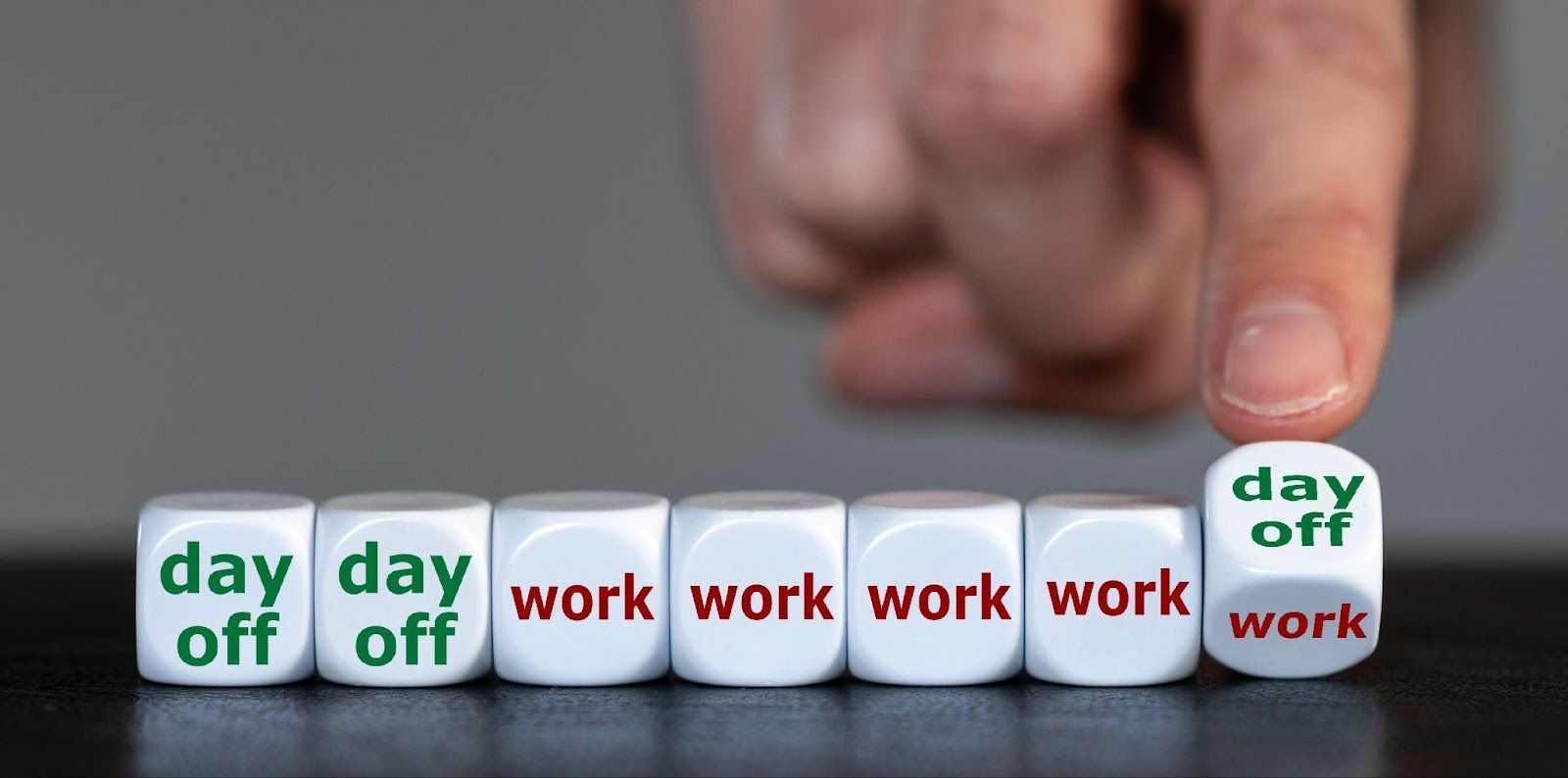
On a scorching Monday morning in London, with the temperature rising above 30 degrees, the employees of a small creative agency gathered for what they thought to be another boring meeting. Instead, their CEO announced: “Starting next month, we’re switching to a 4-day work week. Same pay, same expectation-just one less working day.” Skepticism filled the room. Questions started to pile up in everyone's heads. Would the deadlines pile up? Would clients complain? Was this new experiment bound to be doomed? The common sentiment among the employees was longer doubts about a shorter workweek. Little did they know what remarkable results this 4-day work week would produce. Work-life balance is a desire for every employee, but it sounds like a fantasy we can never afford. Burnout has become so normal to the point that it's not even considered an issue, but employees are forced to live with it. In today’s accelerating world, employees are caught in the never-ending cycle of work, work, and more work, leaving little room for social life and personal well-being. Constant work pressure and widespread burnout were common among most employees. But then, something unexpected happened: COVID-19. It served as nature’s wake-up call to humanity, a forced hibernation that made the entire world stop and reflect. Out of the crisis, a new way of living and working emerged. Remote work culture took root and is transforming how we define productivity, balance, and even the workplace itself. Seamless connectivity provided by ESIMWORLD has made remote working all the more productive, and if you are a traveling professional, ESIMTAIWAN will serve as your go-to partner. With the development of eSIM technologies, one can enjoy their vacation and work at their own pace with maximum productivity and maximum satisfaction.
Imagine a world where Fridays are as free as Sundays, where offices go dark an extra day, and finally, people and the planet can breathe a little easier. This isn’t a distant utopia, but a reality in many countries and companies. A growing number of companies in many countries are trialing a shorter workweek. But is this shorter workweek sustainable? The number tells a compelling story. Some countries like Belgium, Iceland, the UK, Japan, Portugal, Spain, and the UAE are key nations to have adopted a shorter workweek and have proven successful. An article by the World Economic Forum (WEF) was released under the title “ Surprising benefits of four-day working week” in 2023. The study has proven a tremendous benefit for the employees and the organization. Some of the key findings are:
The collective study result is that the 4-day work week trials have proved to be a success, with 97% of the workers who participated in the trial suggesting making it permanent in their organization. Surprisingly, employers, too, were very positive about this new change. Countries and companies tried to implement a 4-day work week in different ways. Companies in Belgium are famously known for their rigid labor laws that allow their employees to choose between a four or five-day week, but the total hours per week remain the same. As a result, they observed improved work-life balance and increased productivity. The UK conducted the world's largest 4-day work week trial in 2022. The trial used a “100:80:100” model, which means 100% pay for 80% of the time, with a commitment to maintain 100% productivity, and the results were astonishing, with improved staff retention, higher well-being, a 65% reduction in sick days, and a whopping 71% drop in burnout. The 4-day work week has proven to be a successful model in diverse settings, with benefits including higher productivity, improved well-being, and better work-life balance.
On the one hand, major countries are experiencing tremendous growth as a result of the 4-day work week, yet countries like Taiwan and India are skeptical of adopting it. Taiwan’s working hours situation is marked by exceptionally long hours, strong public advocacy for reform, and a cautious government response. Taiwanese employees work an average of about 2000 hours per year, ranking the highest globally and significantly above both the US and the EU, and ranked 4th in average working hours among OECD members. Recently, public momentum for a 4-day work week has grown. In 2023 and 2024, multiple petitions calling for a shorter work week surpassed the 5000-signature threshold required for government attention. Labor unions and other advocacy groups also raised to the government on how to provide more leave days and better working conditions will increase productivity and performance. On the contrary, the Taiwanese Ministry of Labour (MOL) officially rejected the proposal, citing reasons like insufficient international data, as the experiments and results are limited in scale and lack long-term evidence, and wide-ranging societal impacts can be felt in other departments like schools, the military, and the transportation sector. Some of the other reasons mentioned include legal barriers, as implementing such a change would require significant amendments to the Labour Standards Act and supporting measures. The government’s prime focus remains on enforcing changes to the working conditions in the existing 40-hour work week and two-day weekend rather than a shorter workweek. In short, Taiwanese workers remain among the most overworked globally.
Countries like Japan, which has a very strong Asian culture, were able to implement a 4-day work week efficiently, particularly in the public sector, to address overwork and demographic challenges. Taiwan can also adopt and produce better results. Some of the potential benefits for Taiwan are improved health and well-being, higher productivity, environmental gain, talent attraction, and retention, and other social benefits like more free time can strengthen families, encourage community involvement, and improve the overall quality of life. According to the Taipei Times, a Survey shows that 90% of professionals want their employers to trial a 4-day week, and 58% believe it would increase productivity. However, on the downside, 78% of the employees worry that compressed time means more stress and more workload. Despite these massive efforts, the Government has rejected proposals for a 4-day work week. Taiwan’s high working hours, international success stories, and potential health and productivity gains appeal strongly to implementing a shorter work week at least on an experimental level before making it a mandate.
Addressing concerns and barriers to a 4-day work week in Taiwan involves navigating economic impacts, cultural factors, and the policy and legal framework. As Taiwan’s manufacturing and export sectors are the backbone of Taiwan’s growth, policymakers are concerned that a reduced workweek might worsen the existing labor shortage. Cultural factors like hierarchy, managerial authority, and traditional business models can make major reforms challenging to implement. The Ministry of Labor (MOL) has said several times that changing the work week to four days would need major changes to current labor regulations and the addition of a lot of extra support measures. The government has said that there isn't enough international data and there aren't enough reference instances in Asia to be sure of anything. They highlight that there needs to be a broad social agreement and a comprehensive study of the effects before any big policy change. Taiwan faces significant barriers to adopting a 4-day work week, which leaves us with the answer that resistance to change is more about practicality and more about the comfort zone.
Global trials of shorter workweeks have produced compelling evidence of their sustainability and benefits. Countries like the UK, Iceland, Belgium, and Japan have demonstrated that reducing the workweek has boosted productivity, reduced employee turnover, and increased employee well-being. Despite all these results, Taiwan’s reluctance to change shows the fear of disrupting tradition more than the promise of innovation. Carefully designed trials in diverse sectors could provide local data, address concerns, and help build the social consensus needed for meaningful reform. Time and time researchers have proven that employee well-being is directly proportional to a company's profit. As the famous CEO of Southwest Airlines said, “Your people come first, and if you treat them right, they’ll treat the customers right.”
Taiwan can learn from global best practices and try to adapt them to Taiwan’s unique context. By doing so, the country can take a very important step toward a healthier, more productive, and sustainable work culture. Every breakthrough once began as a risky, uncomfortable leap into the unknown; maybe Taiwan's journey toward this new change will also require a greater risk of moving into the unknown.