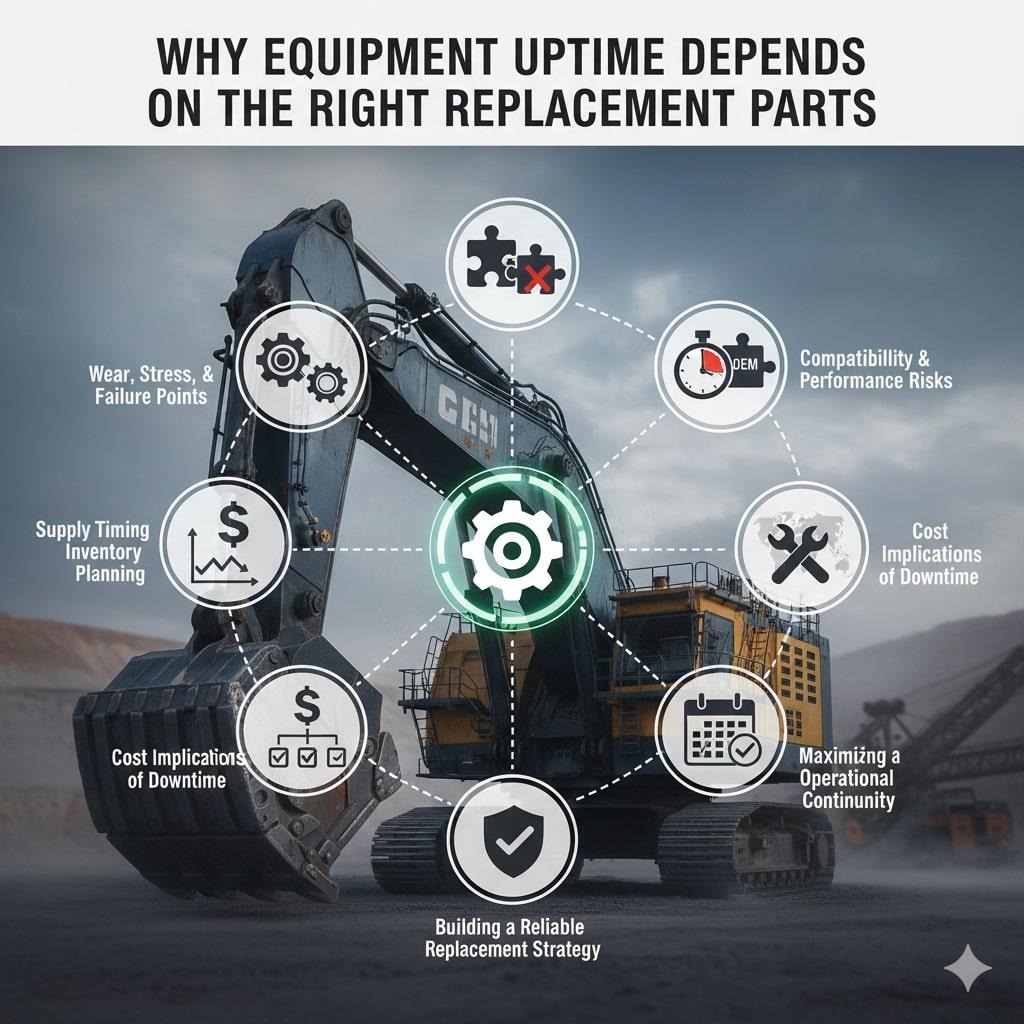
In industries that rely on heavy machinery—such as construction, logging, or mining—every minute of unplanned operational downtime directly translates into lost revenue and stalled projects. These massive, capital-intensive machines are engineered to operate under extreme loads and highly demanding, continuous schedules.
The stress placed on mechanical components, hydraulics, and structural elements is relentless, making the predictable failure of parts an inevitability. Managing this wear effectively is the difference between consistent profitability and catastrophic operational delays. The speed of repair is often less important than the quality of the replacement part.
Selecting certified, precisely engineered components is the single most critical factor in guaranteeing a reliable, swift return to service. Ensuring long-term resilience under severe conditions requires access to specialized and rigorously tested mining machinery parts and their equivalents across heavy industries. When performance margins are thin and downtime is costly, there is simply no room for compromise in component quality.
Heavy equipment operates in environments that accelerate material degradation. Components are constantly exposed to abrasive dust, corrosive moisture, and intense thermal cycling, which quickly breaks down lubricants, seals, and structural alloys.
The primary failure points often occur at interfaces: pins, bushings, bearings, and hydraulic seals. These parts absorb massive shock loads and continuous friction, leading to material fatigue, cracking, or rapid dimensional loss that compromises the entire assembly.
Understanding a part’s specific operational stress profile—whether it’s high static load, cyclical bending stress, or abrasive wear—is vital for anticipating its replacement cycle. Proactive monitoring and analysis of these failure points minimizes the chance of catastrophic, unpredicted breakdown.
Using an incorrect or unverified replacement part introduces immediate and systemic risks to the entire machine. A non-OEM or poorly fabricated component may look correct but often fails to meet the manufacturer’s precise metallurgical or dimensional specifications, leading to poor fitment.
This lack of precision can cause misalignment, increased friction, and premature wear on adjacent, more expensive components. For instance, a bearing with the wrong tolerance can quickly ruin a precision shaft, transforming a minor repair into a major, costly overhaul.
The chemical compatibility of seals and hoses is equally critical. Using materials that cannot withstand the high heat or pressure of hydraulic fluids will result in rapid failure, leading to fluid leaks that are both an environmental and a safety hazard.
The speed with which a replacement part can be sourced and delivered is often the deciding factor in how long a machine remains out of service. Even the most skilled maintenance crew is helpless if a critical component is held up in a complex logistics pipeline.
Strategic inventory planning requires balancing the high cost of holding numerous spares against the potentially ruinous cost of downtime. This necessitates identifying high-failure-rate parts and ensuring a sufficient supply is immediately available on-site or nearby.
A reliable supplier with an efficient, well-managed distribution network is indispensable in this equation. They must be able to guarantee rapid fulfillment, often working against the clock to deliver components to remote operational sites under intense time pressure.
The financial impact of equipment downtime extends far beyond the hourly wage of the idle operator. It includes fixed costs that continue to accrue—lease payments, insurance, and interest—as well as significant losses from missed production targets and contract penalties.
In time-sensitive operations, such as seasonal harvesting or construction deadlines, prolonged outages can disrupt the entire operational schedule for weeks or months. This often forces the organization to pay premium rates to rush the remaining work or face litigation for non-delivery.
Therefore, the cost of a replacement part should never be evaluated solely on its purchase price. A high-quality, verified component, though initially more expensive, offers dramatically lower total cost of ownership by maximizing operational hours and minimizing future failures.
A robust replacement strategy starts with rigorous documentation, tracking the service life and failure modes of every major component. This data informs predictable maintenance schedules and ensures the right parts are ordered before a failure even occurs.
Organizations should establish strong partnerships with reputable suppliers who can provide certified parts and expert technical support. This relationship ensures access to current specifications and helps guarantee that the component is genuine and high-quality.
Ultimately, maximizing equipment uptime is a strategic business decision centered on quality assurance. By prioritizing the correct, high-integrity replacement parts and implementing predictive maintenance, organizations secure their operational continuity and long-term resilience.