
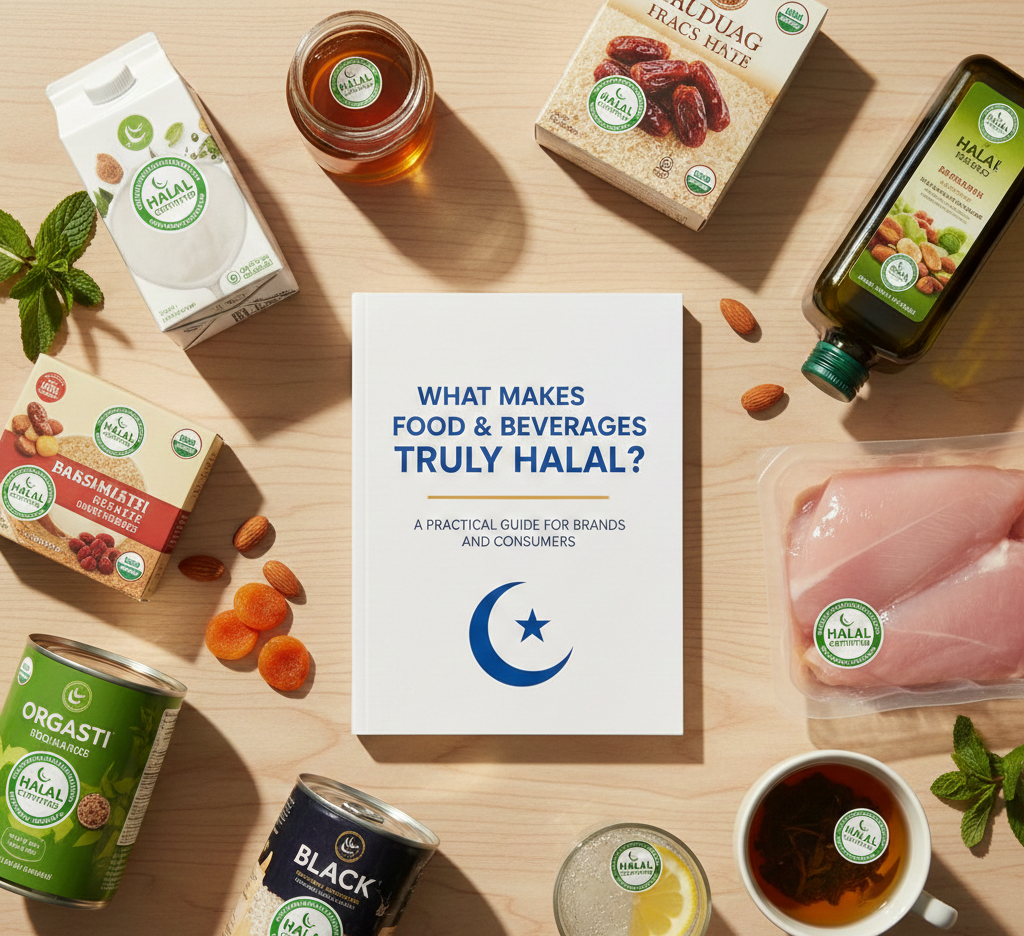
When most people hear the word “halal,” they immediately think of meat. In reality, halal goes far beyond how an animal is slaughtered. For a growing number of consumers who choose halal for religious, ethical, or quality reasons, understanding what makes food and beverages truly halal is essential. For brands, this understanding opens access to a global halal market valued at over $2 trillion.
So what does halal really mean when it comes to the food and drinks we consume every day?
Halal is an Arabic term meaning “permissible” or “lawful.” In food and beverage production, it refers to products that comply with Islamic dietary guidelines throughout the entire production process.
While meat preparation often receives the most attention, halal standards apply to every stage of manufacturing. This includes ingredient sourcing, processing methods, equipment usage, storage conditions, packaging, and transportation. A product is not halal simply because it does not contain pork or alcohol. It must meet strict requirements across the full supply chain.
For beverages, this scrutiny extends to flavorings, preservatives, processing aids, and even filtration materials. Products as simple as fruit juices, soft drinks, or bottled water can fail halal requirements if any part of their formulation or processing involves non-halal substances. This is why specialized food and drink halal certification services play an important role in evaluating beverage ingredients and production practices.
Many everyday products contain hidden risks that consumers may not expect.
Alcohol-based flavors are among the most common concerns. Vanilla extract, for example, often uses alcohol as a carrier. Many natural and artificial flavorings rely on alcohol during extraction, even in products where alcohol is not detectable by taste.
Gelatin and emulsifiers present another challenge. Gelatin is frequently derived from pork and is found in candies, desserts, yogurts, and supplements. Emulsifiers such as mono- and diglycerides may originate from animal fats, making their halal status unclear without proper documentation.
Enzymes and additives are also frequently overlooked. Rennet used in cheese production can come from non-halal animal sources. Ingredients like L-cysteine or certain food colorings may have origins that require verification. Without transparency, consumers have no reliable way to assess compliance.
Cross-contamination during production remains a critical issue. Facilities that manufacture both halal and non-halal products risk contamination through shared equipment, storage areas, or production lines. Without strict separation and cleaning protocols, even halal ingredients can lose their halal status.
For brands operating in a competitive and diverse marketplace, halal certification offers benefits that extend well beyond religious compliance.
Trust and transparency are central to modern consumer expectations. Third-party certification demonstrates that a product has been independently reviewed and verified, strengthening credibility with retailers and consumers alike.
Consumer confidence often translates into purchasing decisions. Certified halal products are widely perceived as being subject to higher standards of ingredient control and hygiene. This perception appeals not only to Muslim consumers but also to those seeking ethically produced and carefully monitored foods.
Market expansion is another major advantage. Muslim consumers actively seek certified halal products, and demand continues to grow globally. At the same time, many non-Muslim consumers associate halal certification with quality, cleanliness, and accountability. For brands looking to enter or scale within this space, working with a trusted halal certification authority helps ensure compliance while building long-term trust.
The certification process begins with a detailed review of all ingredients, including processing aids and packaging materials. Each component must be verified as halal-compliant, often requiring documentation from suppliers regarding sourcing and manufacturing methods.
Brands must provide clear documentation, such as ingredient specifications, supplier declarations, and manufacturing flowcharts. Transparency is essential, and any changes in formulation or suppliers typically require reassessment.
Facility inspections are a key part of certification. Auditors evaluate cleanliness, equipment usage, storage practices, and cross-contamination controls. Staff training and internal quality systems are also reviewed to ensure ongoing compliance.
After certification is granted, periodic audits help maintain standards over time. This ongoing oversight ensures that halal compliance is not a one-time claim but a continuous commitment.
For consumers, identifying genuine halal products starts with careful label reading. Look for certification logos from recognized halal certification bodies. A legitimate certification always includes the certifying organization’s name or logo and often a certificate number.
Be cautious of products that simply state “halal” without certification. Reputable certification bodies maintain public directories where consumers can verify certified brands and products.
When dining out, consumers can ask restaurants about their halal certification status and food preparation practices. Many businesses are transparent about their sourcing and are willing to share details. For packaged foods, manufacturers often provide certification information on their websites or through customer support channels.
Whether you are a brand owner considering certification or a consumer seeking genuinely halal options, understanding what makes food and beverages truly halal allows for more informed decisions.
For brands, halal certification reflects a commitment to transparency, quality control, and ethical production. For consumers, it provides clarity and confidence in an increasingly complex food system.
As awareness continues to grow and standards evolve, halal certification plays an important role in building trust across global food markets. By staying informed and asking the right questions, both producers and consumers can navigate halal food and beverage choices with greater confidence.







