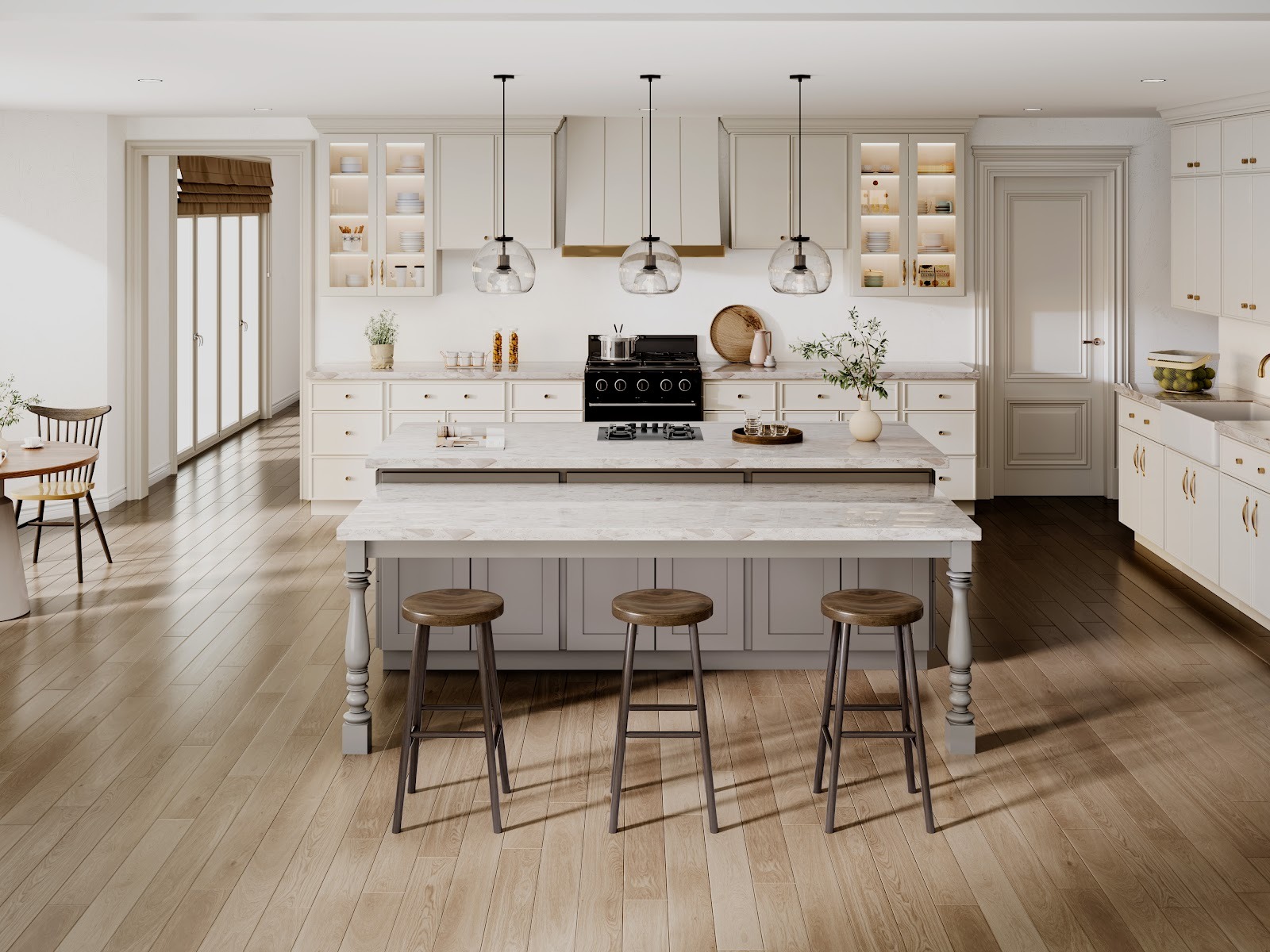
When you walk into a kitchen that immediately feels inviting — bright, organized, stylish — much of that impression comes from thoughtfully selected kitchen cabinets. Cabinets aren’t just “places to hide dishes”: they define how a kitchen functions, how it looks, and how long it lasts. A well-designed cabinet system can transform a basic cooking space into the heart of a home, making daily chores easier and elevating the overall vibe of the home.
Whether you’re cooking every day, hosting friends and family, or simply enjoying a cozy meal — the right cabinets can make or break how comfortable and efficient your kitchen feels. That’s why choosing the right materials, finishes, layouts, and hardware deserves serious thought. Before you dive into specific styles, it is often helpful to use a cabinet calculator to estimate your needs and budget, ensuring your vision aligns with your project's scope.
Cabinet Material Matters: Compare Your Options
One of the most important decisions when planning kitchen cabinetry is the material. Different materials bring different strengths, weaknesses, costs, and maintenance needs. Here are the main options.
Plywood — The Balanced All-Rounder
- Plywood — made by layering thin wood veneers — offers excellent strength and structural stability. It’s less prone to warping or sagging under weight, compared to many alternatives.
- It also tends to resist moisture and humidity better than many engineered wood products, which makes it a smart choice in kitchens — where water, steam, dishwashers, and sinks are common.
- For many homeowners and designers, plywood strikes the best balance between durability, performance, and cost.
Best for: Structural parts (cabinet boxes, shelving) and kitchens where durability and longevity matter.
MDF (Medium-Density Fiberboard) — Smooth Finish & Budget-Friendly
- MDF is engineered wood made from compressed wood fibers + resin. Its biggest advantage is having a very smooth, uniform surface, which makes it ideal for painted finishes or modern, flat-panel cabinet doors.
- It’s typically more affordable than plywood or solid wood — appealing to budget-conscious remodels or cost-effective kitchen makeovers.Because MDF lacks natural wood grain, it’s easier to paint or veneer consistently, which is perfect if you want a sleek, modern look.
However: MDF is more susceptible to moisture — in a humid or wet kitchen environment (near sinks, dishwashers, etc.), MDF may swell or degrade over time if not properly sealed.
Best for: Cabinet doors or drawer fronts — especially for modern, painted, minimalist-style kitchens — in kitchens with controlled humidity or where water exposure is limited.
Solid Wood — Classic Look, Premium Feel, But With Tradeoffs
- Solid hardwood cabinets bring timeless beauty, natural wood grain, and long-term potential — especially when properly maintained.
- The downside: wood can warp or crack over time when exposed to humidity or frequent moisture changes. That makes it less ideal if your kitchen is exposed to steam, water splashes, or heavy use — unless you invest in high-quality kiln-dried hardwood and careful maintenance.
- Also, solid wood cabinetry tends to be more expensive, so it's often chosen for high-end or custom kitchens.
Best for: Luxury kitchens, traditional or rustic design styles, or when you want the warmth and character of real wood.
Other Materials: Particle Board, Laminate, Metal — When to Consider Them
- Particle Board is the most budget-friendly option. It’s inexpensive and widely available, but it lacks the strength and moisture resistance of plywood or MDF, and under heavy load or humidity it can sag or deteriorate.
- Laminate / Veneer / Thermofoil: These are surface finishes applied over engineered cores (MDF or particle board), offering a modern look, varied colors, and easier cleaning. Great for contemporary kitchens, though long-term durability depends heavily on the quality of core materials and finishing.
- Metal / Stainless Steel Cabinets — often used in commercial kitchens or modern industrial-style homes; very durable and easy to clean, but typically more expensive and less “homey” in appearance.
These alternatives may make sense depending on your budget, design preferences, and how much durability you require.
Design & Functionality: More Than Just Looks
Choosing cabinet material is only part of the equation. Great kitchen cabinets shine when design, layout, and function come together — because a beautiful cabinet that’s impractical is still an annoyance.
Smart Layout & Storage Design
- Think about how you use your kitchen: Are you cooking daily? Do you store many pots, pans, small appliances? Then adjustable shelving, deep drawers, pull-out shelves or racks, and clever corner solutions (like lazy Susans or blind-corner drawers) are valuable. These features dramatically improve storage efficiency and user convenience.
- Work with the “kitchen work triangle” — the layout between stove, sink, and refrigerator — when designing cabinet placement, so the cooking flow stays efficient and safe.
- Maximize vertical space: if your ceiling allows, tall cabinets or stacked upper/lower units give more storage without eating floor space.
Finishes, Doors & Hardware — Impact on Aesthetics and Longevity
- For painted doors or modern flat-panel designs, MDF or veneer over a stable core tends to give the most consistent, smooth results.
- If you want natural-grain wood look, solid wood or real-wood veneer over plywood can offer richness and warmth; but these require good sealing and maintenance, especially in humid environments.
- Quality hinges, drawer slides (ideally full-extension metal slides), soft-close mechanisms, and durable hardware all contribute to how pleasant and long-lasting the cabinets are. Don’t under-invest here.
Budget, Longevity & Value: Thinking Long-Term
Buying kitchen cabinets is often one of the biggest investments in a home renovation. It pays to think not just about upfront cost — but long-term durability, maintenance, and how the kitchen will age.
- Budget vs. quality tradeoffs: Cheaper options (particleboard, basic MDF) may work for low-use kitchens or temporary setups — but for a kitchen that will see daily cooking, clean-up, and heavy use over years or decades, plywood or good-quality engineered materials are often the smarter investment.
- Maintenance & lifespan: Well-made cabinets with better materials — sealed plywood, sealed hardwoods, good hinges and hardware — can last decades when maintained properly. Conversely, low-cost boards in humid environments often show wear: warping, swelling, sagging or distorted doors.
- Home value and resale: A kitchen with quality cabinets — both in structure and design — adds value to a home; prospective buyers often pay more for kitchens that look solid, well-designed, and move-in ready.
Quick Decision Guide: Which Cabinet Material for Your Needs?
Your Priorities / Kitchen Type
| Recommended Cabinet Material / Setup |
Frequent cooking, heavy use, need durability & moisture resistance | Plywood kitchen cabinets — strong, stable, moisture-friendly
|
Budget-conscious or want modern painted look, light use | MDF cabinets (for doors/panels) + proper sealing, avoid water exposure |
Want natural wood look, willing to maintain, prefer classic or rustic style
| Solid wood or wood-veneer over plywood — for warmth and longevity |
Ultra-low budget, temporary kitchen, minimal use | Particle-board or laminate/thermofoil cabinets (with clear expectations about durability)
|
Modern/industrial aesthetic, easy cleaning, perhaps commercial use | Metal / stainless-steel cabinets (or modern laminate over engineered core) |
Final Thoughts: Cabinets Shape the Kitchen — Choose Wisely
Kitchens are often the heart of a home — where meals happen, conversations flow, and life unfolds. Cabinets play an outsized role in shaping that space. A good set of kitchen cabinets isn’t just furniture: it’s the foundation of cooking routines, storage habits, cleaning ease, and the day-to-day vibe of the home.
When remodeling or building a kitchen, invest time in understanding materials, construction quality, storage needs, layout, and finishes. A smart choice now can lead to decades of satisfaction — while a poorly chosen cabinet set often leads to frustration, early replacement, or compromises in function and style.
In short: treat kitchen cabinets as a long-term investment in your home and lifestyle. Choose materials and designs that fit both your needs and your future.








