In Ocean City, like communities nationwide, the challenges facing today’s students are multi-layered. They navigate the constant pressure of academic performance, the social complexities of adolescence, and the relentless pull of digital screens. In this high-stakes environment, educators and parents are urgently seeking simple, effective, and accessible methods to foster focus and reduce anxiety.
The surprising answer is emerging not from a new high-tech gadget, but from a decidedly low-tech source: the printable coloring page. What was once dismissed as a simple activity for preschoolers has been rigorously re-evaluated by mental health professionals and educators, now recognized as a powerful tool for cognitive wellness and stress reduction across all age groups—from kindergarten through high school.
The resurgence of coloring is rooted in cognitive science. It provides a perfect entry point into what psychologist Mihaly Csikszentmihalyi termed the "Flow State"—a state of mind where an individual is fully immersed in an activity, characterized by energized focus and enjoyment.
In our digital age, attention is often fragmented. When a student engages in coloring, the brain's activity shifts dramatically. Instead of being bombarded by stimuli from multiple apps or social feeds, the brain is given a narrow, calming task.
Dr. Elena Reyes, a pediatric neurologist, often notes that this process is profoundly therapeutic. "When you focus on selecting colors, staying within the lines, and observing the patterns, the brain engages the visual and motor cortices. Crucially, this distracts the amygdala, the area responsible for threat and anxiety detection," Dr. Reyes explains. "The rhythmic, predictable nature of coloring effectively lowers the stress hormone cortisol, creating a mental reset button. This effect is similar to meditation, but more accessible for those who find stillness difficult."
For students struggling with chronic stress or academic pressure, the ability to shift from a "reactive" state to a "focused creative" state is invaluable. It not only helps them relax but also significantly improves their capacity to absorb information afterward.
Teachers are strategically integrating coloring into the school day, recognizing its value far beyond mere "downtime" or art class.
For younger students, the benefits are physical and foundational. Holding a crayon, marker, or pencil with control while coloring directly strengthens the small muscles in the hand. This sustained, deliberate practice is a critical prerequisite for developing legible handwriting and achieving the necessary muscle endurance for long writing assignments—a skill increasingly challenged by the early adoption of tablets and keyboards.
In Social-Emotional Learning (SEL), coloring provides a crucial, non-verbal communication tool. Teachers can use thematic coloring sheets (e.g., sheets depicting kindness, frustration, or friendship) to initiate discussions about feelings. Some educators ask students to "Color how your day feels," allowing them to express complex emotions using vibrant or muted palettes without the pressure of finding the right words. This visual processing aids emotional regulation and gives teachers valuable insight into a student’s internal state, particularly useful in counseling or special education settings.
The utility of coloring extends across academic subjects, maximizing visual memory and engagement:
While coloring is fundamentally a non-digital activity, technology plays a vital supporting role in making it accessible and diverse. Physical coloring books are limited in scope and content. In contrast, online resources offer the flexibility that modern educators require.
Digital resources provide:
A resource that has become familiar to many educators is Direct Coloring, a massive library offering over 50,000 free printable coloring pages. Platforms like Adobe also provide a wide variety of these pages, allowing students to download, print, and use them immediately for classroom activities or at-home relaxation. This rapid access is crucial, especially when teachers need a quick transition activity to settle a classroom.
The appeal of coloring pages is not limited to elementary schools. Recent cultural trends, particularly on social media platforms, have made coloring trendy for middle and high school students.
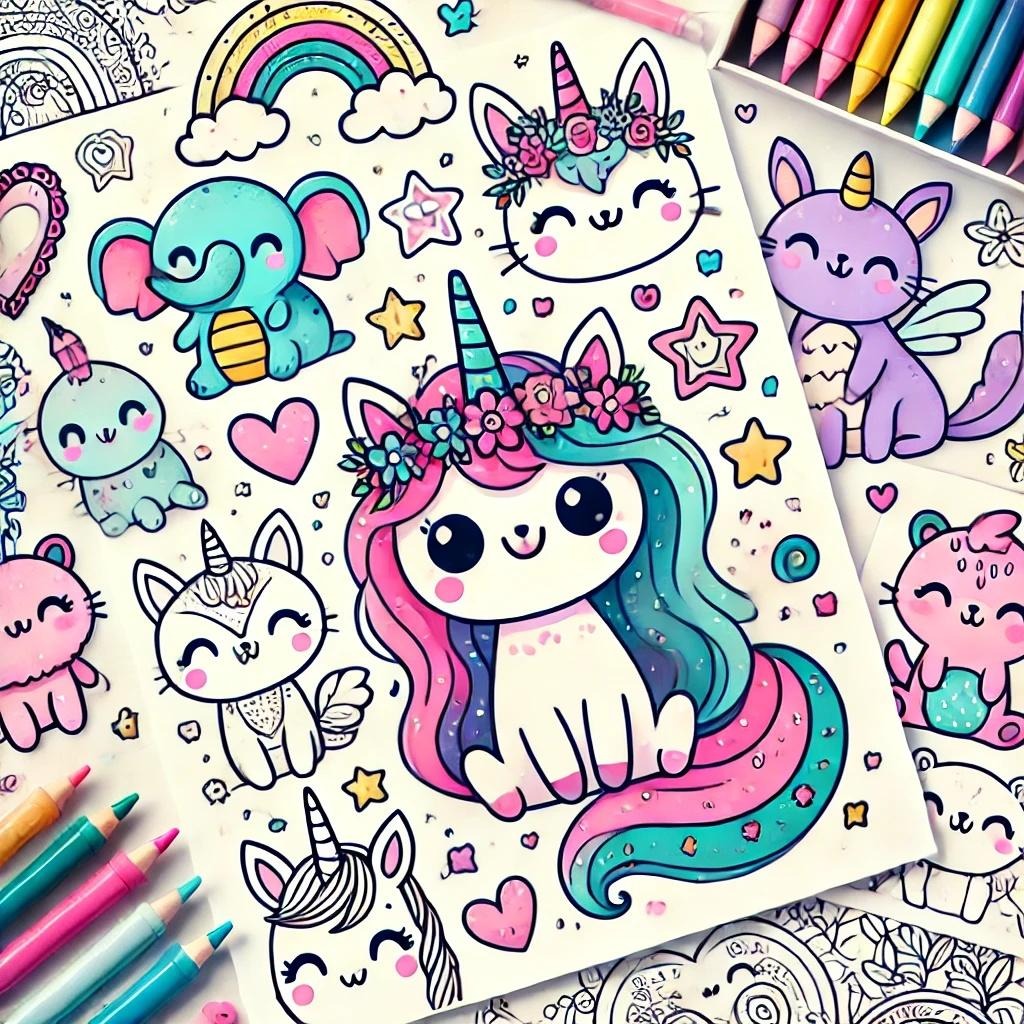
One of the most popular categories is the "Cute Aesthetic"—designs featuring chubby characters, simple outlines, and soft, pastel-style illustrations. For Gen Z and Millennials, this serves as a form of nostalgia and a conscious, gentle counterpoint to the intensity of the adult world.
Furthermore, coloring has become part of the ASMR (Autonomous Sensory Meridian Response) culture. Slow, relaxing videos of people filling in illustrations, complete with the gentle sound of gel pens or markers gliding across paper, attract millions of views. These videos are often used as tools for stress relief and aiding sleep.
The sheer variety of coloring pages available online ensures that every age group finds designs tailored to their interests, from intricate geometric patterns for adults to trending cute characters for teens.
Outside the classroom, coloring has emerged as an important "family ritual." Many parents view coloring time as a meaningful bonding moment.
In many homes, coloring together is one of the few truly analog activities where all family members, from toddlers to adults, can participate without relying on screens. It creates a safe space for children to relax and share their day's events.
For adults, it also serves as an excellent grounding nighttime habit—a tactile, present activity after hours of screen exposure. This simple act reduces visual fatigue and clears the mind, promoting better sleep. By prioritizing these simple activities, families are actively fostering a healthy culture of "digital detox."
Coloring has successfully transitioned from a simple recreation to a multifaceted tool, supporting both mental wellness and cognitive development. It stands as a perfect example of how sometimes, the most effective solution to complex modern problems lies in simplicity.
It is:
In an overstimulated world, coloring reminds us to slow down, be intentional, and find joy in the smallest things. Schools and families in Ocean City should continue to leverage this positive trend as an easy, effective strategy to nurture the focus and mental health of the next generation of students.