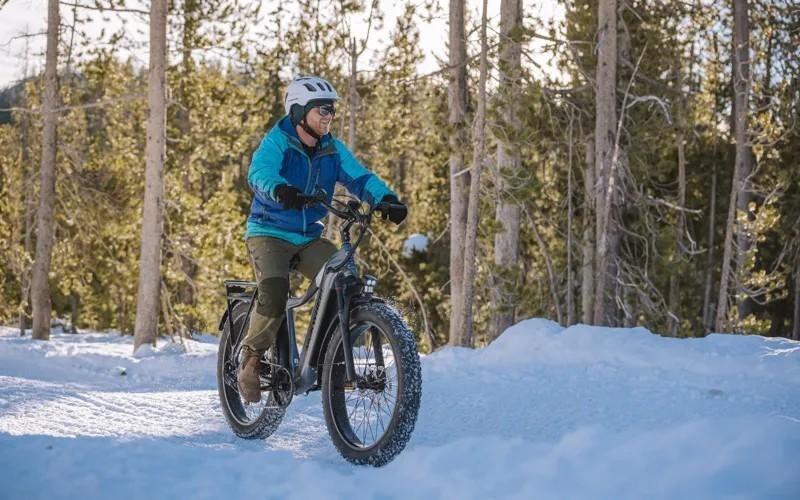
As more regions experience long winter seasons, electric snow bikes are becoming an increasingly popular choice for both outdoor recreation and daily commuting. With wide tires, powerful motors, and strong anti-slip performance, these bikes maintain stability on snow-covered and icy surfaces. However, riding in snowy conditions is very different from riding on regular roads. Beginners must learn a few essential skills to ensure a safe and enjoyable winter riding experience.
Snowy environments present three major challenges.
First, traction on snow and ice is limited, causing tires to slip more easily.
Second, low temperatures affect battery performance, reducing range—the colder it gets, the more noticeable the loss.
Third, uneven snow surfaces or hidden ice layers require riders to have steady control and stronger handling skills.
Wide tires increase ground contact, while lower tire pressure helps the tires better conform to the surface, improving traction. Tires between 4.0–5.0 inches are ideal for snow riding.
Depending on conditions, adjust tire pressure to 5–15 PSI. In areas with heavy ice, studded snow tires can significantly increase grip.
A more powerful motor with higher torque makes it easier to handle thick snow and steep terrain. A 750W or higher motor is typically recommended. For the battery, a large capacity (700Wh or more) helps offset range loss in cold weather. Keeping the battery at room temperature before riding can further improve performance.
Winter roads are slippery, so strong and responsive hydraulic disc brakes are ideal for maintaining safe stopping power in snowy or icy conditions.
Among the many electric snow bike brands, Mokwheel has gained growing attention in recent years—not only for its strong performance but also for its thoughtful design tailored to harsh climates. Many Mokwheel fat-tire electric bikes come equipped with 4-inch or wider tires, offering excellent traction on soft snow and icy surfaces. Their high-torque motors deliver stable power output even in deep snow, preventing power shortages during difficult sections.
Mokwheel’s large-capacity batteries also perform well in low temperatures, providing a more reliable winter range. Even more impressive, some models support a portable outdoor power system, making them ideal for winter camping, exploration, and long-distance rides. If you’re looking for an electric bike truly capable of handling winter conditions, Mokwheel is a brand worth serious consideration.
Ensure tire pressure is appropriate, tread is visible, and braking response is steady.
Use windproof goggles, waterproof outerwear, insulated gloves, and high-visibility front and rear lights.
Beginners should choose simple, flat routes with minimal traffic and avoid steep or complex terrain.
Avoid sudden acceleration, abrupt braking, or sharp turns.
It provides smoother power delivery and reduces the chance of wheel slip.
Keep the bike upright, hold the handlebars firmly, and pass through slowly to avoid sliding.
For climbing, build momentum early and maintain your cadence.
For descending, shift your weight back and apply brakes lightly and gradually.
Wipe down the bike to prevent salt and snow corrosion, clean and re-lubricate the chain, and store the battery indoors.
Snow riding is a unique and memorable experience. With the right skills, proper gear, and a cautious attitude, you can enjoy a safe and liberating winter journey on your electric bike.
Yes, but the range will decrease in low temperatures. Keep the battery warm indoors before riding and avoid leaving the bike in freezing conditions for long periods.
Not recommended. Start on light snow and flat surfaces to learn control first, then gradually move to deep snow, icy terrain, or slopes.
Not necessarily. The ideal range is 4.0–5.0 inches. Too wide reduces maneuverability, while too narrow reduces traction.
Yes. Mokwheel bikes typically feature high-torque motors, wide stable tires, and large-capacity batteries, offering smooth power and comfortable riding—excellent for beginners and winter commuters.
Lower pressure increases traction, but too low increases the risk of tire damage. The recommended range is 5–15 PSI, adjusted based on snow conditions.
Yes. Snow, salt, and de-icing chemicals accelerate corrosion. Clean your bike after each ride, keep it dry, and store the battery indoors.
Slipping is more common on snow, but risks can be greatly reduced by riding slowly, avoiding sudden movements, using wide or studded tires, and increasing visibility.
Technically yes, but not recommended. Regular electric bikes have narrow tires and braking systems not optimized for slippery surfaces. Snow-specific electric bikes provide far safer handling.
It functions as a portable power source for heating equipment, lighting, or camping gear—especially valuable for winter exploration and long rides.
With a high-power motor (750W+), climbing snowy hills is manageable. Maintain a steady cadence and use pedal assist to ride uphill more easily.