When considering purchasing a prefabricated home, you must have asked yourself: "Will this thing really stand up in a storm?" It's a fair question. No one is going to invest in a house that is not able to withstand whatever nature has to offer.
The short answer is: Yes, contemporary prefab houses are surprisingly strong. Let me explain why.
Prefab homes are constructed in a plant and shipped to your location in sections. Imagine high-quality furniture that comes together ready-made—only it is your whole house.
There are a few types:
The factory setting is actually a great benefit. Your house is not sitting out in the rain while builders construct it. All work is done indoors, and quality checks are performed at each stage.
Absolutely. Prefab homes must meet the same building criteria as other houses. In most instances, they are checked with extra care since they are inspected after manufacturing and again after installation on your land.
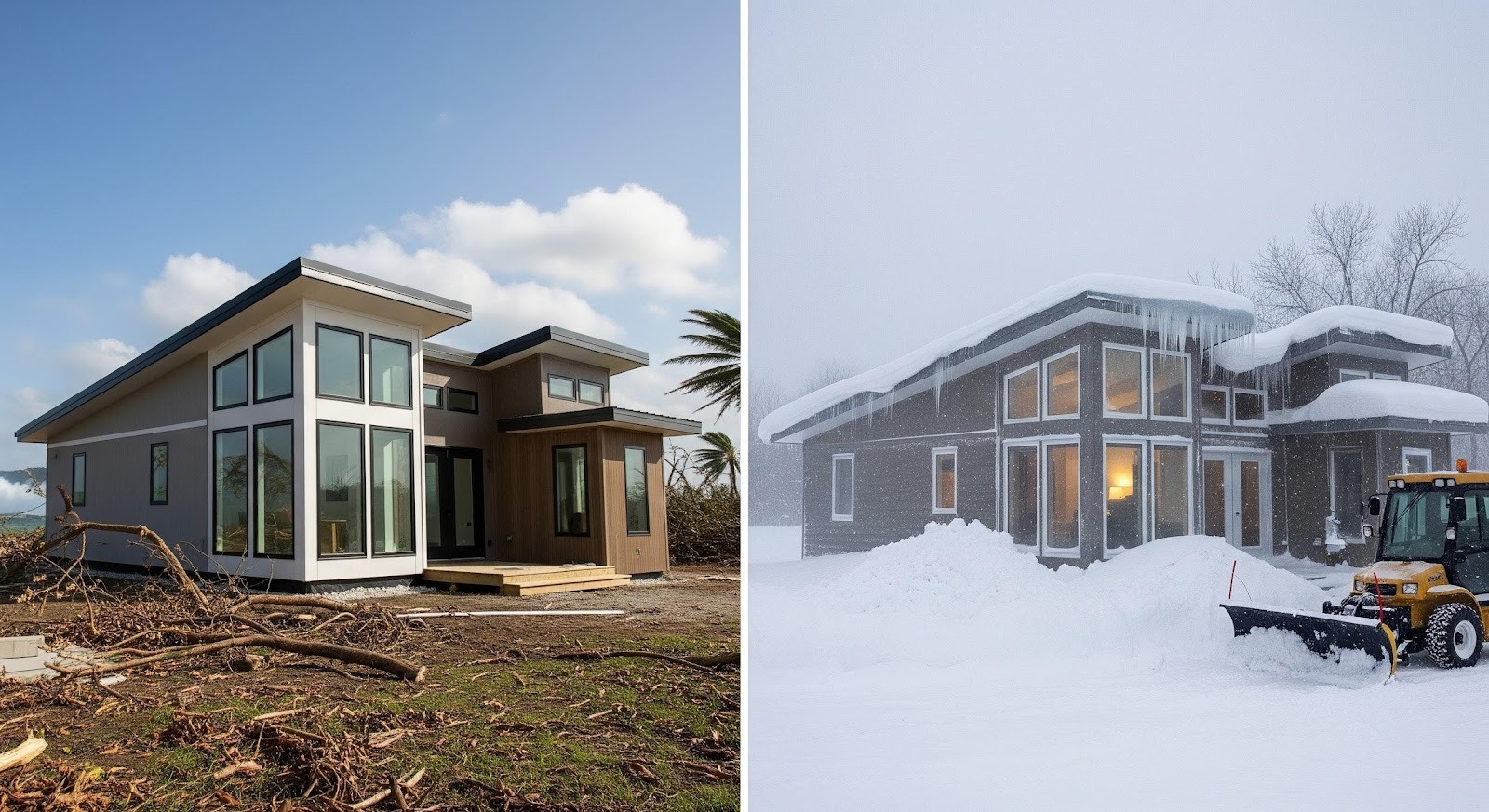
Live in hurricane country? Your prefab will be constructed to withstand winds of 110mph and above. Lots of snow where you are? The roof will be made to carry all that weight. These are not optional extras; they are mandatory by law.
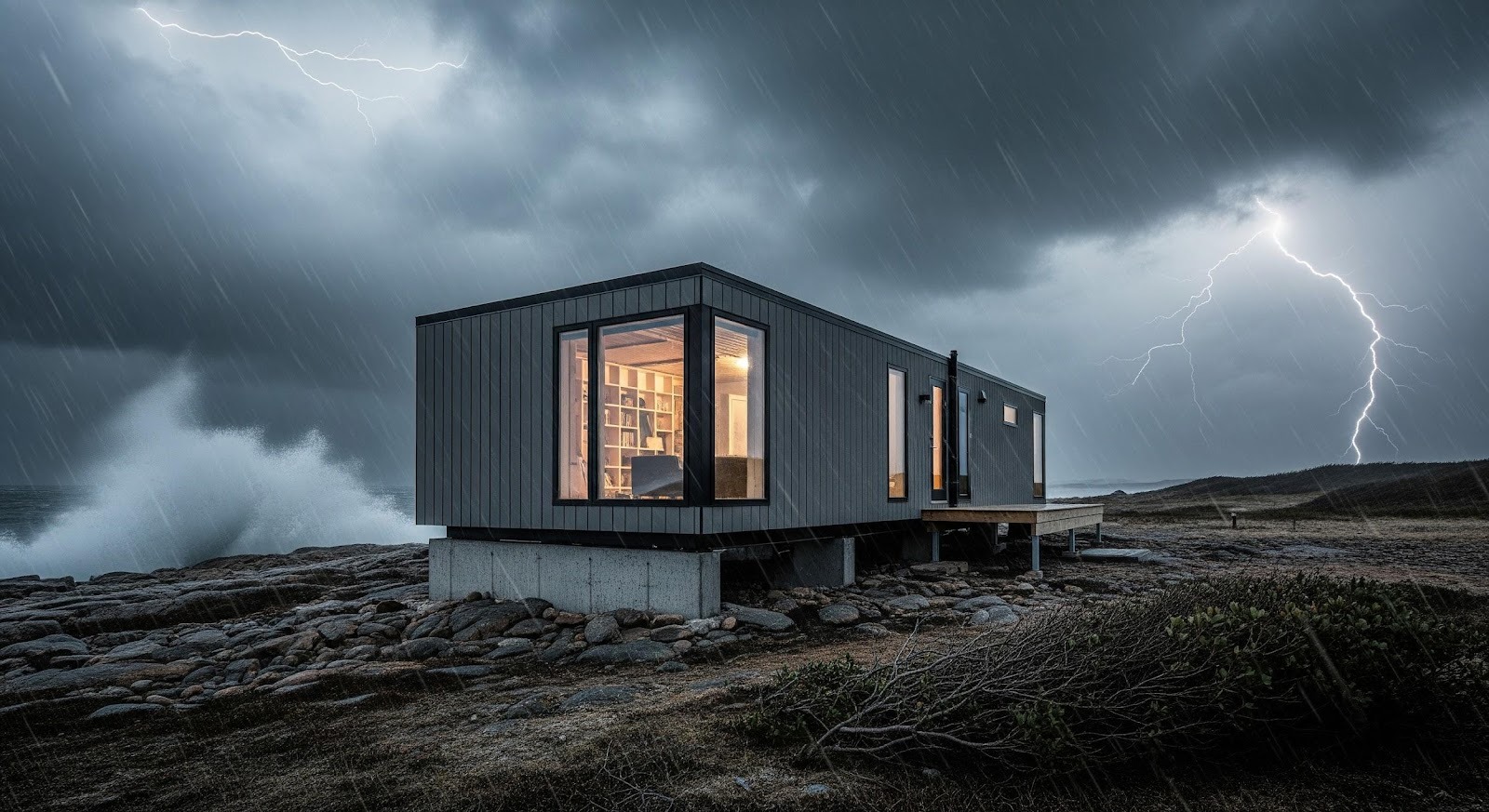
Modern prefab homes are engineered with serious wind resistance. They are joined with heavy-duty steel straps and bolts to the walls, roof, and floors. Wind cannot easily lift your roof because everything is fastened together into a single strong system.
Engineered lumber is also used by many builders; it is stronger and more consistent than ordinary wood. This is crucial when you are in 100+ mph winds.
Prefab homes in cold climates have roof trusses capable of supporting heavy snow. They are not made in a warehouse with approximate measurements; therefore, there is no guesswork.
The tightness of the construction also prevents ice dams—pieces of ice that build up on your roof lip and lead to leaks. Better protection implies better insulation.
Prefab homes in earthquake-prone areas are constructed with additional structural support in the walls and foundation. Their segmented structure actually allows them to flex slightly during shaking, preventing them from falling apart.
The quality of your home lies in the hands of the builder. To ensure that your house is well suited to your local climate, a good custom home builder will ensure your house is built to suit the environment. They will understand which modular home designs perform well in your locality and will be able to recommend improvements if needed.
Ask questions like:
A good builder will have clear answers.
A prefab home, as tough as it may be, requires a solid foundation. The soil on which you build is just as important as the house itself.
A higher foundation may be required in flood-prone areas. In cold climates, the foundation should be deep enough to prevent frost damage. Special anchors hold everything in place in windy locations.
Ensure that you contract seasoned professionals for this aspect.
All houses should be well maintained to remain weather-proof. For your prefab house, this means:
The good news? Prefab houses tend to be sealed tighter than traditional houses, so they are less prone to issues.
The practical outcomes are quite remarkable. Prefab homes have endured hurricanes, direct tornadoes, and heavy snowstorms.
Following Hurricane Katrina, insurance companies realized that modular homes fared better than most traditional houses in the same regions. This has been reported following other large storms as well.
Why? Good engineering, quality control, and installation work hand in hand.
Yes—when it is constructed properly, installed properly, and kept in good condition. Indeed, your prefab house could be stronger than a conventionally constructed one due to its meticulous construction.
The keys to success:
Do these things, and your prefab home will shelter you through whatever storms you encounter.