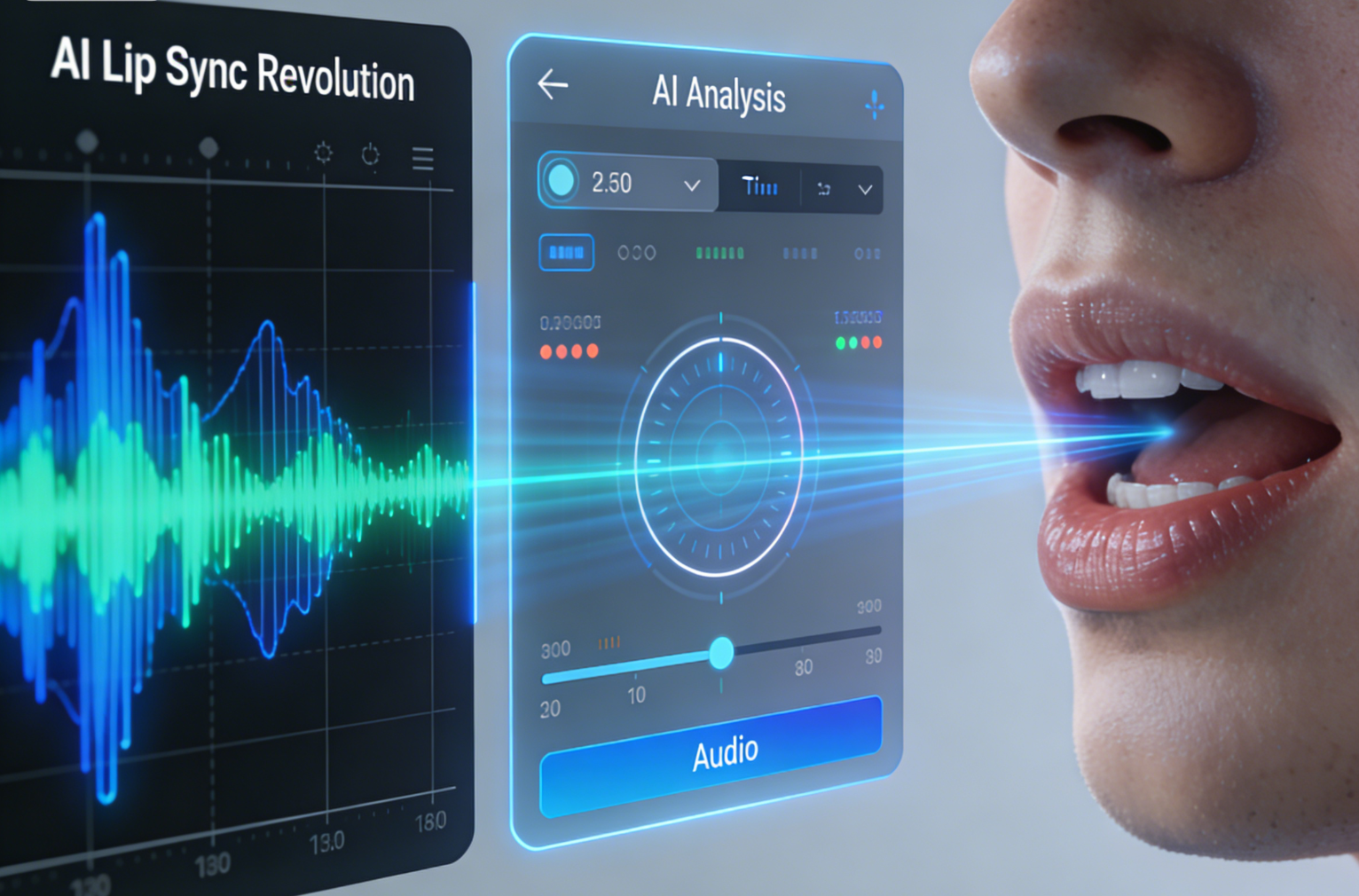
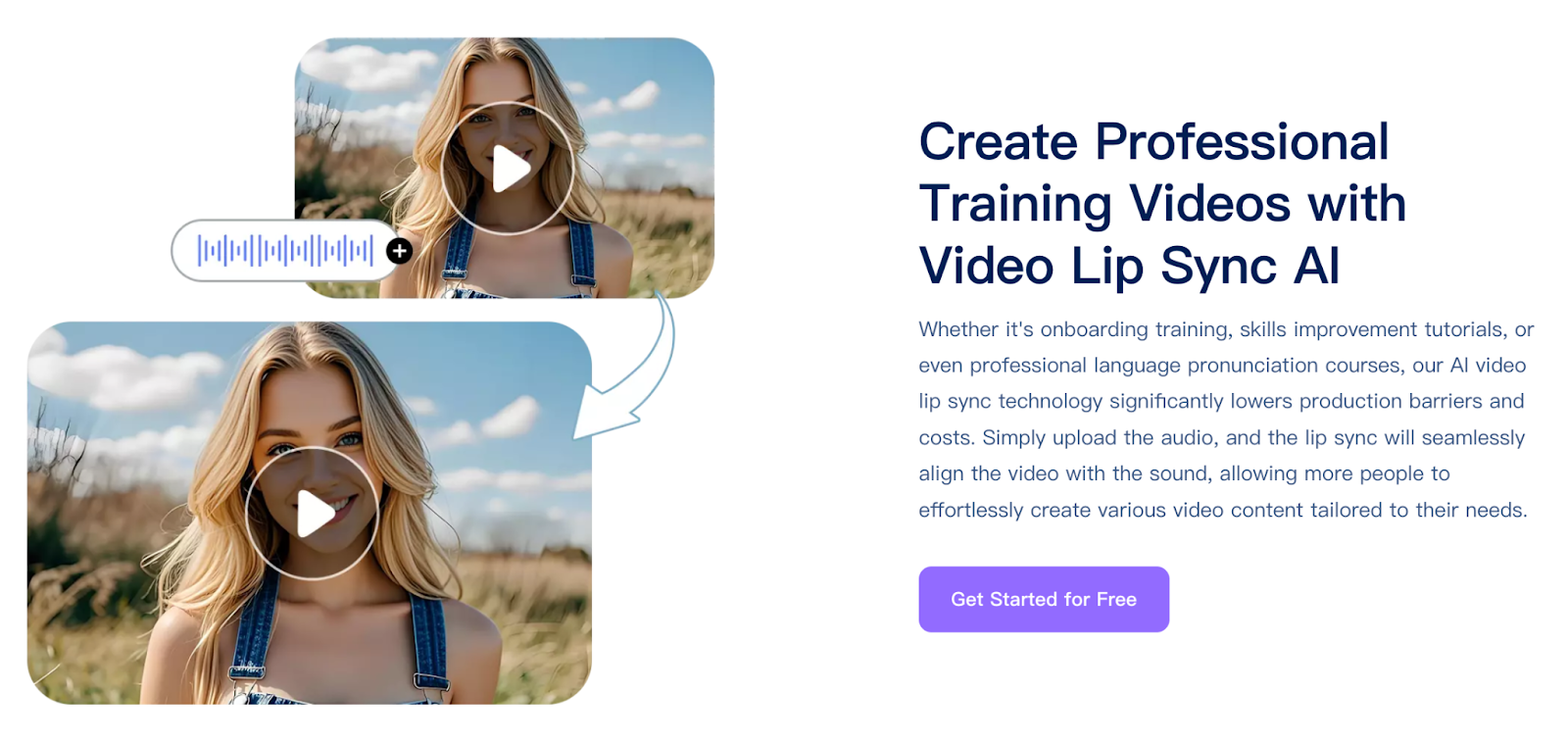
In recent years, the demand for realistic digital avatars, virtual influencers, and localized video content has surged. At the heart of this transformation lies lip sync AI—a groundbreaking technology that maps spoken audio to accurate facial movements. Specifically, the ability to input English audio and automatically generate synchronized lip movements for speakers of other languages represents a major leap in cross-lingual media production. Whether you're creating educational videos, dubbing films, or building interactive chatbots, modern lip sync AI systems now offer unprecedented realism and efficiency. This blog explores how AI-powered lip synchronization bridges language barriers while maintaining natural-looking articulation, focusing on the innovative pipeline that starts with English audio and outputs multilingual lip-synced video.
AI lip sync generators have evolved from simple phoneme-mapping tools into sophisticated deep learning systems capable of handling complex linguistic and visual nuances. When the source is English audio but the target speaker appears to be speaking another language (e.g., Spanish, Mandarin, or Arabic), traditional methods fail due to mismatched phonetic structures and timing. AI-based solutions overcome these limitations through advanced modeling and cross-lingual adaptation.
Modern AI lip sync generators use neural networks trained on multilingual speech and video datasets. These models learn not only how English phonemes correspond to mouth shapes but also how those same mouth shapes can be adapted—or reinterpreted—to match the articulatory patterns of other languages. For instance, even if the input is an English sentence, the system can infer how a native French speaker would move their lips to say the translated version, thanks to learned cross-lingual viseme (visual phoneme) correlations.
Accurate lip sync isn’t just about matching sounds—it’s about timing, rhythm, and emotional prosody. AI systems now incorporate temporal alignment modules that adjust mouth movements frame-by-frame to match the cadence of the target language, even when the original audio is in English. This ensures that pauses, emphasis, and intonation feel natural to native viewers, avoiding the “robotic dubbing” effect common in older technologies.
A key advantage of current AI lip sync generators is their ability to preserve the speaker’s identity. Using techniques like 3D morphable face models or diffusion-based animation, these tools animate only the mouth region while keeping eye movement, head pose, and expression consistent with the original video or avatar. This is especially crucial in multilingual scenarios where the same digital persona must appear fluent across dozens of languages without losing recognizability.
The ability to generate realistic lip movements from English audio for non-English speakers unlocks a wide array of real-world applications. From entertainment to education, businesses and creators are leveraging lip sync AI to scale content globally while maintaining authenticity.
Educational platforms can record a single English lecture and automatically generate versions with instructors “speaking” in Spanish, Hindi, or Japanese—all with perfectly synced lip movements. This drastically reduces localization costs and accelerates course deployment in new markets, making high-quality education more accessible worldwide.
Traditional dubbing requires voice actors and manual animation—a slow, expensive process. With an AI lip sync generator, studios can input the original English dialogue and instantly produce dubbed scenes where characters’ lips match the target language. This is particularly valuable for streaming services aiming to localize vast libraries quickly.
Brands increasingly use virtual influencers for marketing. These AI personas must speak multiple languages convincingly. By feeding English scripts into a lip sync AI system, marketers can generate social media clips where the avatar appears to speak fluently in German, Korean, or Portuguese—enhancing engagement without hiring multilingual talent.
AI-powered customer support agents with human-like faces are becoming common. Using multilingual lip sync, a single backend English response engine can drive front-end avatars that “speak” the user’s native language with accurate mouth movements, improving trust and comprehension in global support interactions.
For sign language users or those who rely on lip reading, accurate visual speech is essential. AI lip sync tools can generate clear, exaggerated mouth movements tailored to specific languages, aiding comprehension. Even when the source is English audio, the output can be optimized for visual clarity in French or Arabic-speaking deaf communities.
Content creators often struggle to reach international audiences. With a lip sync AI free tool, a YouTuber can upload an English vlog and generate versions where their digital twin speaks Italian or Thai—complete with natural lip movements—allowing them to grow global followings without re-recording.
Today’s best-in-class AI lip sync generators combine speed, accuracy, and ease of use. They’re no longer niche research prototypes but production-ready tools accessible to developers, marketers, and educators alike.
Many platforms now offer real-time lip synchronization, enabling live avatars during virtual events or interactive broadcasts. Powered by lightweight neural networks, these systems process English audio streams and render synchronized mouth movements within milliseconds—ideal for gaming, live customer service, or metaverse applications.
Leading lipsync AI tools support a broad range of languages, including tonal ones like Mandarin and Vietnamese, as well as right-to-left scripts like Arabic and Hebrew. The underlying models account for language-specific articulation quirks, ensuring that lip movements remain anatomically plausible and culturally appropriate.
Users can upload their own photos or 3D models to serve as the speaking avatar. Advanced tools allow fine-tuning of lip shape, teeth visibility, and even micro-expressions to match brand guidelines or personal preferences—making the output feel uniquely theirs.
Whether you’re a developer integrating lip sync into an app via API or a marketer using a drag-and-drop web interface, modern platforms cater to all skill levels. Some even offer lip sync ai free tiers for experimentation, lowering the barrier to entry for small teams and individual creators.
The convergence of speech processing, computer vision, and generative AI has made it possible to turn English audio into lifelike, multilingual lip synced video with remarkable fidelity. As these tools become more accessible—through both free and enterprise-grade offerings—they empower creators, educators, and businesses to communicate across language barriers without sacrificing authenticity or emotional resonance. Far from being a novelty, AI-driven lip synchronization is fast becoming a cornerstone of inclusive, global digital media.