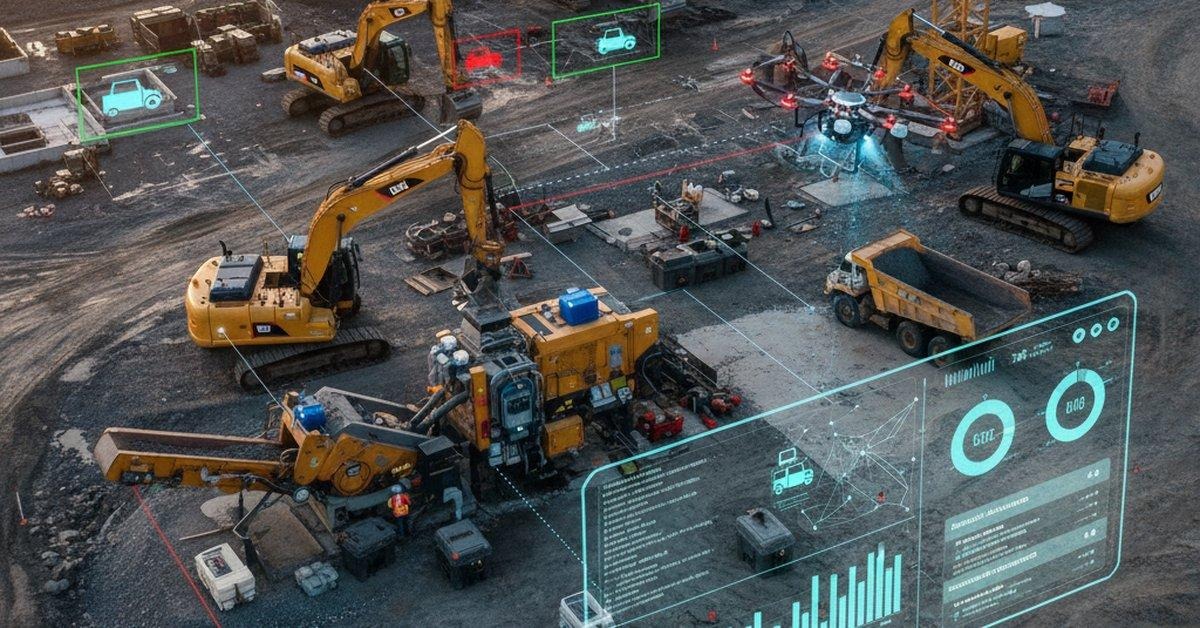
Construction success depends on knowing where your equipment is, how it’s being used, and whether it’s earning or burning money. Whether it’s excavators, dozers, or generators, every piece of machinery contributes directly to production and profitability.
For many contractors, tracking used to mean whiteboards, spreadsheets, or word of mouth. These manual systems collapse as soon as projects multiply or equipment starts moving between jobs.
Today, construction equipment tracking software is solving that problem, turning every machine into a data point that fuels better scheduling, utilization, and financial control.
Construction equipment rarely stays in one place. Machines rotate between multiple projects, staging yards, and service areas. If location tracking is manual, errors are inevitable.
Modern equipment tracking tools use:
These tools provide a live map of equipment locations. This eliminates time-consuming phone calls to figure out where a machine is, reduces duplication of rentals, and prevents accidental hoarding of equipment on low-priority sites.
Knowing where your assets are is the first step toward using them efficiently.
A machine is only as productive as the hours it operates. Traditionally, usage hours were logged manually by operators. But manual logs are easy to forget, misestimate, or lose.
Telematics-enabled systems automatically record:
This data feeds directly into scheduling and maintenance planning.
Why does this matter? Because maintenance intervals are often based on engine hours—not calendar dates. If hour logs are wrong (or missing), maintenance is either delayed or performed too early. Both outcomes cost money.
Automated usage tracking removes guesswork and protects the equipment investment.
One of the biggest inefficiencies in construction is not knowing what’s available and when. Equipment tracking software gives dispatchers real-time visibility into fleet availability, helping them:
Platforms like Clue make this process seamless by connecting field requests, approvals, and logistics into a single digital workflow.
Tracking transforms dispatch from reactive phone calls to proactive resource management.
Accurate equipment records help teams make smarter long-term decisions. A digital record follows each asset for its entire lifecycle, including:
This gives managers clarity on:
This also improves accountability. If equipment arrives at a job damaged, digital check-in history shows when and where the issue occurred, no finger-pointing required.
Clear records protect both equipment and the budget.
Tracking data becomes even more powerful when it connects to project costing, billing, and ERP tools.
Leading software platforms like Clue, Sage 300 CRE, and Viewpoint integrate tracking with financials, so usage hours and location data automatically feed into cost codes and project budgets.
The result: equipment tracking data drives not just logistics, but profitability.
In construction, equipment information needs to travel across many roles:
Technology provides a shared source of truth for real-time equipment tracking. Field operators can instantly log equipment check-ins and usage from their mobile devices. Yard teams can confirm transfers or deliveries as they happen. Managers can view live maps, utilization summaries, and cost reports in seconds, all from the same dashboard.
When tracking data flows automatically, everyone from dispatchers to project managers has the same clear picture of where every machine is and how it’s being used.
Older tracking systems were clunky, desktop-bound, and rarely adopted in the field. Today’s equipment tracking software is built to be mobile-first, intuitive, and field-ready, designed for operators, yard managers, and dispatchers who need quick answers, not long tutorials.
Modern platforms like Clue emphasize real-time visibility and seamless field-to-office updates. Operators can check in equipment with a few taps, site leads can see live availability, and managers can reassign machines instantly, all within familiar workflows.
This shift matters because a tracking system only delivers value when everyone actually uses it. By making adoption effortless, these tools turn accurate tracking into a daily habit instead of a chore.
Ease of use isn’t a luxury, it’s what makes tracking accurate, consistent, and profitable.
Technology has transformed construction equipment tracking from a manual guessing game into a real-time, data-driven advantage. Contractors using modern tracking software now have clear visibility into where their machines are, how often they’re used, and how efficiently they’re deployed.
Meanwhile, teams still relying on spreadsheets, calls, or memory are losing hours and money to misplaced assets, double bookings, and underused machines.
In an industry where every hour counts, contractors who track with precision operate with an edge. Technology doesn’t replace field expertise, it multiplies its impact by giving teams the clarity to act faster, smarter, and more profitably.