
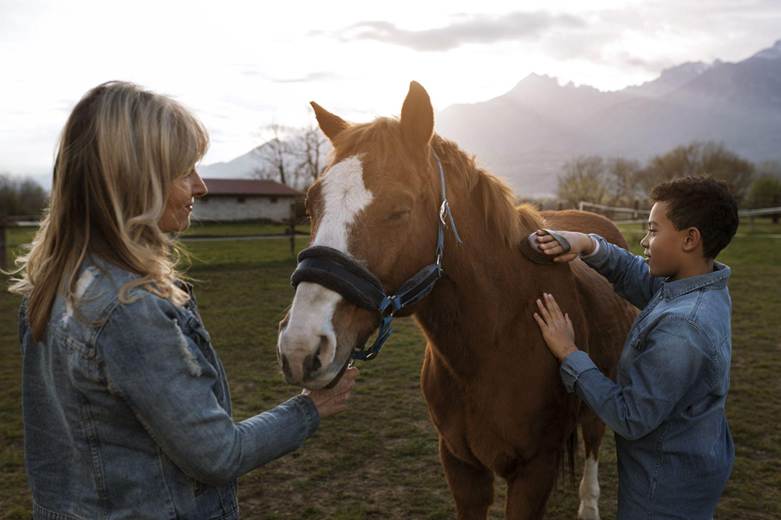
It's emotionally taxing for families when a teen needs support but insists they're fine, refusing traditional counseling or difficult conversations. Equine therapy becomes a meaningful alternative because it engages teens differently, not through forced dialogue, but through experience, connection, and nonverbal communication. This approach offers a pathway for teens who avoid vulnerability, resist help, or believe nothing is wrong.
Many adolescents coping with anxiety, depression, trauma, masking, or emotional shutdown rely on self-protection behaviors. Rather than requiring them to express their feelings before building trust, equine therapy creates an environment where they can first experience safety. That shift often becomes the starting point for change
Teens who say they don’t need help often share similar emotional patterns. They may:
With equine therapy, the process begins with presence rather than pressure. Horses rely on subtle cues, breath, tone, posture, and intention, allowing teens to experience connection without forced disclosure.
This is why equine therapy is often more effective for resistant teens than verbal-first methods. Instead of debating whether help is needed, the experience itself shows them what safety feels like.
Horses respond without analyzing or labeling behavior. They react to emotional congruence, meaning they pick up when someone’s inner state does not match their outward presentation. For teens who say they’re fine when they are not, the response creates a powerful moment of reflection.
During equine therapy, a teen may approach a horse confidently while feeling anxious internally. The horse may step back or disengage, mirroring the unspoken emotion. This feedback feels different from a parent or therapist pointing it out; it feels honest, natural, and safe.
This gentle mirroring can help teens:
The process supports emotional growth without confrontation, one of the reasons equine therapy works for teens who resist support
A key reason equine therapy works where talk therapy may stall is the level of autonomy built into the experience. Teens are not told how to feel or what to do; instead, they are invited to work together. They choose how to approach, interact, and engage, and those choices create natural consequences and learning opportunities.
Many resistant teens are not opposing the support they receive; rather, they are resisting the loss of control over their lives. Equine therapy restores that sense of control in a structured and therapeutic manner.
Meaningful shifts might include:
Over time, these experiences transfer into real-life communication and relationships.
Studies in trauma-informed and experiential therapeutic models validate the advantages of programs such as equine therapy. The National Institute of Mental Health highlights how emotional regulation, nervous system response, and body-based therapies play an essential role in healing, particularly for adolescents who struggle to express or even identify their feelings.
Because the work is somatic and relational, teens begin processing stress not just cognitively, but physically and emotionally. This makes equine therapy especially helpful for:
By engaging multiple parts of the nervous system, the therapy helps teens shift from survival mode into connection and learning.
Many families notice changes before teens are willing to name them. Through consistent involvement in equine therapy, adolescents often begin developing skills such as
Lived experience, not lectures, yields these outcomes. Horses require authenticity, safety, and clarity, skills that translate directly into friendships, school environments, and family dynamics.
Resistance is often the protective layer teens use when they feel overwhelmed or misunderstood. Equine therapy bypasses that defense by offering:
Over time, many teens who first entered reluctantly begin to share more, participate willingly, and open themselves to broader forms of support, including traditional counseling. The therapy is a way to get to the next step, not the end.
When a teen insists they don’t need help, families often feel frustrated or powerless. But resistance does not equal failure; it often signals fear, exhaustion, or uncertainty. Equine therapy gives these adolescents a safe, grounded path forward by helping them reconnect with confidence, emotional awareness, and trust at their pace.
For teens who shut down, detach, or refuse traditional help, this approach offers something rare: a therapeutic environment where healing begins through connection, not confrontation.







