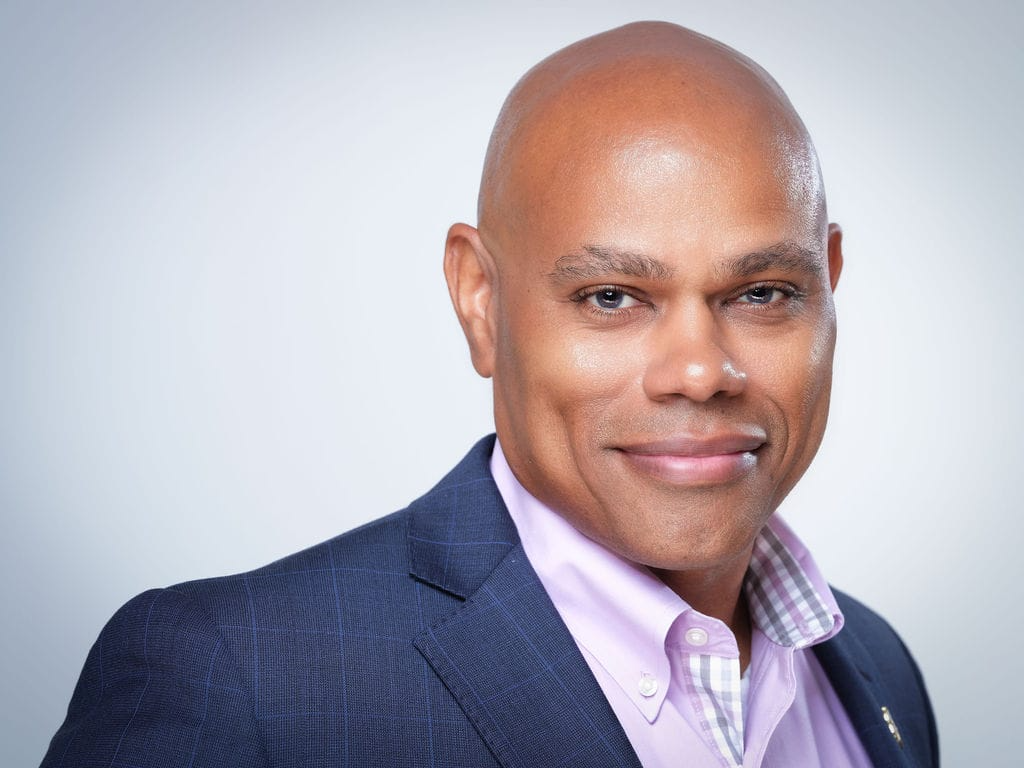
Douglas Lemott Jr. has built a career founded on something bigger than technical proficiency. While his CV includes more than three decades of IT and security leadership in the U.S. Marine Corps, VMware, SAP NS2, and today the Analysis and Resilience Center for Systemic Risk, his reputation has to do with service, discipline, and mentoring.
With every turn, he has exemplified that good personal branding has little to do with self-promotion and everything to do with consistency of action. His leadership infuses discipline and trust, structure and empowerment, and mission and community. And as a veteran of the United States, he continues to translate those values into work that serves national infrastructure and the individuals behind it.
Leadership Is Built on Trust, Not Tools
In his current role as Chief Information Security Officer at ARC, Douglas Lemott Jr. emphasizes a guiding principle: people, then processes, then tools. This approach grounds his leadership in human relationships first. Rather than default to technical solutions, he starts by listening to his teams, to stakeholders, and to the needs of the broader mission.
“Processes aren’t chains,” he said. “They’re structures. And people should be empowered to impact them.” That mindset creates an atmosphere in which team members don’t hesitate to share ideas or push boundaries. Through one-on-one check-ins, bottom-up audits, or post-mortems, Lemott solicits and acts on feedback to streamline.
His leadership model has been influenced in part, however, by his career in the Marine Corps, during which he led cybersecurity for more than 300,000 users on the Marine Corps Enterprise Network. It's a high-stakes environment that calls for exactitude. It's called, as well, for adaptability. His team had to become comfortable working within protocols and breaking out when the situation called for it.
Creating Momentum Through Mentorship
One thread of consistency throughout Lemott’s career has been emphasizing the importance of mentoring future leaders. In the military and in business, he looks past titles and looks at potential. He promotes what he defines as “bounded risk-taking”, giving professionals latitude to experiment with ideas within well-defined boundaries.
He shares that real leadership shows when your team performs well in your absence. This starts with creating psychological safety. In his teams, no one is penalized for challenging old routines or asking a better question. By embedding this mindset into daily operations through scenario planning, red teaming, and structured feedback. He enables people to learn and lead at the same time.
"See, you know you've done well," he said, "when your team isn't just following the playbook, but redacting the playbook, knowing full well the risks and the rewards."
A Veteran's Obligation to Service After the Uniform
Douglas Lemott Jr. spent 27 years in the United States Marine Corps prior to getting into private sector cybersecurity. His time in uniform affects more than just leadership style; it motivates his overall mission.
He remains actively involved in supporting fellow veterans, advocating for policies and programs that help military personnel transition into meaningful civilian careers. That includes work in mentorship, professional development, and systems design that considers the unique strengths and challenges of veterans entering the tech workforce.
This mindset also defines how he addresses cybersecurity. Where threats change quickly and failure has national implications, Lemott doesn’t simply operate on tech alone; he develops teams to think and act strategically. His military experience instills discipline and order in industries that so often favor swift movement over solidity.
Community Engagement Based on Action
The service ethos of Lemott transcends professional life. Whereas his external work deals in systemic cybersecurity and critical infrastructures, his priority in personal life includes hands-on involvement in communities.
He advocates local causes involving underserved youth, especially in tech education and career guidance. His creed lies in viewing leadership as best ascertained not in terms of what one commands, but in terms of what one elevates in other people.
Instead of pursuing media coverage or camera time, Lemott regularly shows up in the literal and figurative sense, meaning providing advice to junior professionals, making appearances at community gatherings, or collaborating with veterans and underserved family-focused organizations. Such commitments mirror his view that leadership includes an obligation to serve.
Structured Creativity Under High-Stakes Conditions Lemott does not subscribe to the view that structure and creativity can't mix. He argues vigorously that creativity succeeds due to structure. That insight features prominently in his work on cybersecurity, particularly in rolling out new processes or new systems.
As one example, at SAP NS2, he led an initiative to infuse compliance standards into the dev pipeline itself. By transforming policies into dev-friendly automated rules fed in early, he increased audit readiness and deployment speed. It reduced friction across departments and allowed teams to innovate in a consistent and safe space.
Another example came in an initial leadership role in which he walked one-on-one across the organization to root out hidden inefficiencies. A junior analyst's insight helped lower false positives in threat alerts by 30 percent. That success didn’t come from the adoption of new tools, but from improved questioning and allowing for honest responses.
Legacy Through Team Culture, Not Individual Titles
For Lemott, the measure of success isn’t certifications or career accomplishments. It’s in the culture. He looks for evidence of teams internalizing common values: Are they driving improvements on their own initiative? Are they writing down and perfecting their own workflows? Are they teaching what they know to the next generation?
These behaviors indicate that leadership is replicating itself, that people are not only absorbing principles but applying them with confidence. “Innovation that only works in theory is just overhead,” Lemott said. “What matters is what people do differently because of it.”
He gauges success in real terms by examining measurable outcomes, the interaction of teams, and operational resilience. That includes all the way from faster detection and response times to enhanced communication during incidents.
Cross-Sector Partnerships Through Shared Purpose
Much of Lemott’s work today involves cross-industry collaboration. At the ARC, he leads projects to harmonize responses to systemic risk management across sectors so that critical infrastructures can be protected against cyber risks.
This collaboration requires technical excellence as well as trust. The various sectors communicate differently, and they frequently have conflicting priorities. Lemott acts as a translator of sorts, getting leaders to align objectives and function on a mutually agreed-upon basis of what's at stake.
While some of these efforts are not yet public due to project sensitivities, his approach remains consistent: define the mission, align the team, and create room for improvement through feedback and analysis. This steady, inclusive style allows innovation to happen without undermining risk management.
Positive Branding via Continuous Effort
With so much personal branding boiled down to social media posts or superficial messages, there's a unique alternative in the offering of Douglas Lemott Jr. His personal brand is not built via words but via exhibited core values: structure, trust, service, and mentoring.
He does not talk much in terms of buzz phrases or abstractions. He discusses results, improving processes, and helping other people. This pragmatism helps to define his industry reputation. He is perceived by his peers as one who makes decisions clearly and takes deliberate actions.
By remaining consistent in how he shows up to his teammates, to his community, and to the broader mission. Lemott has created a positive brand that needs zero spin.
Why This Kind of Leadership Is Necessary Now
As security becomes more sophisticated and trust in institutions falters, leaders such as Douglas Lemott Jr. offer a way out. They demonstrate that strength needs no ego, that there can be innovation within limits, and that service can be a life-long discipline. As he puts it, “Creativity is not chaos—it’s a disciplined pursuit of better.” That ethos, if pursued across sectors, has the ability to revamp not just teams and technologies, but whole systems.