
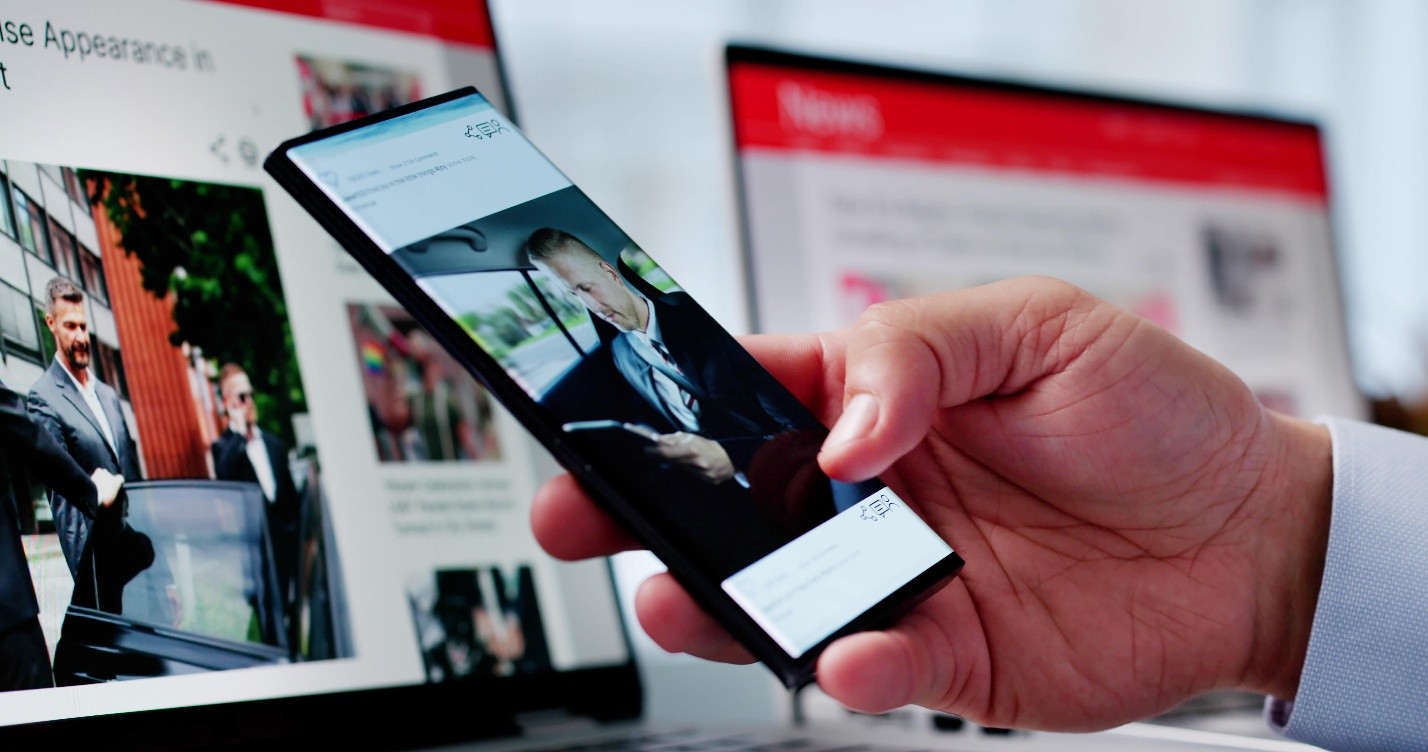
Public opinion has always been shaped by a ton of information that come their way. But what’s changed is the velocity, volume, and also the variety of that information, and not to forget the channel through which it arrives. Today, people's ideas aren't formed by a few evening shows or morning papers; they're formed in real time by endless feeds, scrolling, and a constant stream of material. The effect is huge: the media doesn't just report the news; it shapes reality. In a time when attention is valuable, it's important to understand these trends if you want to understand how people think.
There are a few who observe that look at this intersection with a lot of clarity, and Andrew Stakoun is one of them. His perspective connects technology, the human psyche, society, and also market forces. His views are straightforward and yet very decisive. He says that media consumption has become the lens through which people interpret the world, and shifts in how that media is consumed directly shape cultural narratives, political debates, and even real estate or travel decisions. To study perception, therefore, is to study media habits.
Not too long ago, people's media use followed expected patterns. Editors, broadcasters, and publishers were in charge of deciding which news got out to the public. The way things were seen was through a fairly narrow view. These days, computers have taken their place as gatekeepers and customize feeds based on how each person acts.
This is the result of fragmentation, wherein two people who live in the same city inhabit completely different personalities online. This is all on basis of what their feeds decide to prioritize. News is no longer a shared civic experience; it is a personalized stream designed to maximize engagement.
As per Andrew Stakoun of Atlanta, personalization is like a double-edged edges sword. On one hand, it reaches niche audiences and gives people the power to choose the information they want. On the other hand, it makes echo chambers stronger, which reinforces biases and makes groups more divided. People used to shape public opinion as a whole, but now it's becoming more and more divided.
One of the other defining factors of modern media consumption is the speed at which the information is passed on. Stories that once took days to circulate now gain global traction in hours. Viral videos, trending hashtags, and instantaneous coverage can turn into an international conversation overnight.
Although speed seems insignificant, it has the power to change how we look at things. People often respond before they have all the facts, which leads to stories that become hard to change before the facts are clear. This means that managing perceptions is no longer a long-term goal for businesses, governments, and cultural institutions; it's now a must.
As Andrew Stakoun notes, perception has become as much about immediacy as accuracy. The first story often sets the tone, even if subsequent corrections or clarifications emerge later. The public remembers the headline, not always the update.
Text-based news is still important, but short-form video, pictures, and live streaming have changed the way people pay attention. Younger people, in particular, spend hours every day on platforms like TikTok, Instagram Reels, and YouTube Shorts. In this setting, images don't just add to how we see things; they make them.
For Andrew Stakou of Atlanta, this trend underlines the importance of media literacy. The audience must learn to interpret not only what they see but how and why they are seeing it. Without that awareness, perception risks becoming a product of entertainment-driven algorithms rather than informed judgment.
The rise of both faith and skepticism at the same time is one of the most interesting things about how people use media. On the one hand, influencer culture shows that people believe individual creators a lot, sometimes even more than institutions. There is also more doubt about established media and government communications.
Andrew Stakoun of Atlanta warns that this shift needs to be handled carefully. Decentralization has given different points of view a voice, but it has also made it harder to tell what proof is good. People can change their minds about something even if there are no facts to back it up.
Using media has become the building blocks of how we see things. How people see the world is affected by the platforms they use, how fast they scroll, and the material they value the most. This world has problems, like fragmentation, oversimplification, and false information, but it also has chances to engage, educate, and have an impact.
As Andrew Stakoun of Atlanta emphasizes, perception today is inseparable from media habits. Understanding this overlap is no longer optional for leaders, businesses, or citizens. It is the foundation for navigating a society where attention defines reality and where what people consume ultimately determines what they believe.







