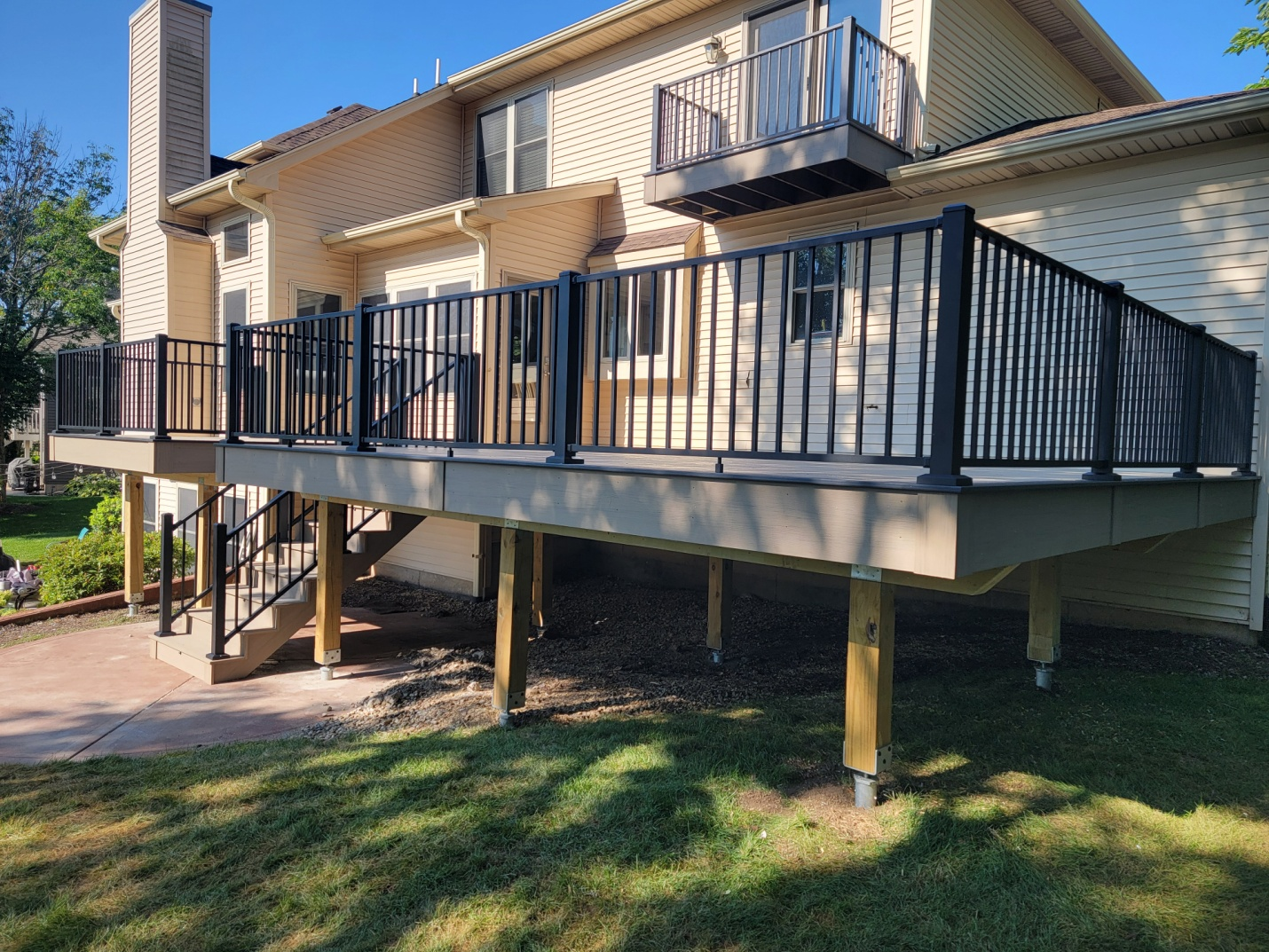
As part of your deck maintenance, deck resurfacing is one of the most important procedures to keep your deck safe. It has to be done on time and the right way to avoid extra expensive repairs along the way.
As homeowners, the outdoor space, like the indoor space, has to be clean and ready for families to gather, to share meals with friends, and for quiet mornings to enjoy a cup of coffee while the air is still fresh. In this article, we will discuss and give you a few tips from Radu Oprea, the CEO of a local Naperville decking company, on when you should resurface your deck and when to replace it entirely.
What Is Deck Resurfacing?
Over time, your deck will start to get old. Usually, this is due to the boards getting old from rain, weather, and wear and tear. Resurfacing your deck is a method of rejuvenating your deck by replacing the deck’s top surface, so you don’t have to rebuild the entire deck. In most of the cases, the foundation is in good shape for years to come, especially if your deck was built with a steel frame. It can be done in many cases, when you see cracked or splintered boards, discoloration from the sun, mold or mildew, and in general, just wear and tear. This is a method to recover the original appeal of your deck and add years of life to it.
When is Resurfacing Possible?
This part of the maintenance should be done on time. If you left your deck for too long, it might be too late for it to get a new surface. Below are some signs, suggested by Radu, that might suggest you if you deck qualifies for it or not:
With other words, if the frame is strong, you can freely do a resurfacing job on it.
When is Deck Resurfacing Not Possible?
A re-decking add-on is sometimes an inadequate remedy. Simply adding another layer over an unreliable substructure merely defers the problem—and sometimes intensifies the danger. Anticipate entire replacement of the system if any of the following applies:
Attempting a thin overlay over any of the above is functionally the equivalent of glazing a ruptured membrane above an antiquated envelope.
Decking Materials and How Often They Need Resurfacing
There are multiple factors that can influence how often a resurfacing job should be done on your deck, but one the most important is the material you used to build it.
Materials That Need More Frequent Resurfacing
These materials require greater upkeep and attention to maintenance:
Pressure-Treated Pine
A cost-effective and popular option, but it’s fades pretty fast.
Resurfacing or replacement boards usually required every 10-15 years (sooner with poor maintenance).
Cedar & Redwood
This option looks naturally attractive but it’s softer than hardwoods and it is not resistant to weather damage.
Resurfacing required every 10-15 years dependent on climate and maintenance.
Softwoods in General
Softwood decks require greater maintenance, and the surfaces will require more upkeep attention.
Materials That Require Less Frequent Resurfacing
These options are more resistant and don’t need frequent replacement:
Composite Decking (wood fiber + plastic blend)
PVC / Vinyl Decking
Hardwoods (Ipe, Mahogany, Teak, etc.)
Quick Comparison
Final Ideas
Deck resurfacing has it’s time, like your teeth have their time for cleaning, once the caries got to them, you’ll have to repair them or replace them entirely.
It can a bit costly but it’s the way to maintain your deck. Rebuilding it is way more expansive. You should keep in touch with your local deck building company to invite them once in a while for an inspection. Many of them offer free estimates, a great way to get an idea of what’s going on.
At the end of the day, your deck should be a place where you can relax with your family. And it doesn’t matter what you choose: to resurface or rebuild, the goal is to have a safe, beautiful space that welcomes years of memories.