Introduction
In industries where color consistency is paramount—such as automotive coatings, cosmetics, textiles, and packaging—the ability to measure color accurately under various viewing angles is crucial. Traditional color measurement tools often fall short when assessing complex finishes like metallic or pearlescent surfaces. This is where the 3nh Multi-Angle Spectrophotometer comes into play. Designed to provide precise color measurements from multiple angles, it ensures that products meet stringent quality standards.
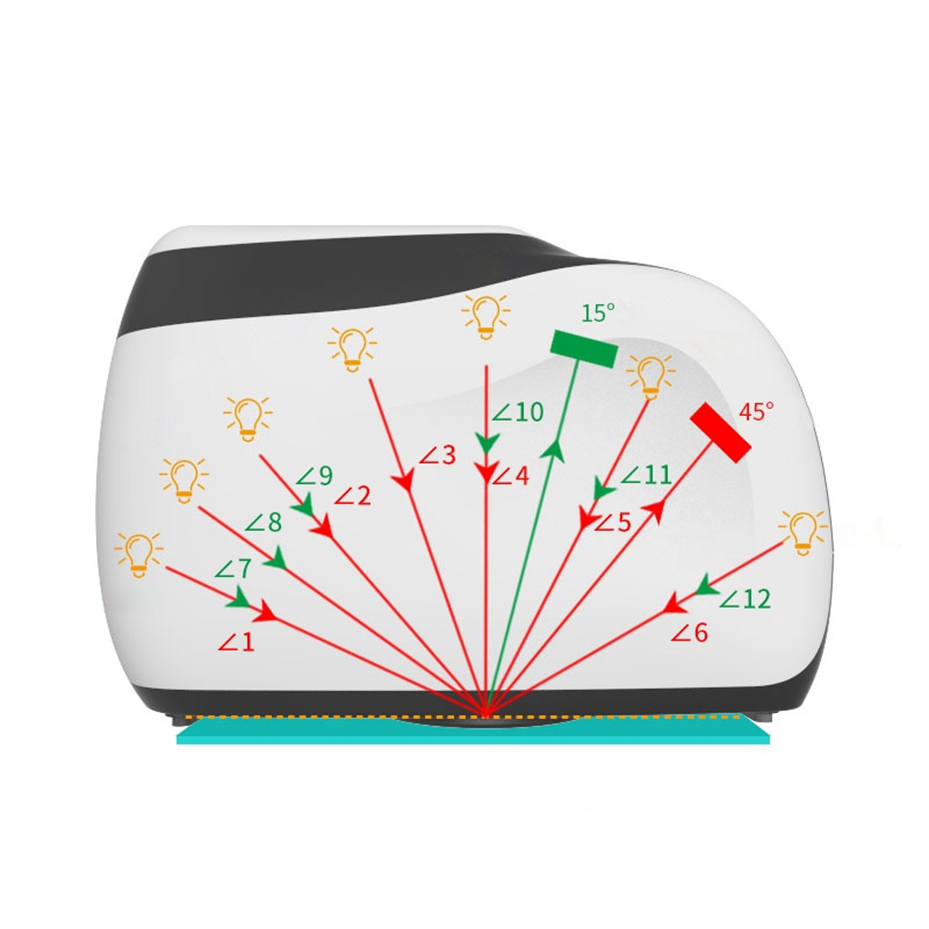
A Multi-Angle Spectrophotometer is an advanced instrument that measures the color of a surface from multiple angles of illumination and observation. Unlike standard spectrophotometers, which typically measure color from a single angle, multi-angle devices can simulate real-world lighting conditions, providing a more comprehensive understanding of how a product's color will appear under different circumstances.
The 3nh Multi-Angle Spectrophotometer offers several models, each tailored to specific industry needs:
● MS3006: Features six measurement angles, ideal for assessing metallic and pearlescent coatings.
● MS3012: Offers twelve measurement angles, suitable for more complex finishes and detailed analysis.
The primary advantage of the 3nh Multi-angle Spectrophotometer sale sites is its ability to measure color from multiple angles. This feature is particularly beneficial for evaluating special-effect finishes that change appearance depending on the viewing angle. By capturing data from various perspectives, the instrument provides a comprehensive color profile, ensuring consistency and quality.
Equipped with a 256-element double-array CMOS image sensor, the 3nh spectrophotometer delivers high-resolution measurements. This advanced optical technology ensures accurate and stable readings, even on curved or textured surfaces. The full-spectrum LED light source with blue enhancement further improves measurement precision by providing a broad spectral range and consistent illumination.
The 3nh Multi-Angle Spectrophotometer features an intuitive touchscreen interface that displays measurement results from all angles simultaneously. This user-friendly design allows operators to quickly assess color variations and make informed decisions, enhancing efficiency in quality control processes.
To ensure reliability and consistency, the 3nh spectrophotometer complies with various international standards, including ASTM, ISO, and SAE. This adherence to recognized guidelines guarantees that measurements are accurate and comparable across different industries and regions.
The versatility of the 3nh Multi-Angle Spectrophotometer makes it suitable for a wide range of applications:
● Automotive Industry: Assessing paint and coating finishes to ensure uniformity and quality across vehicle parts.
● Cosmetics and Personal Care: Evaluating the color consistency of products like lipsticks and nail polishes.
● Textile and Apparel: Measuring fabric colors to maintain consistency across different dye lots.
● Packaging: Ensuring that printed materials match brand colors and meet quality standards.
By providing detailed color measurements from multiple angles, the 3nh spectrophotometer helps industries maintain high-quality standards and meet customer expectations.
● Enhanced Color Accuracy: By measuring color from multiple angles, the 3nh spectrophotometer provides a more accurate representation of how a product's color will appear under various lighting conditions.
● Improved Quality Control: The detailed color data enables manufacturers to identify and correct color inconsistencies early in the production process, reducing waste and rework.
● Increased Efficiency: The user-friendly interface and comprehensive measurement capabilities streamline the quality control process, saving time and resources.
● Global Standard Compliance: Adherence to international standards ensures that measurements are reliable and accepted worldwide, facilitating global trade and collaboration.
When selecting a Multi-Angle Spectrophotometer from 3nh, consider the following factors:
● Measurement Angles: Choose a model with the appropriate number of measurement angles for your specific application. The MS3006 is suitable for standard applications, while the MS3012 offers more detailed analysis for complex finishes.
● Surface Types: Consider the types of surfaces you will be measuring. The 3nh spectrophotometer is designed to handle various surface textures, but certain models may offer enhanced capabilities for specific materials.
● Compliance Requirements: Ensure that the model you select complies with the relevant industry standards and regulations applicable to your region or sector.
● Budget: While the 3nh spectrophotometer offers advanced features, it's essential to choose a model that fits within your budget while meeting your measurement needs.
So, you've checked the list. Why should you even put your color measurement needs in the hands of 3NH?
The obvious advantage of this is this. It does not cost thousands of dollars, and you can get a performance not lower than that of 3NH. Such savings are able to be invested back into your business or other aspects.
Our equipment is carefully designed to be comparable to or better than its corresponding brand-name counterpart. We apply the same principles of measurement and cutting-edge technology so that our data is equally reliable.
The 3nh Multi-Angle Spectrophotometer is an indispensable tool for industries that require precise color measurement under varying viewing angles. Its advanced optical technology, user-friendly interface, and compliance with international standards make it a reliable choice for quality control and product development. By investing in a 3nh spectrophotometer, businesses can ensure color consistency, meet customer expectations, and maintain high-quality standards across their products.
What makes 3NH spectrophotometers a good alternative to Konica Minolta?
3NH has highly effective sensors and processors to make accurate measurements. They are industry-standard design specs for spec. Quality control guarantees the same performance at various applications and different settings.