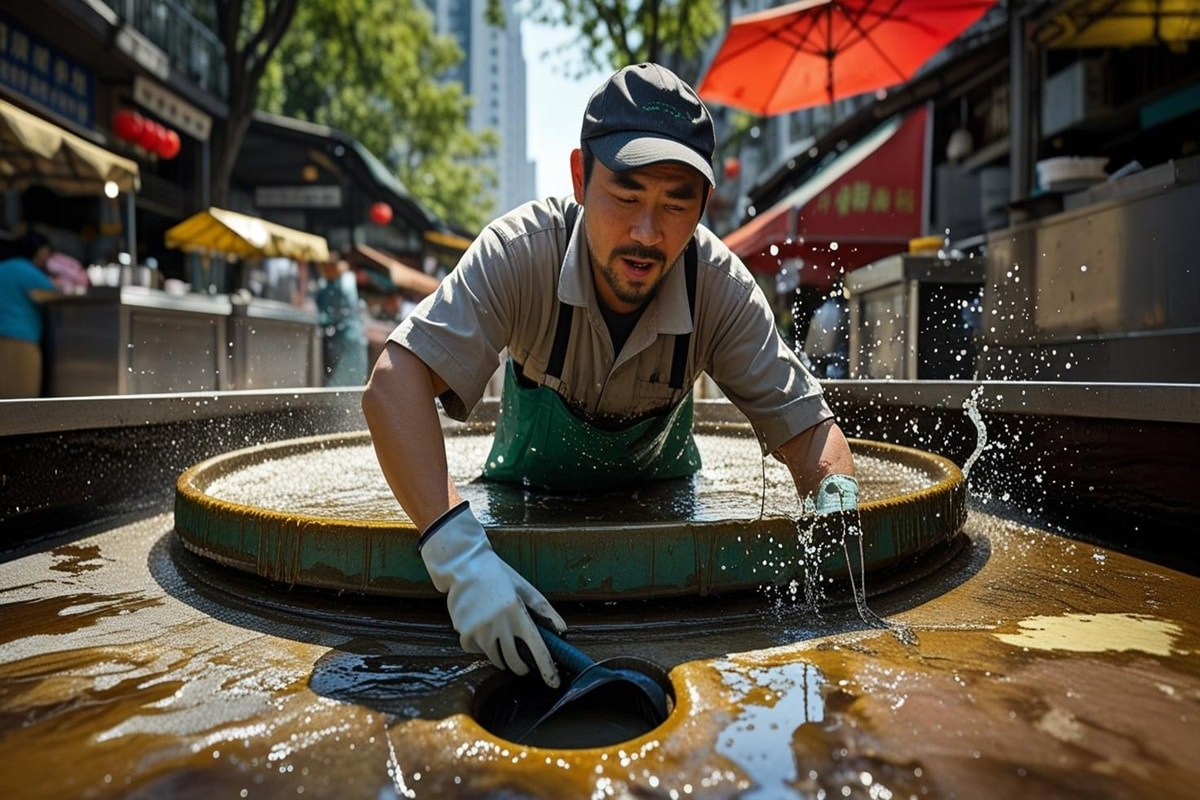
Anyone who manages or uses a kitchen, whether at home, a commercial, or an industrial kitchen, has most likely faced the not-so-glamorous task of grease trap cleaning. Grease trap cleaning is a behind-the-scenes job that keeps everything running smoothly in your kitchen.
A grease trap forms a vital part of your plumbing system as it catches fats, oils, and greases, known as FOG, before they clog your pipes and cause backups in your plumbing system. However, over time, these grease traps fill up, and professionals must clean and maintain them.
Many individuals often ask whether they can clean a tree, trap themselves, or if it's better to call in the professionals. Even though on the surface it may look cheaper and quicker to do it yourself, once you dig a little deeper, the benefits of hiring a professional, by far, outweigh those of doing it yourself.
So in this blog, we'll break it all down so that you can make the best decision for your business, your staff, and your kitchen.
Before we get into the pros and cons of doing it yourself or hiring a professional, it is important to understand what a grease trap is, what grease trap cleaning is, and why it is so important.
A grease trap is a plumbing device that is specifically designed to intercept most of the grease and solids before they enter the wastewater in your disposal system. It is basically a filtration system that prevents your kitchen fats, oils, and grease from wreaking havoc on your pipes and plumbing.
Regular grease trap cleaning is much more than just hygiene. It's about keeping your business and your kitchen running efficiently and legally. Over time, grease traps can become clogged, which can lead to slow drains, foul odors, and eventually some serious plumbing issues.
Neglecting essential maintenance of your grease trap could lead to the following:
Regular cleaning and maintenance of your grease trap, therefore, ensures optimal performance, keeps your kitchen sanitary, and helps you stay compliant with local laws. However, how do you go about cleaning your grease trap?
DIY Grease Trap Cleaning
We start with do-it-yourself grease trap cleaning, which may be appealing for small business owners and individuals.
Do-it-yourself grease trap cleaning does have its benefits, such as cost savings because there are no service fees, just your time and effort. It is also convenient because you can clean your greens trap on your schedule without having to wait for a technician. Furthermore, you have more control over the process because you know exactly what you are doing and when.
However, in theory, it often sounds like a simple job. Remove the lids, scoop out the FOG, scrub it down, and reassemble. If your grease trap is small and you're confident in your ability to follow local disposal laws, it might work, but at least just temporarily.
Unfortunately, do-it-yourself, grease-trap cleaning is never as easy as it sounds, and some risks and challenges come with doing it solo.
Grease trap cleaning is unpleasant. It involves heavy lifting, foul odor, and a sludge that is not easy to dispose of.
Improper Waste Disposal
Many jurisdictions have strict rules for handling grease and oil waste. So, if you pour the waste down the drain or just toss it in the garbage, you could face some environmental fines or even health violations.
On the other hand, you may clean the surface level of your grease trap, but you don't always know how to check for cracks, corrosion, or flow issues. This is where professionals come in. They inspect the unit every time, catching issues early before they turn into big problems.
Working with commercial plumbing, especially, is quite risky if you're not trained. One wrong move and you can completely damage the entire system, or you can get severely injured.
Last and most importantly, there is non-compliance with health regulations. Health inspectors take grease trap cleaning very seriously, and if you don't keep detailed logs or you fail to meet local frequency requirements, authorities could easily fine you heavily.
Professional grease trap cleaning and maintenance service providers offer efficient and complete grease trap cleaning and maintenance services that are compliant with all regulations.
Businesses especially choose professional grease trap cleaning service providers to outsource this job too. These trained professionals can handle everything from cleaning to maintenance, waste removal, and implementing system checks.
Here are a few reasons why hiring a professional grease trap cleaning service is the smarter choice:
The professionals come fully equipped with the right knowledge and tools to get the job done quickly and efficiently. They do not just clean your grease trap; they inspect it for early signs of damage or failure.
The service providers have licenses, and they fully understand local disposal laws to ensure your business stays compliant. They also keep detailed service records that you can share during your health or council inspections.
There is just something about when a pro handles a job that gives you the peace of mind knowing that it's done right. You don't have to second-guess the process or worry about any more surprises ahead.
Ultimately, your time is better spent managing your business or your kitchen and not scooping out greasy sludge. Hiring a professional allows you and your staff to focus on what you do best.
Then again. Hiring a professional maintenance team to do routine cleaning and maintenance of your grease trap reduces the chances of damage to your plumbing system. Repairs and longer-lasting equipment.
The only real downside of hiring a professional grease trap cleaning service provider is most likely the cost. It is going to be more expensive than doing it yourself. Well, at least up front.
However, when you weigh that up against the risks you are taking in doing it yourself, such as fines, downtime, unnecessary repairs, or even injury, it is often the most cost-effective option in the long run.
So, in the end, you need to decide what is going to be best for your business or your kitchen. Is it more important for you to save money with a DIY grease trap cleaning? However, in reality, most commercial and industrial kitchens are much better off hiring professionals.
So, unless you're running a very small operation or it is for your home kitchen and you are confident in your disposal and cleaning methods, the risks will outweigh the savings.
Keep in mind, professional grease trap service providers do not just clean your grease trap; they inspect it, they document it, and they help to expand the lifespan of your plumbing infrastructure. In industries where cleanliness and compliance are not negotiable, peace of mind is worth everything that you spend on it.
If you are unsure where to start, you can always look for a certified local service provider that has experience in your specific type of business. Many grease trap cleaning service providers often offer. Offer routine maintenance plans that you can set to know that your grease trap is in expert hands.
Grease trap cleaning is an essential part of keeping your kitchen clean efficiently, running smoothly, and staying compliant with local regulations. While you could clean your grease trap yourself, it is messy, risky, potentially non-compliant, and could cause damage to your plumbing.
Hiring a professional is the best option as they offer expert care, regulatory peace of mind, and you will have fewer problems down the road.
So in the end, if you want safety, reliability,, long-term value, the professional route is always the safest.