Table of Contents
Key Takeaways
Understanding Airline Policies for Pet Travel
Successfully navigating pet air travel starts with a firm understanding of airline-specific policies. Each airline enforces its own set of requirements regarding pet size, breed, type of carrier, and even which pets can travel in the cabin versus the cargo hold. Some carriers impose restrictions due to temperature, while others may have blackout dates during peak periods. To avoid travel day surprises, scrutinize the pet policy section of the airline’s website and call the airline to clarify anything uncertain. One way to streamline the entire process is by enlisting the help of dog transportation companies, who are experts in managing the myriad airline regulations and documentation.
Working with experienced transportation professionals can eliminate the guesswork from logistics and ensure that your pet’s move is handled meticulously. These companies often provide step-by-step guidance, assistance with booking, and up-to-date information about international and domestic pet travel regulations, making them a valuable resource for pet parents navigating complicated itineraries or unusual destinations.
Choosing the Right Carrier
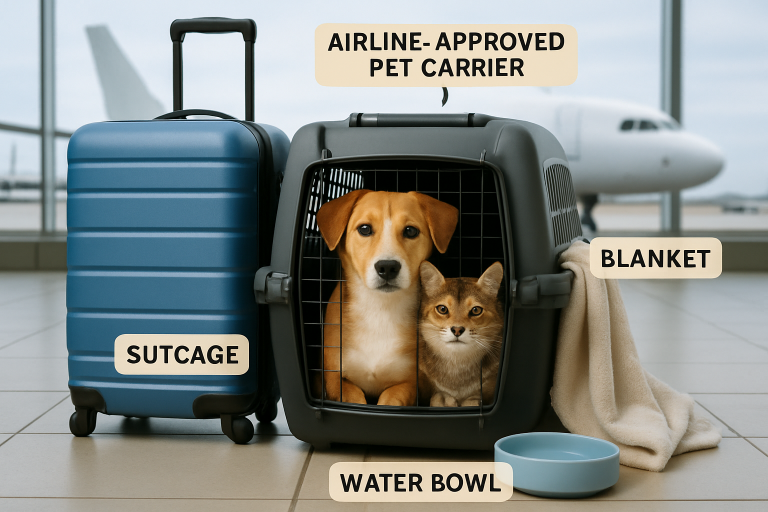
Your pet’s comfort and safety depend significantly on its carrier. Airlines generally require IATA-compliant carriers that are secure, well-ventilated, and spacious enough for your pet to stand, lie down, and turn around comfortably. Take time to measure your pet—nose to tail and floor to top of the head—before selecting a carrier. Hard-sided carriers are optimal for cargo travel, while soft-sided ones are typically used for cabin transport. Regardless of the type, durability is non-negotiable.
Start introducing the carrier at least a week before departure. Leave it in a favorite space, add familiar bedding, and offer treats while your pet explores it. With positive associations, the carrier will feel more like a safe den than a strange enclosure on travel day. Adequate preparation also reduces the risk of stress-related behavior such as chewing or scratching during the flight.
Pre-Flight Veterinary Check-Up
A pre-flight check-up with your veterinarian is mandatory for most air travel with pets. Still, it’s also a significant opportunity to assess your pet's wellness and discuss specific travel concerns. The vet will perform a physical exam, verify vaccination status, and issue any required health certificates. Some destinations may require additional paperwork or treatments for entry, so ask for a checklist that meets the requirements of your itinerary. For a broader overview of travel requirements and common concerns, the AVMA’s guide to traveling with your pet is a reliable resource.
If your pet is prone to anxiety, your vet can advise about natural calming aids or medications. Ensure that you test any recommended products ahead of time to avoid potential adverse reactions during transit. For pets with chronic health conditions, request travel-specific advice on medication schedules and emergency contacts.
Acclimating Your Pet to Travel
Gradually desensitizing your pet to the experiences they’ll have during travel can ease the transition. Begin by letting your pet rest in the carrier at home with the door open, followed by practice sessions that include closing the door for short intervals. Once comfortable, try short car rides to simulate the feel of transportation. These short trials help your pet become familiar with movement, new sounds, and the sensation of confinement—skills that pay off on the day of the actual flight.
Positive reinforcement is key. Praise, treats, and play can all be connected to time in and around the carrier. This strategy can help even anxious pets adjust more readily to the novelty of air travel.
Packing Essentials for the Journey
Packing with your pet in mind ensures you’ll have what you need, whether you’re crossing continents or just a few states. Include a leak-proof water bottle and bowl, kibble for at least two meals, familiar toys, a favorite blanket, and any medications with their corresponding prescriptions. Keep a printed copy of your pet’s veterinary and vaccination records on hand, even if you’ve already submitted them digitally.
Label your pet’s carrier clearly with your name, phone number, and destination address. For personal peace of mind, consider a GPS tag attached to your pet’s collar—modern devices can offer real-time location tracking, which can be a lifesaver in case of travel mishaps.
Managing Layovers and Transits
Layovers and transit periods can be among the most stressful phases of air travel with pets. Whenever possible, book direct flights to minimize time in airports. If a layover is unavoidable, research which airports are the most pet-friendly—many now offer designated pet relief stations both inside and outside security areas. Review the airline’s policies for transiting pets, as some require owners to retrieve their pets between legs, while others will manage transfers for you.
Post-Arrival Care
Once you and your pet have arrived, give your companion plenty of time to stretch, hydrate, and adjust to their new surroundings. Stick to established routines for feeding, play, and rest to give your pet a sense of stability during the transition. Keep an eye out for symptoms of travel stress, dehydration, or motion sickness. If something seems off, consult a local veterinarian right away—some issues, like flight-induced anxiety or exposure to new pathogens, benefit from immediate attention.