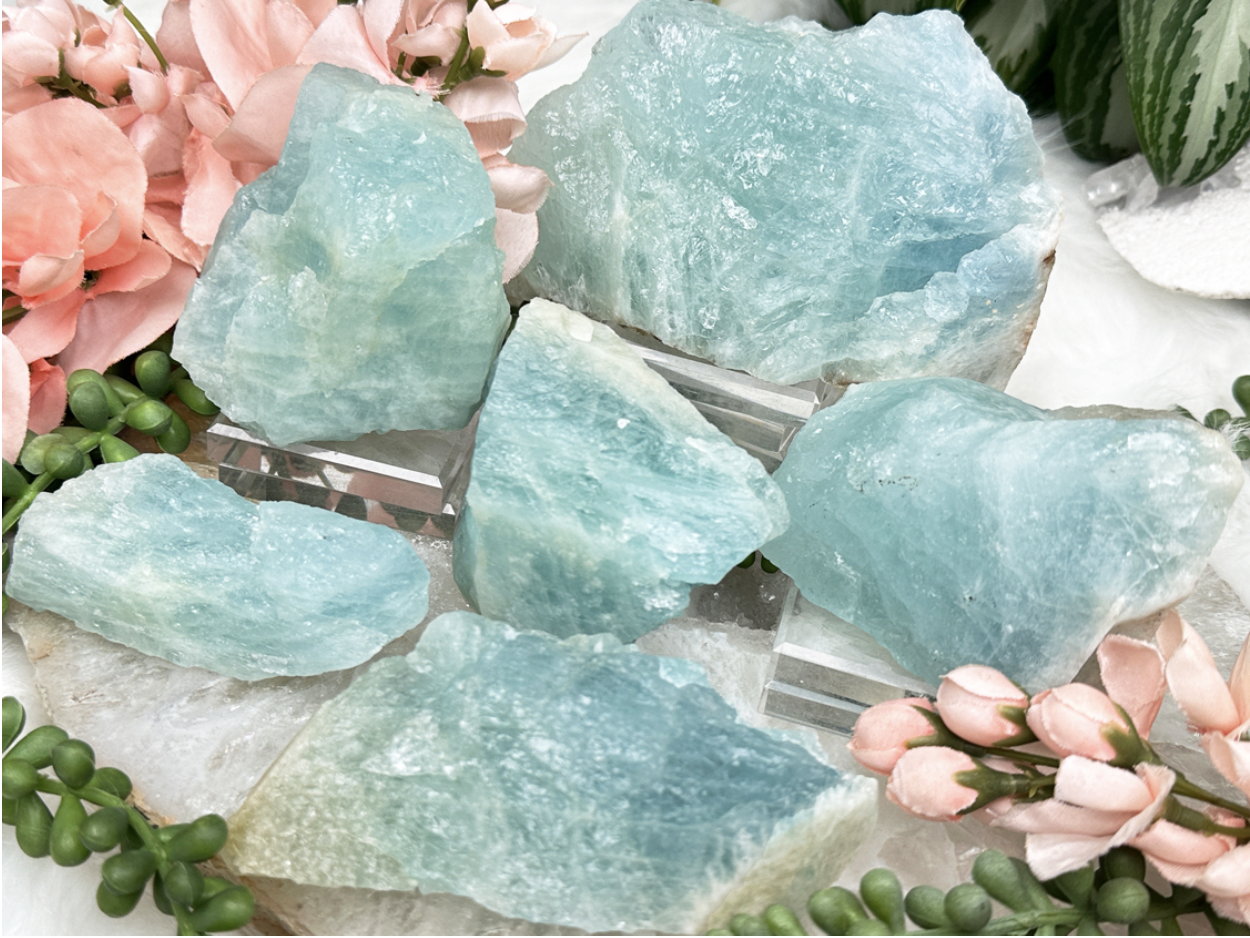
In the serene ambiance of a crystal shop, one can find an array of raw crystals, each exuding its unique charm and energy. These unpolished gems, untouched by human refinement, offer a direct connection to the Earth's geological wonders and have captivated human interest for centuries.
Understanding Raw Crystals
Raw crystals are minerals that have crystallized naturally without undergoing any cutting, polishing, or treatment. They retain their original form as shaped by geological processes over millennia. This natural state is believed by many to preserve the crystal's inherent energy and vibrational qualities, making them particularly valued in various metaphysical practices.
Raw Crystal Clusters
Among the various types of raw crystals, crystal clusters are particularly fascinating. A cluster consists of multiple crystal formations growing together, often emerging from a single base. These raw clusters can feature a wide variety of minerals, but quartz clusters are the most commonly recognized and sought after. Their intricate structure, where individual points radiate outward from a central base, makes them visually striking. Crystal clusters are believed to enhance energy flow and amplify the properties of the individual crystals that make them up. Many people use them for their ability to purify and energize a space, as the energy is said to radiate outward in all directions. The natural formation of crystal clusters also makes them highly valued in spiritual practices, as they are thought to help create a harmonious environment, encouraging both emotional and physical healing.
Formation of Raw Crystals
The genesis of raw crystals is a testament to the dynamic nature of our planet. They form through several geological processes:
- Cooling and Solidification of Magma: As molten rock cools beneath the Earth's surface, minerals crystallize over time, resulting in the formation of crystals like quartz and feldspar.
- Evaporation of Mineral-Rich Solutions: In arid environments, water bodies rich in dissolved minerals evaporate, leaving behind crystalline structures such as halite and gypsum.
- Metamorphic Processes: Existing rocks subjected to intense heat and pressure can lead to the recrystallization of minerals, forming new crystals like garnet and staurolite.
- Hydrothermal Activity: Superheated water rich in dissolved minerals moves through rock fractures, cooling and depositing minerals that crystallize over time, producing specimens like tourmaline and topaz.
Diversity of Raw Crystals
The world of raw crystals is vast and varied, with each type possessing distinct characteristics:
- Quartz Varieties: Quartz is one of the most abundant minerals on Earth, and its raw forms are widely recognized. Amethyst, a purple variety of quartz, is admired for its vibrant hue and is often found lining cavities in volcanic rocks.
- Feldspar Group: This group includes minerals like moonstone and labradorite, known for their captivating optical effects. Raw labradorite, for instance, displays a mesmerizing play of colors when light interacts with its internal structures.
- Carbonate Minerals: Calcite and aragonite are common carbonate minerals that form intricate crystalline structures. Raw calcite crystals can exhibit a range of colors and are often transparent or translucent.
- Oxide Minerals: Hematite and magnetite are examples of oxide minerals that crystallize in raw forms. Hematite, in particular, is recognized for its metallic luster and reddish streak.
Geographical Distribution
Raw crystals are unearthed from various corners of the globe, each region offering unique specimens:
- Brazil: Renowned for its rich deposits of amethyst and citrine, Brazil's geodes often contain stunning raw crystals that are highly sought after by collectors.
- Madagascar: This island nation is a treasure trove of diverse minerals, including the orbicular-patterned ocean jasper and vibrant blue apatite.
- United States: States like Arkansas are famed for high-quality quartz crystals, while Montana offers an abundance of sapphires in their raw form.
- India: Known for deposits of raw garnet and moonstone, India's mineral wealth contributes significantly to the global crystal market.
Metaphysical Significance
In various spiritual and healing practices, raw crystals are believed to possess potent energies:
- Energy Amplification: Raw quartz crystals are thought to amplify energy and intention, making them staples in meditation and healing sessions.
- Grounding and Protection: Stones like raw black tourmaline are used for grounding and are believed to provide protection against negative energies.
- Emotional Healing: Raw rose quartz is associated with love and emotional healing, often utilized to foster compassion and self-love.
- Chakra Alignment: Different raw crystals are linked to specific chakras, aiding in balancing and aligning the body's energy centers.
Caring for Raw Crystals
Maintaining the integrity and energy of raw crystals involves mindful practices:
- Cleansing: Regularly cleansing raw crystals is essential to clear any accumulated energies. Methods include rinsing with water, smudging with sage, or placing them under moonlight.
- Charging: To rejuvenate their energy, raw crystals can be charged by exposure to sunlight, burying in the earth, or placing them on a selenite slab.
- Storage: Storing raw crystals separately or wrapping them in soft cloth prevents physical damage and preserves their natural state.
Conclusion
Raw crystals, in their untouched and natural form, offer a profound connection to the Earth's geological and metaphysical wonders. Their diverse formations, rich geographical origins, and attributed energies make them invaluable to collectors, healers, and enthusiasts alike. Embracing raw crystals allows individuals to experience the unrefined beauty and potent energies that these natural treasures embody.








