
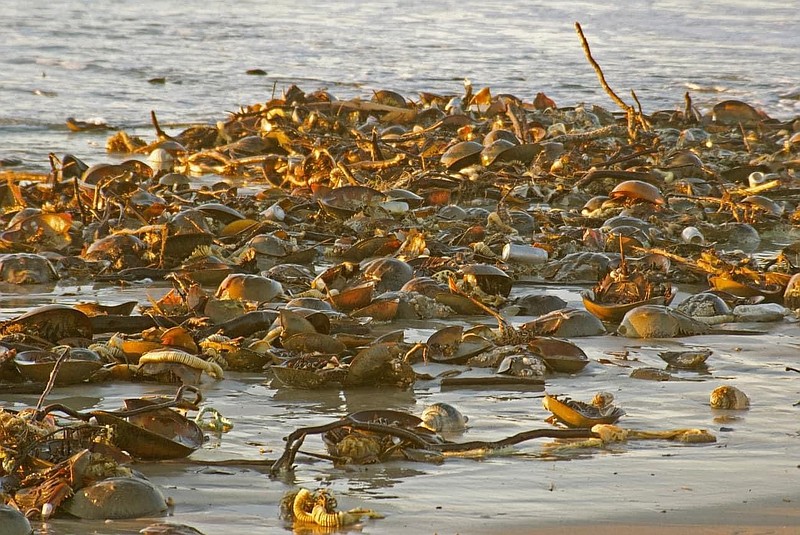
Horse shoe crabs can survive so long as they remain damp on land. (Photo courtesy of the Wetlands Institute of Stone Harbor)
 By MADDY VITALE and DONALD WITTKOWSKI
The latest winter storm churned up more than your typical clamshells, whelks and other marine life. Littering the Ocean City beaches over the weekend were hundreds, if not thousands, of horseshoe crabs in a mass stranding.
Horseshoe crabs are sea creatures that have been around for millions of years. They are not crabs. In fact, they are most closely related to the arachnid family. While they can be viewed by some as sci-fi looking, they are an important part of the ecosystem, according to marine scientists.
Meghan Kolk, conservation scientist with the Wetlands Institute in Stone Harbor, said she heard about the horseshoe crabs in Ocean City from a volunteer at the institute and saw photos on social media.
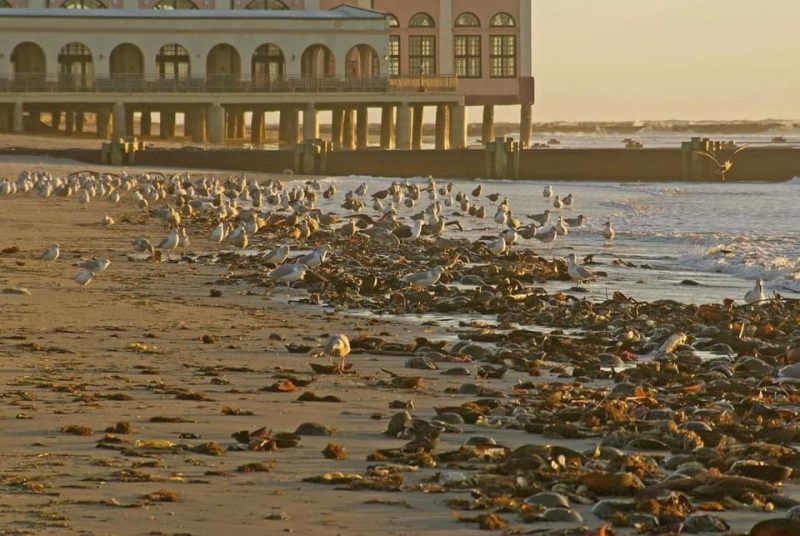
A volunteer at the institute and some concerned residents went down and surveyed the mass stranding. Horseshoe crabs littered many of the beaches, including near the Music Pier at Eighth Street and the Ocean City Fishing Club Pier 14th Street.
Not all of the horseshoe crabs were dead. Among the ones that were alive, there was also evidence of molting, a process of shedding their old shells in order to grow.
Luckily, as quickly as the horseshoe crabs seemed to appear on the beaches Sunday, they returned to the ocean with the high tide on Monday, Kolk said.
She speculated that many of them survived.
By MADDY VITALE and DONALD WITTKOWSKI
The latest winter storm churned up more than your typical clamshells, whelks and other marine life. Littering the Ocean City beaches over the weekend were hundreds, if not thousands, of horseshoe crabs in a mass stranding.
Horseshoe crabs are sea creatures that have been around for millions of years. They are not crabs. In fact, they are most closely related to the arachnid family. While they can be viewed by some as sci-fi looking, they are an important part of the ecosystem, according to marine scientists.
Meghan Kolk, conservation scientist with the Wetlands Institute in Stone Harbor, said she heard about the horseshoe crabs in Ocean City from a volunteer at the institute and saw photos on social media.
A volunteer at the institute and some concerned residents went down and surveyed the mass stranding. Horseshoe crabs littered many of the beaches, including near the Music Pier at Eighth Street and the Ocean City Fishing Club Pier 14th Street.
Not all of the horseshoe crabs were dead. Among the ones that were alive, there was also evidence of molting, a process of shedding their old shells in order to grow.
Luckily, as quickly as the horseshoe crabs seemed to appear on the beaches Sunday, they returned to the ocean with the high tide on Monday, Kolk said.
She speculated that many of them survived.
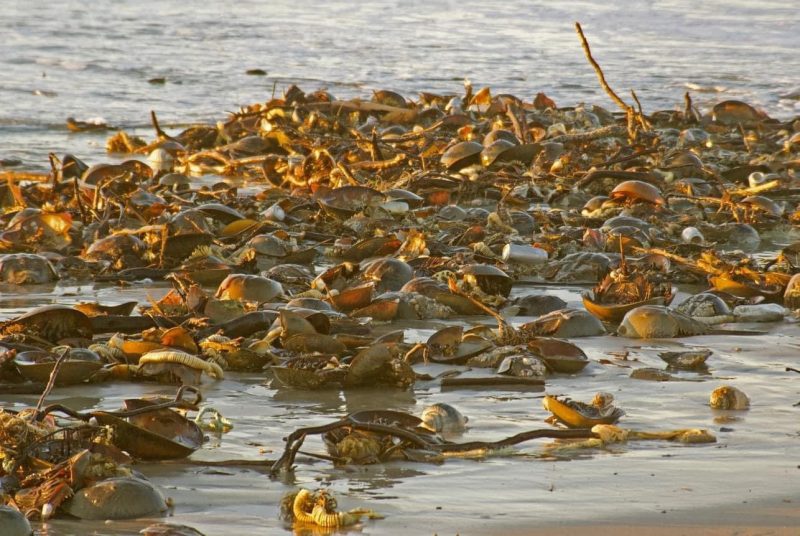 Horseshoe crabs can survive on land if they remain damp. (Photo courtesy of Jim McHugh)
In summer, when it is dry, they have less of a chance to survive. But in winter, when it is damp, they can survive for a while out of the water, Kolk explained.
“It is a normal occurrence that happens over the winter, but it seems with more intense storms, it is happening more frequently,” she said of mass strandings of horseshoe crabs.
The full extent of the weekend's stranding wasn’t known.
Mike Jargowsky, Sea Isle City’s emergency management coordinator, said in an interview Tuesday that he wasn’t aware of any horseshoe crabs washing up in Sea Isle. He said typically, if something does, it is whelk, but usually only when there is a northeast wind blowing off the ocean.
As far as marine life washing up in other areas besides Ocean City and Sea Isle goes, Kolk noted that whelk sometimes litter the shoreline in Wildwood Crest.
This is certainly not the first time for the phenomenon of horseshoe crabs being stranded on the beaches in Ocean City.
In January of 2022, Ocean City resident Linda Boris used her camera to document the stranding of numerous horseshoe crabs on beaches from 19th to 21st Streets.
Horseshoe crabs can survive on land if they remain damp. (Photo courtesy of Jim McHugh)
In summer, when it is dry, they have less of a chance to survive. But in winter, when it is damp, they can survive for a while out of the water, Kolk explained.
“It is a normal occurrence that happens over the winter, but it seems with more intense storms, it is happening more frequently,” she said of mass strandings of horseshoe crabs.
The full extent of the weekend's stranding wasn’t known.
Mike Jargowsky, Sea Isle City’s emergency management coordinator, said in an interview Tuesday that he wasn’t aware of any horseshoe crabs washing up in Sea Isle. He said typically, if something does, it is whelk, but usually only when there is a northeast wind blowing off the ocean.
As far as marine life washing up in other areas besides Ocean City and Sea Isle goes, Kolk noted that whelk sometimes litter the shoreline in Wildwood Crest.
This is certainly not the first time for the phenomenon of horseshoe crabs being stranded on the beaches in Ocean City.
In January of 2022, Ocean City resident Linda Boris used her camera to document the stranding of numerous horseshoe crabs on beaches from 19th to 21st Streets. 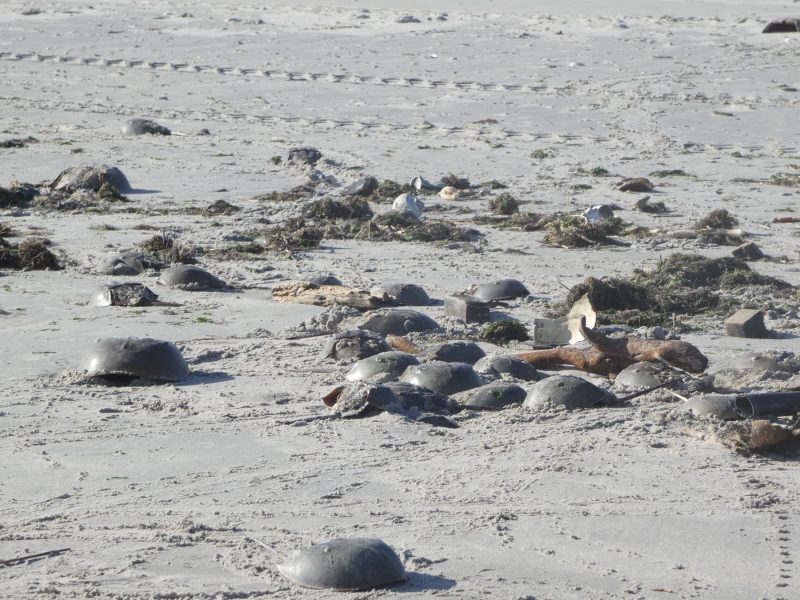 Horseshoe crabs line the 21st Street beach in Ocean City in January of 2022. (Photo courtesy of Linda Boris)






