

Mayor Jay Gillian, left, and developer John Flood are disputing each other's account of a key legal point about the city's proposed purchase of a large tract of land.
 By Donald Wittkowski
In dueling public statements, Mayor Jay Gillian and his opponent, John Flood, accused each other of misconduct on Monday as the mayor’s race took a decidedly nastier turn with only a week to go before the Ocean City municipal election.
The fray began when Flood issued a press release accusing Gillian of “diverting” city resources away from a critical flood-control system to instead concentrate on a public restroom project that Flood alleges will benefit the mayor’s Boardwalk amusement park business.
Strongly denying the allegations, Gillian responded with his own statement criticizing Flood for using “baseless propaganda” in what he said is Flood’s “desperate attempt to get elected at all costs” on May 8.
“My opponent’s use of the word ‘diverted’ is ironic, as his attempt to ‘divert’ the public’s attention away from the facts surrounding these important capital projects is intentionally misleading,” Gillian said.
According to Flood, in 2016 and 2017 city funding and resources were diverted away from replacing some failing “check valves.” The check valves, he said, are crucial for keeping tidal waters from flooding the town.
Flood said the city used those resources to instead redesign a public restroom project that is under construction at Sixth Street and the Boardwalk, next door to Gillian’s Wonderland Pier, an amusement park owned by the mayor.
“This information shows that while residents needed their check valves replaced for flooding protection, the mayor wanted to make it more convenient for people to get to Wonderland,” Flood said.
By Donald Wittkowski
In dueling public statements, Mayor Jay Gillian and his opponent, John Flood, accused each other of misconduct on Monday as the mayor’s race took a decidedly nastier turn with only a week to go before the Ocean City municipal election.
The fray began when Flood issued a press release accusing Gillian of “diverting” city resources away from a critical flood-control system to instead concentrate on a public restroom project that Flood alleges will benefit the mayor’s Boardwalk amusement park business.
Strongly denying the allegations, Gillian responded with his own statement criticizing Flood for using “baseless propaganda” in what he said is Flood’s “desperate attempt to get elected at all costs” on May 8.
“My opponent’s use of the word ‘diverted’ is ironic, as his attempt to ‘divert’ the public’s attention away from the facts surrounding these important capital projects is intentionally misleading,” Gillian said.
According to Flood, in 2016 and 2017 city funding and resources were diverted away from replacing some failing “check valves.” The check valves, he said, are crucial for keeping tidal waters from flooding the town.
Flood said the city used those resources to instead redesign a public restroom project that is under construction at Sixth Street and the Boardwalk, next door to Gillian’s Wonderland Pier, an amusement park owned by the mayor.
“This information shows that while residents needed their check valves replaced for flooding protection, the mayor wanted to make it more convenient for people to get to Wonderland,” Flood said.
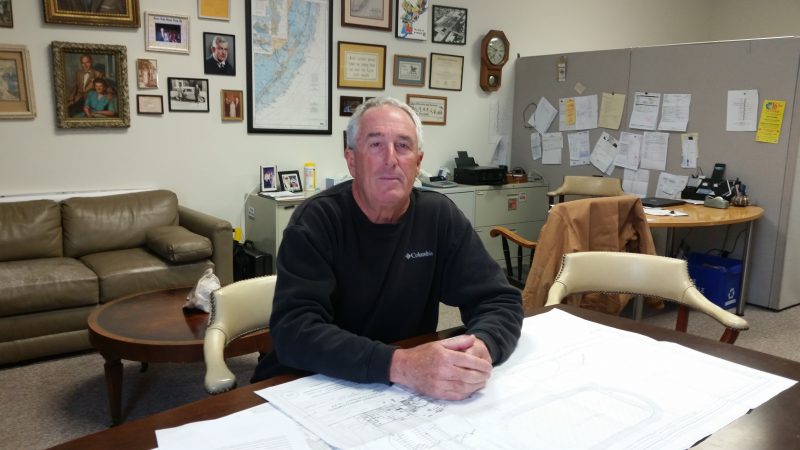
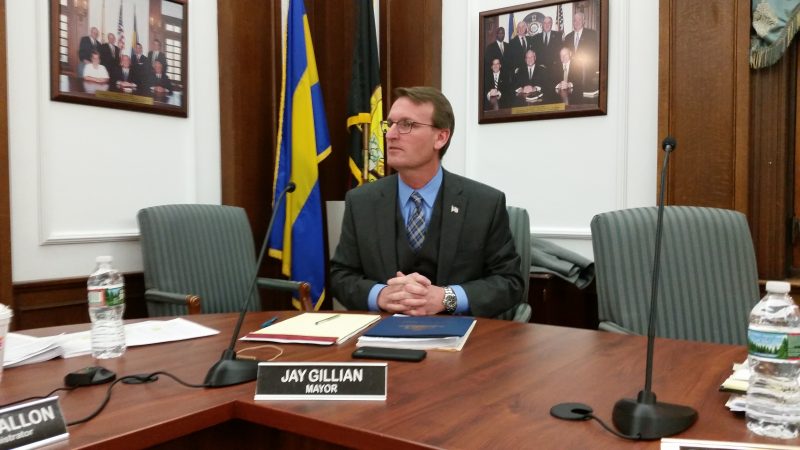 Mayor Jay Gillian accuses John Flood of "stringing together documents from unrelated projects to manufacture false conclusions."
Flood said the city's website lists the faulty check valves at Waterway Road, the Municipal Airport, 14th Street and 16th Street as in the “Planning Stages.”
An email shows that as early as Sept. 6, 2016, the city knew that the check valves were “not functioning correctly” and needed to be replaced, Flood said. They were to be added to the city’s 2017 capital plan.
Despite learning of the check valves’ failure in September 2016, it seems the city has not yet replaced them, Flood said, citing the city’s website. They are still listed as a project in the “Planning Stages,” scheduled for fall 2017, he said.
Mayor Jay Gillian accuses John Flood of "stringing together documents from unrelated projects to manufacture false conclusions."
Flood said the city's website lists the faulty check valves at Waterway Road, the Municipal Airport, 14th Street and 16th Street as in the “Planning Stages.”
An email shows that as early as Sept. 6, 2016, the city knew that the check valves were “not functioning correctly” and needed to be replaced, Flood said. They were to be added to the city’s 2017 capital plan.
Despite learning of the check valves’ failure in September 2016, it seems the city has not yet replaced them, Flood said, citing the city’s website. They are still listed as a project in the “Planning Stages,” scheduled for fall 2017, he said.






