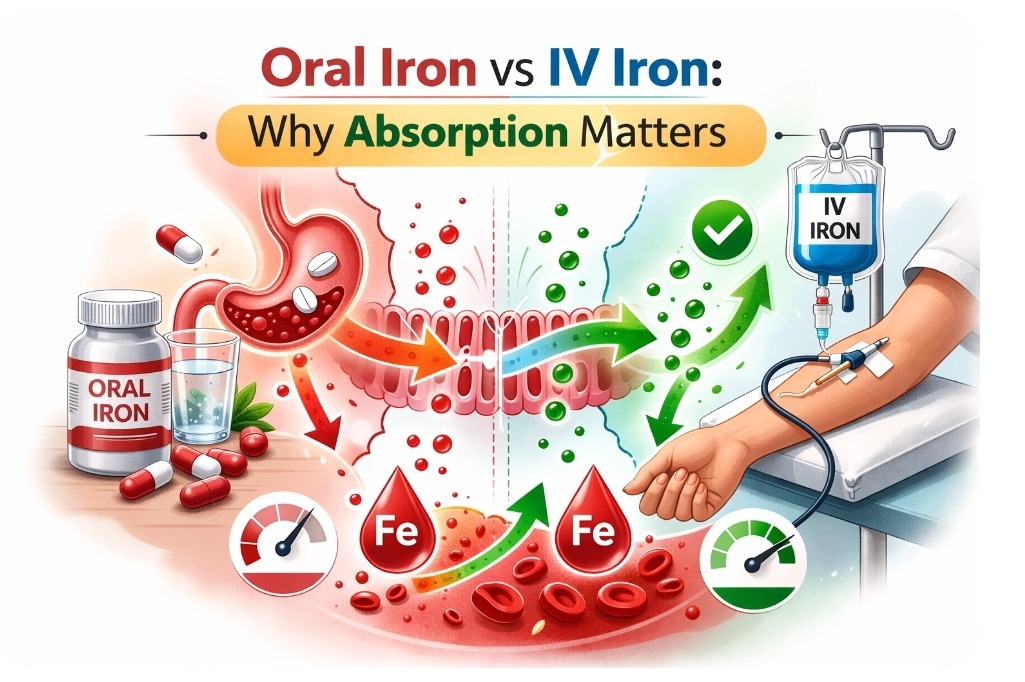
If you are dealing with low ferritin or iron deficiency anemia, you have two primary options: oral supplements or intravenous delivery. Most patients start with tablets because of lower upfront costs and simple accessibility. However, oral iron frequently fails to resolve the deficiency because the human body has a strict physiological limit on how much iron it can absorb through the digestive tract.
When you ingest an iron pill, it must be broken down by stomach acid and absorbed in the duodenum, the first part of the small intestine. If your body is under stress, dealing with an infection, or experiencing chronic inflammation, it produces a hormone called hepcidin.
This hormone acts as a biological gatekeeper, actively blocking iron from entering the bloodstream to prevent pathogens from using it. This mechanism often results in zero net gain in iron levels despite months of consistent daily supplementation.
The limitations of oral IV supplements
The primary issue with oral iron is extremely low bioavailability. Under ideal conditions, only about 10% to 20% of the iron in a pill is actually absorbed by the body. If you have any gut-health issues, that number can drop to near zero.
The remaining 80% or more of the elemental iron stays in the gut, where it causes specific physical complications that lead many to stop treatment entirely, such as:
If you need to restore iron levels immediately to address symptoms like extreme fatigue or heart palpitations, IV therapy Miami provides the only direct route to the bloodstream. By bypassing the digestive system, you circumvent hepcidin blockages and gut-related malabsorption. This delivery method ensures 100% of the iron dose is immediately available for red blood cell production in the bone marrow.
Choosing IV therapy eliminates the gastrointestinal side effects that make pills so difficult to tolerate. Because the iron does not pass through the stomach or intestines, there is no risk of nausea or constipation.
Most patients observe a noticeable increase in energy and a reduction in "air hunger" or shortness of breath within 24 to 72 hours of a single session. This is because the body can immediately begin incorporating the iron into hemoglobin, the protein in red blood cells that carries oxygen.
Who should choose an iron infusion?
An iron infusion Miami is often recommended to individuals who can't tolerate the side effects of oral iron or who require rapid stabilization of their blood levels. It is specifically utilized in the following clinical scenarios:
Oral iron tablets require a daily commitment, often for up to half a year, and offer an absorption rate of only 10% to 20%. This results in a recovery timeline that is too slow for many active professionals or those with severe symptoms.
In contrast, an iron infusion offers 100% absorption and typically produces measurable results in the blood within days. While pills involve high rates of gut-related side effects that lead to poor compliance, infusions bypass the gut entirely.
This makes them the preferred choice for those with sensitive digestive systems or those who have failed previous attempts at oral supplementation.
What to expect during an iron infusion session
An iron infusion is a controlled clinical treatment managed by healthcare professionals. A registered nurse administers the iron via a small catheter, usually in the arm. The session lasts between 15 and 60 minutes, depending on the specific dose and the formulation being used.
Modern iron formulations, such as iron sucrose or ferric carboxymaltose, have a high safety profile. They have a significantly lower incidence of allergic reactions compared to older, high-molecular-weight iron dextran versions used in previous decades.
During the drip, you may experience a temporary metallic taste in your mouth or mild flushing. These are standard physiological responses to the mineral entering the bloodstream and resolve shortly after the infusion is completed.
There's no downtime required; you are typically able to drive yourself home and return to your work or exercise routine immediately following the appointment.
Always consult a physician before getting iron infusions
Iron deficiency is a quantitative problem that requires a quantitative solution. It is not a condition where "more is always better," but rather one where "enough is essential." If your ferritin is below 30 ng/mL, your cellular energy and oxygen transport are compromised.
If you have tried pills for 30 days without a measurable rise in your blood work, or if you are experiencing stomach pain that prevents you from taking your supplements, the oral route has failed.
Investing in an iron infusion is a move toward biological efficiency. You are trading a long, uncomfortable, and often unsuccessful timeline for a single, effective medical intervention. Before booking a session, ensure you have a full iron panel.
This should include your Ferritin level, Total Iron Binding Capacity (TIBC), and Transferritin Saturation. These numbers provide the roadmap for exactly how much iron your body needs to reach an optimal state.
Above all, you should consult a licensed physician and get your lab work done to confirm that you indeed need an IV iron.
Conclusion
When deciding between these two methods, consider your lifestyle and your current health status. If your deficiency is mild and your digestion is perfect, pills may eventually work.
However, if you are responsible for a demanding schedule, managing a household, or if your blood markers are in the "danger zone," the infusion is the more practical choice. It provides the certainty that the mineral is actually in your system and working to repair your energy stores immediately.