Trusted Local News

5 Types of Balloon Centerpieces and Their Visual Impact

There are several types of balloon centerpieces, and each one affects the room differently. Some make tables easier to find. Others take up space or block views. The right choice depends on ceiling height, table size, and how guests will use the table.

Below are five common types of balloon centerpieces and the visual impact of each. This will help you decide which option fits your space, budget, and layout without guessing.

 1. Standard Latex Cluster Centerpieces

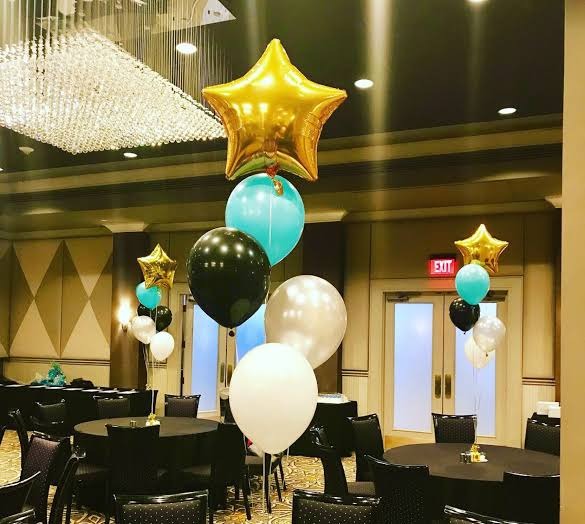
A standard cluster consists of several 11-inch balloons tied to a weighted base, usually topped with a larger foil or specialty balloon, standing 18 to 24 inches high. This is the classic "balloon bouquet" style, creating a dense pop of color at the center of the table without requiring a complex setup.


  • The Good: These are the most budget-friendly and use a small base, leaving the table clear for catering platters and glassware.
  • The Bad: They sit exactly at eye level. If the ribbons aren't gathered tightly, they block the view between guests sitting across from each other.
  • Expert Tip: If you're looking for professional balloon decor Maryland, keep in mind that local venues with lower ceilings work best with clusters under 20 inches to prevent the room from feeling cramped.

2. Floating Cloud Arrangements

Floating clouds use helium balloons of different sizes (5 to 16 inches) tied at staggered heights to look like soft, suspended sculptures floating above the table. This style creates a fluffy, asymmetrical effect that mimics a high-end floral arrangement but adds volume to the room without feeling "heavy."


  • The Good: You can float these high above the guests' heads, which ensures 100% visibility across the table for networking.
  • The Bad: Helium is sensitive to airflow. If you place these directly under an AC vent, they will sway constantly, which can be distracting during speeches.
  • Expert Tip: Use these for large ballrooms with high ceilings to fill empty vertical space without blocking the floor-level view.

3. Balloon Hoops and Ring Frames

These use a metal or plastic circular frame wrapped in small 5-inch balloons to create a 2-to-3-foot "window" in the middle of the decoration. They are modern and architectural, looking more like a piece of custom furniture or a high-end floral hoop than a traditional balloon.


  • The Good: They provide a structural look. The frame keeps the balloons in a fixed, predictable position for the entire event.
  • The Bad: They require a heavy base to stay upright, which takes up more surface area on the table than a simple weight.
  • Expert Tip: These perform best on long rectangular banquet tables. Space them out to create a focal line without overcrowding individual place settings.

4. Air-Filled Topiary Columns

A topiary is a dense sphere of balloons supported by a vertical rod or base, resembling a manicured "tree" made of balloons. Since these use regular air instead of helium, they do not float, but they provide clean lines and a very tidy, symmetrical appearance.


  • The Good: You save on helium costs, and the balloons stay fully inflated and crisp for up to 48 hours.
  • The Bad: They are rigid. If a guest bumps the table, a topiary is more likely to tip over than a swaying helium balloon.
  • Expert Tip: This is the best choice for multi-day conferences or outdoor events where you don't want balloons sagging because of the temperature.

5. Hot Air Balloon Simulations

This design uses a large 3-foot topper balloon held up over a small basket or flowers using four thin dowels, looking like a miniature hot air balloon ready to lift off. It creates a tall, narrow profile that is whimsical and highly detailed.


  • The Good: It draws the eye upward, making it effective for venues with high industrial ceilings or exposed ductwork.
  • The Bad: These take longer to build, which increases the per-unit cost compared to simple clusters.
  • Expert Tip: When choosing your balloon centerpieces, reserve these for "feature tables"—like registration or gift stations—to mark important areas without cluttering every guest table.

 Getting the Right Balloon Centerpiece for Your Venue

Table Proportions. Table size dictates the decor diameter. A 72-inch round table needs a centerpiece at least 15 inches wide to look right. A single-string balloon on a large table looks like an accident, while a massive hoop on a tiny bistro table leaves no room for guest items.

Ceiling Height. In a ballroom with 20-foot ceilings, small table-level decor disappears. You need height to bridge the gap between the floor and the ceiling. If your venue has 8-foot ceilings, keep your centerpieces low and wide to avoid a "caged-in" feeling.

Temperature and Airflow. Helium expands with heat and shrinks in cold. Moving balloons from a hot loading dock into a cold air-conditioned hall makes them look slightly deflated for about 30 minutes until the gas settles. Because of this, always ensure your specialist uses heavy steel plates so the decor doesn't drift toward the nearest air conditioning vent.

author

Chris Bates

"All content within the News from our Partners section is provided by an outside company and may not reflect the views of Fideri News Network. Interested in placing an article on our network? Reach out to [email protected] for more information and opportunities."

STEWARTVILLE

JERSEY SHORE WEEKEND

LATEST NEWS

Events

March

S M T W T F S
22 23 24 25 26 27 28
1 2 3 4 5 6 7
8 9 10 11 12 13 14
15 16 17 18 19 20 21
22 23 24 25 26 27 28
29 30 31 1 2 3 4

To Submit an Event Sign in first

Today's Events

No calendar events have been scheduled for today.